
If the number one question I get at workshops and PhotoWalks is about how to get the proper exposure, the next question I’m often asked is how do I pose models during a photo shoot. I even wrote a book about it called Posing for Portrait and Glamour Photography that is now out-of-print but a Kindle version is available for those who like a digital format. Posts like today’s could be considered something that compliments that book’s text and images.
Today’s post by Joe Farace
“In my photographs it is apparent that there was no posing at the moment I released the shutter.”—Jerzy Kosinski
 Portrait posing? I think that the initial and most crucial aspect of the process is identifying the type of subject your subject represents. I’ve found that there are basically two types of models: They are either Inner directed or Outer directed and I wrote about the differences in a post called A Look at Modeling Styles. What I didn’t realize at the time I wrote that original post is there are also variations on these types and I’ve added some additional thoughts on that discussion here. The main takeaway for the newer portrait or glamour photographer is that knowing what type of model that’s in front of your camera can ells you how much input from you your subjects needs.
Its all in Part 2
The next phase of the posing procedure involves understanding how to position your subjects in a comfortable manner (key words) and is one of the most essential aspects to master in order to produce marketable portraits.You may be able to photograph a beautiful woman but if her pose is awkward, clumsy or unattractive, it reduces your ability to produce a successful portrait. And because you’ll often be working with people who haven’t been photographed since their wedding or senior portraits, it’s important to develop an understanding of a few simple techniques to assist your subject when they’re in front of your camera.
Here are a few basic posing techniques that I usually begin each session with. For example, this is the pose I use as my “first standing pose” in a session: Start by placing the subject in a three-quarter pose to the camera, (Thinner subjects can pose their bodies square to the camera while more full bodied models will look best with a more angled pose to the camera position.) Next, I’ll ask them to put all of their weight on the foot that’s away from the camera. Then I ask them to point their opposite foot toward the camera. This is harder to do then it sounds; some people get it right away, other do not. So I often show them how to do it by putting myself in that pose. It usually works.
 Once you have your subject in a comfortable pose that also looks good you should refine it with a head tilt or have them move their hands and arms slightly while changing your camera angle and zooming (or walking around) to tighten or loosen the shot’s composition. This part of the process is what I call shooting through a pose; You can read about how that approach works here but it basically boils down to continue shooting until you reach what you think is the best looking pose but then keep going for several more frames to, you know, see what happens!
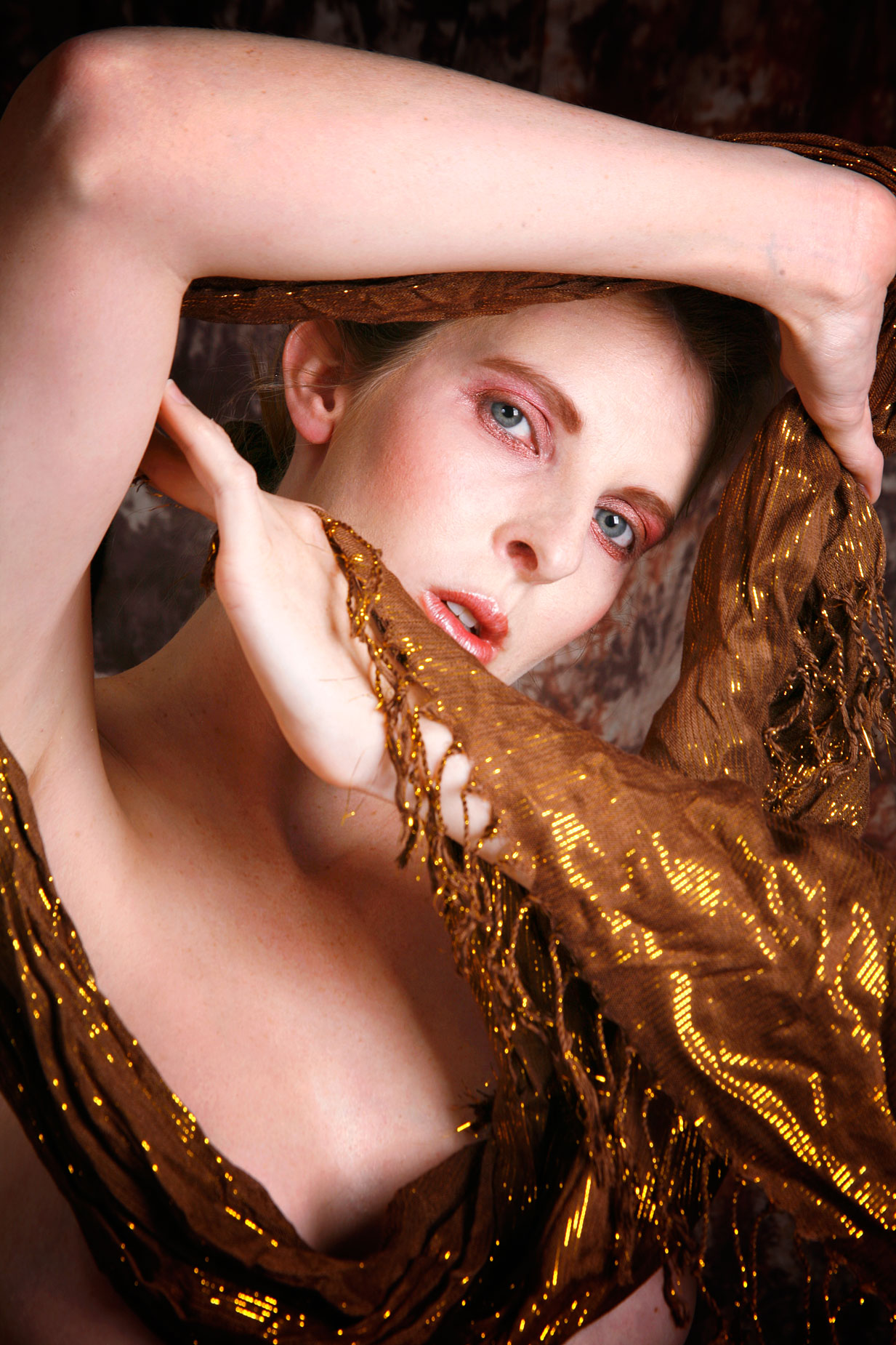
How I made this Portrait: One of the most challenging parts of working in the studio its that there’s usually nothing for the subject to interact with and they often don’t know what to do with their hands. Props help but what if you don;t have any? For this unpublished–a whole ‘nother story unto itself–image of Alice Ivers, I talked to her while moving my hands around my face and head and watched how she mimicked it. This pose is what she came up with and I liked it so much better than any of my suggestions. The camera used to make the portrait was a Canon EOS 5D Mark I with an EF 28-135mm f/3.5-5.6 IS USM lens. The exposure was1/125 sec at f/13 and ISO 100.
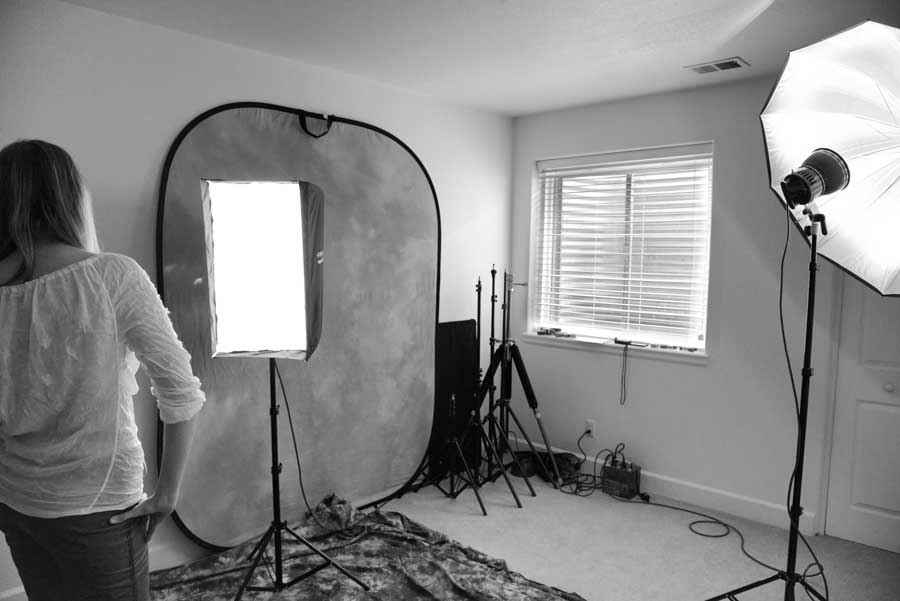
For this session with Alice, the lighting setup consisted of a Speedotron Brown Line flash head attached to a 16×13-inch Westcott Apollo Strip soft box that’s built on an umbrella frame and doesn’t require a speed ring. In the above right view of my studio you can see it on the left (camera right) with the second Speedotron M11 head with a 54-inch silver umbrella attached is opposite it and used as fill. The Apollo Strip soft box provides a narrow focus and dramatic lighting; so much so that sometimes I shot it without turning on the second head for fill and really like the results it produces. The background was an inexpensive muslin that I purchased from Adorama and hung on JTL background stands.
About the model: I only photographed Alice twice for Shutterbug while testing lighting equipment for the magazine but would love to work with her again. If you have a friend, or maybe yourself, who would like to model for me or wants to be my new muse, please contact me through the Contact page or send an e-mail at joefarace at comcast dot net. We can schedule a test shoot or an interview whichever is more convenient.
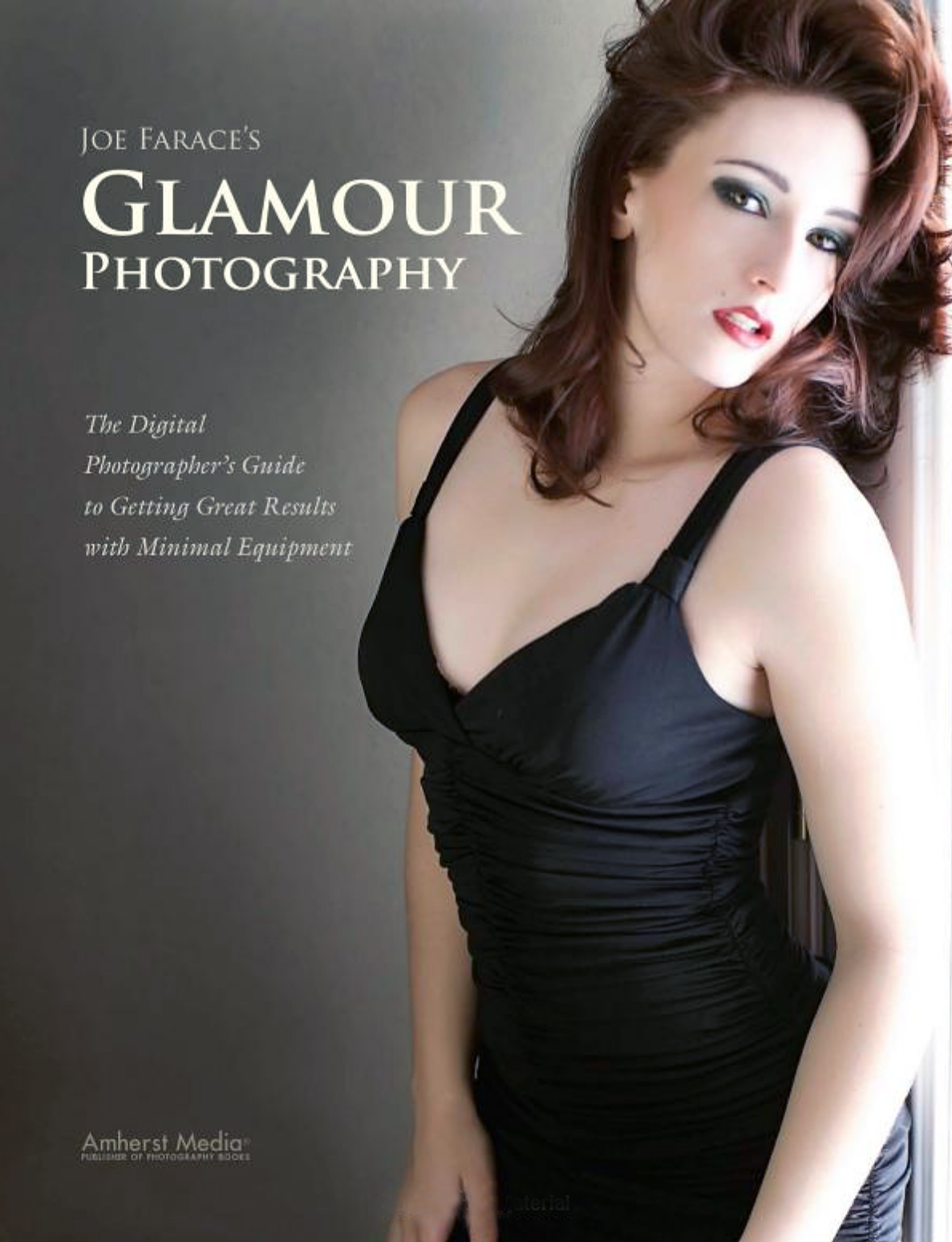
My book Joe Farace’s Glamour Photography is full of tips, tools and techniques for glamour and boudoir photography and includes information on all of the cameras used as well as the complete exposure data for each image. New copies are $45 with used copies start around thirty-two bucks.as I write this. The Kindle version is $19.99 for those preferring a digital forma