
It’s National Chocolate Chip Cookie Day. In the late 1930’s. at the Toll House Inn in Whitman, Massachusetts, Ruth Graves Wakefield chops a Nestlé semi-sweet chocolate bar into bits and mixes them into cookie dough, creating the chocolate chip cookie. Responding to demand, Nestlé makes a deal to print the Toll House Chocolate Crunch Cookie recipe on its semi-sweet chocolate bar wrappers and went on to include a chopping tool to help prepare the bars for use in cookies. That is, right up until 1941 when they started selling them as ‘chocolate chips’ or ‘chocolate morsels’.
Today’s Post by Joe Farace
Human life is as evanescent as the morning dew or a flash of lightning.–Samuel Butler
 These days, many but not all, DSLRs and mirrorless cameras have a built-in flash. That’s not necessarily true for the so-called Professional models even though having a small flash available with the click of a button can sometimes make the difference between a good photograph and a not-so-good one. The Panasonic Lumix GH4 was an exception but the Lumix GH5 does not have a built-in flash.
Here’s why having a camera with a built-in flash is a good idea:
In a Flash
The question remains: When should you use the built-in flash? The most obvious answer is when the light is low and you need to illuminate your subject but that may not always be the best way to use flash. If light levels are low and you use the built-in flash you may get an overexposed foreground with an underexposed background. What kind of flash pictures do you think people in the stands photographing night baseball or football games get with their point-and-shoot cameras? You see this on TV all the time as waves of flashes erupt from the stands during sporting events while the clueless announcers refer to them as “flash bulbs.”
Using a camera’s built-in flash as the sole source of lighting for photographing people indoors inevitably produces lighting that can be overlit and contrasty, although I’ve heard some influencers refer to that look as “trendy.” Nevertheless the tiny flashes found in digital cameras can do a good job of delivering properly exposed pictures if you don’t exceed their maximum flash distance. Hint: Read the manual to find out what that is.
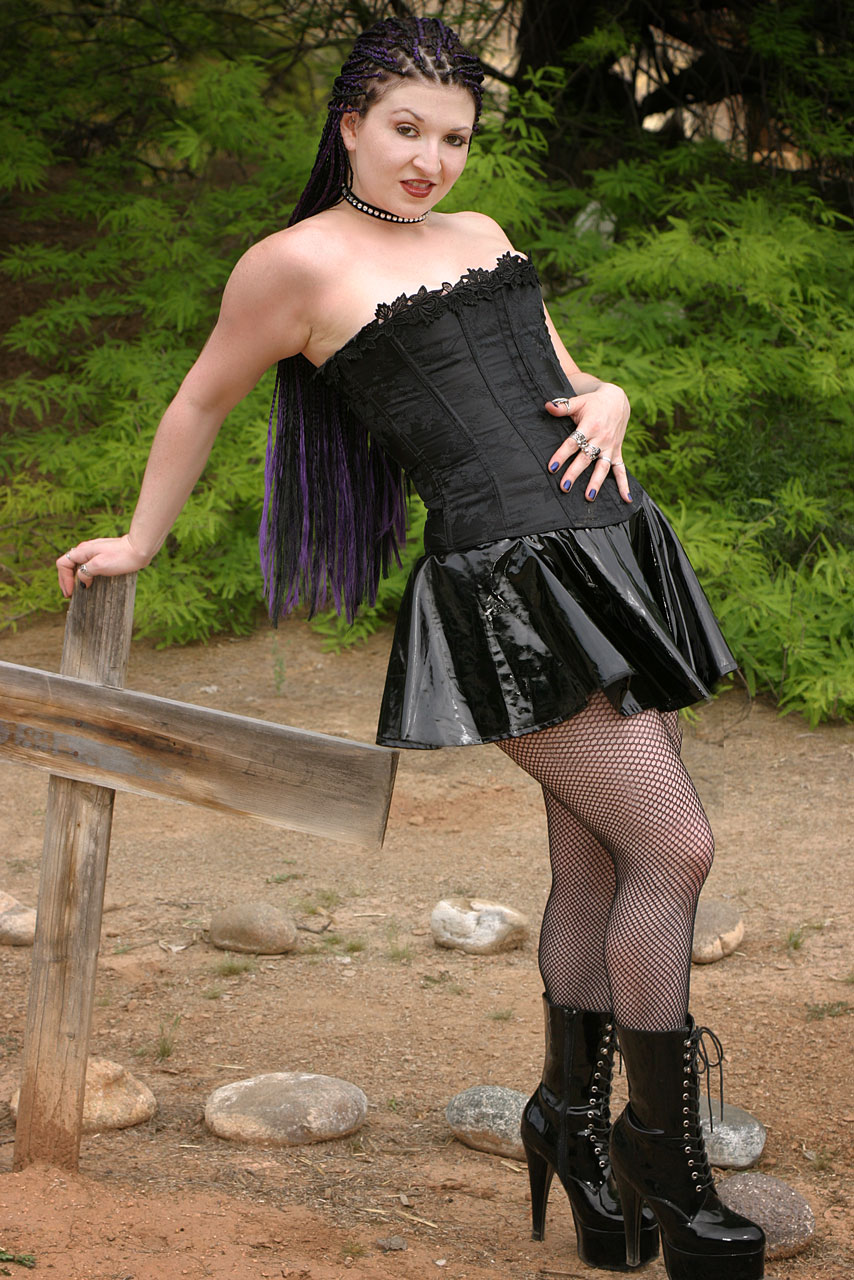
 A better way to use your built-in flash is when there’s enough ambient light for the flash to act as fill. This happens to be one of the reasons why you should always use flash for outdoor portraits. The flash will illuminate your subject and focus the viewer’s attention on them. When you have high ambient light levels indoors flash can be the best way to control contrast and add some dimension to the photograph. Without flash, all you may get is a silhouette.
The downside of using built in flash indoors is that it’s so close to the lens it can produce shadows from the subject onto a nearby wall. The solution, if you have enough room, is to move the subject far enough away from the wall so any shadows produced by the flash fall behind the subject. One rule is that the subject’s distance from a wall should be equal to their height.
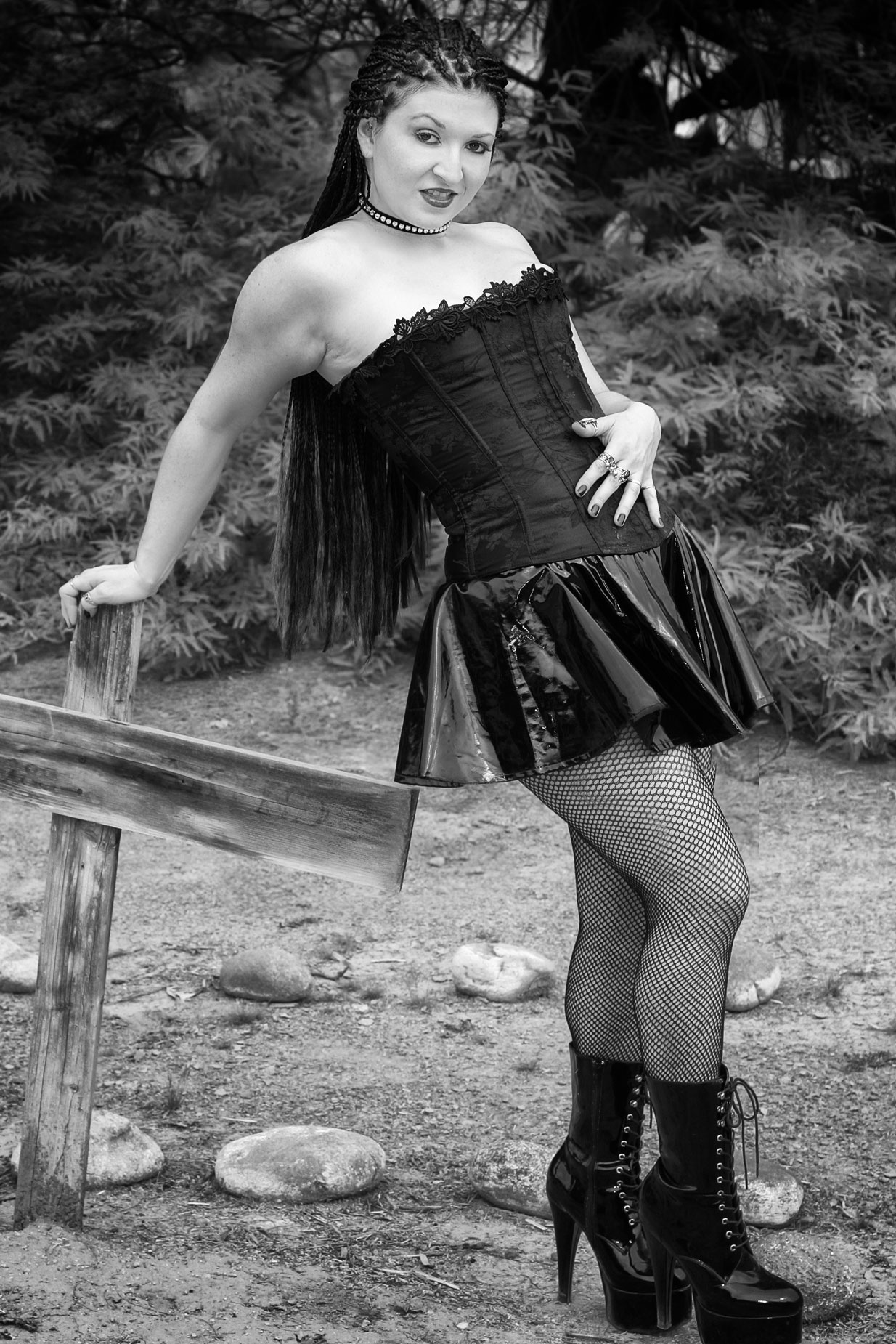
How I Made these photographs: Jovanna was the makeup artist on a group model shoot in Phoenix, Arizona and she asked me to make her portrait and this is what we came up with. This was made on a movie set, not an actual cemetery, and was the “Boot Hill” set. The original outdoor color portrait (above right) was captured using a Canon EOS 10D with a EF 28-105mm f/3.5-4.5 II lens at 45mm with its pop-up flash used for fill. The exposure was 1/200 sec at f/10 and ISO 200 with a minus one-third stop exposure compensation.Since the original color image had such a Goth feel and I’ve been in a goth frame of mind these days, I created the black and white version at left using the Silver Efex Photoshop-compatible plug-in with their High Structure (harsh) preset.
There is no Film Photography theme post today, mainly because I haven’t been shooting much film these days, mostly because of the weather. I don’t want to spend money for film and processing unless I know I have, at least, the potential to make some interesting images. In fact, as I pointed out in a past #wheelswednesday post, I’m re-thinking the whole concept of daily themes for the blog. Some days, it feels like I’m trying to pound a square peg into a round hole to write a post for a specific theme and to tell the truth, most times, I just give up and write what’s in my head. Like today. So maybe that’s my future. If you like the Film Friday theme, please let me know and I will do what I can to keep it going.