
Today’s Post by Joe Farace
“Never regret anything you have done with a sincere affection; nothing is lost that is born of the heart.”—Basil Rathbone
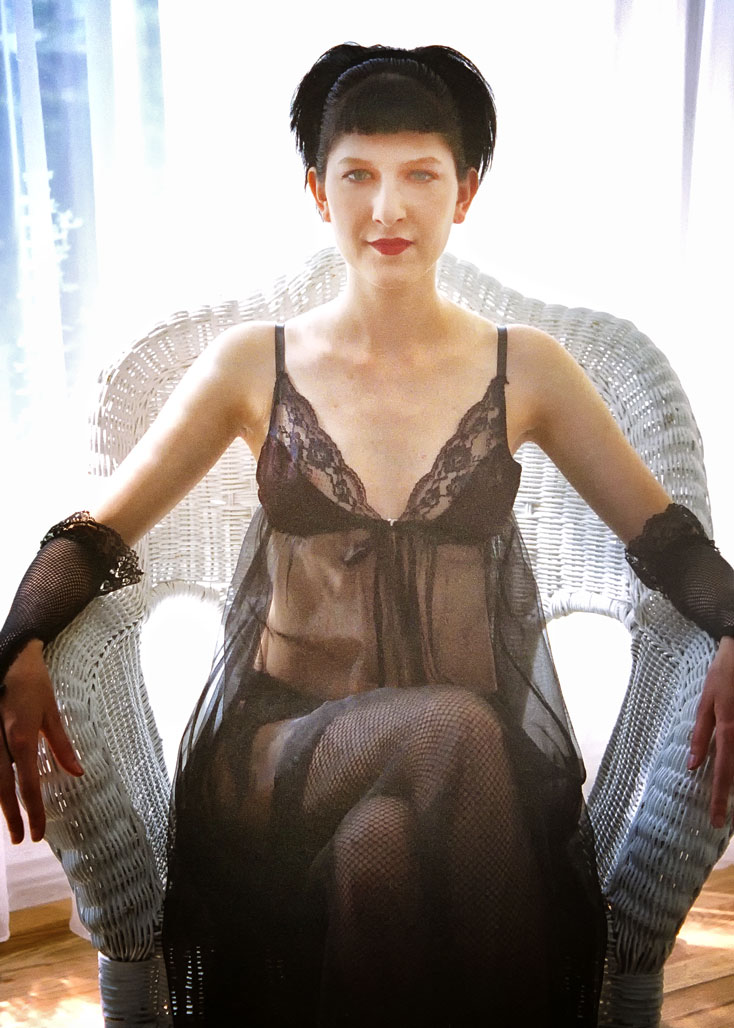 Goth is a music-based subculture that emerged from nightclubs such as the F Club and Batcave in the United Kingdom during the early 1980s, as well as gothic rock, a genre that evolved from British post-punk. The goth subculture is mainly centered around fashion, clubs and music festivals. In the 1990s and 2000s, the goth subculture entered mainstream awareness, with its visual style and fashion influencing various aesthetic variants…—from Wikipedia
Portraits in Monochrome
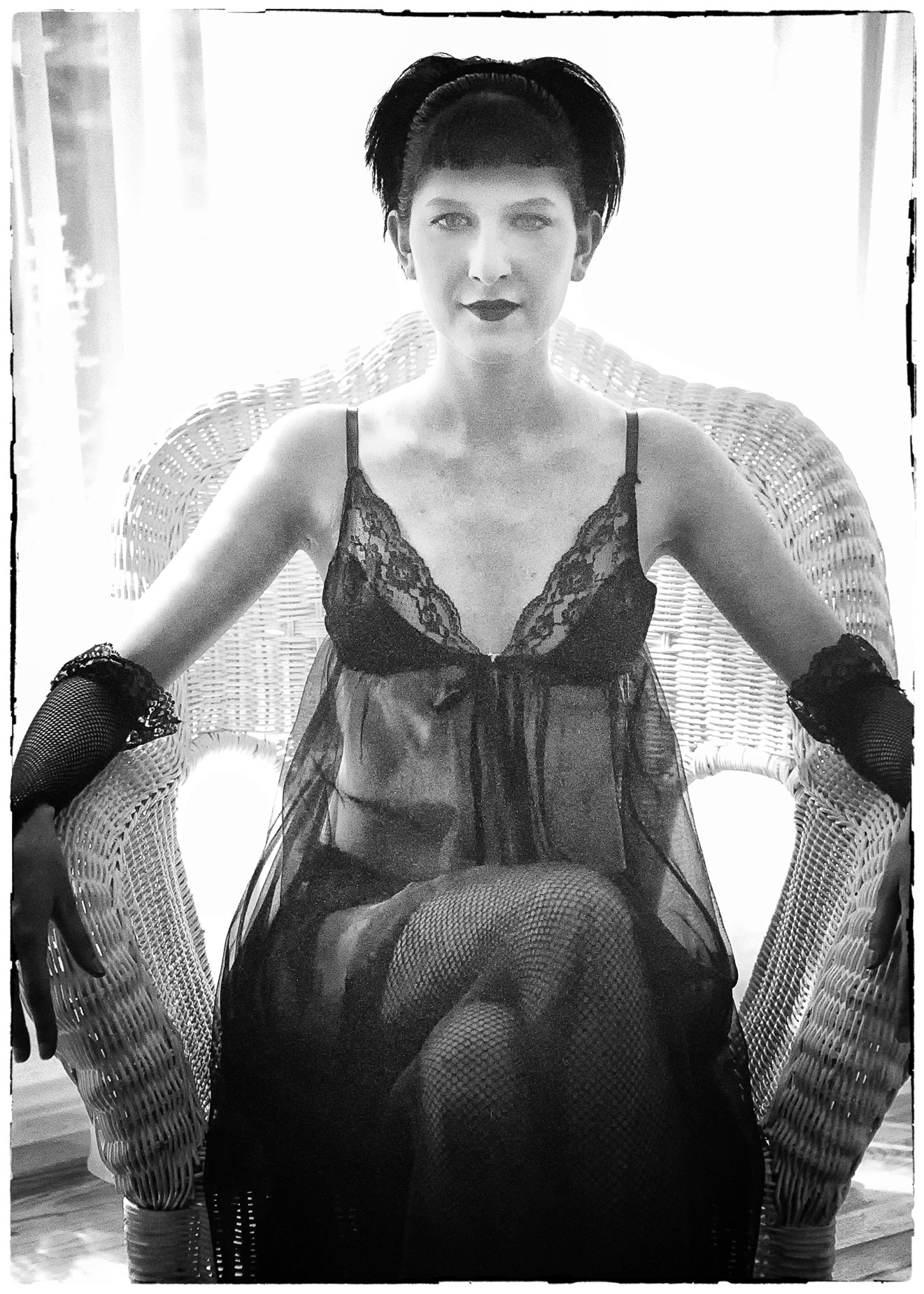
Black and white is a wonderful media for making portraits because the lack of color simplifies the image,making you focus on the subject’s face instead of emphasizing their clothing or surroundings. See for yourself: Take a look at the original color image at right and compare it to the black and white version of the photograph below left. The second image, I think, has more drama but you may prefer the color image and if you do, that’s OK with me.
As I mentioned in my book Joe Farace’s Glamour Photography, when Mary and I owned and operated our studio I wasn’t a people photographer, she was. During that time I tended to photograph things, mostly products and architecture, but occasionally because of her schedule and availability I’d occasionally shoot a business portrait or headshot in the studio but for our day-to-day operations, people were really Mary’s game.
 When I took an extended sabbatical for health-related reasons from the studio’s daily operations, things changed for me photographically. Influenced by the glamour images that I was seeing on the internet at that time, I started making and enjoying making portraits.
How I Made this Portrait: Today’s featured portrait is from one of the first sessions I did when photographing aspiring models represented by a local modeling agency. I photographed this young, talented model at a friend’s studio on a Sunday when it was closed to the public. Inspiration for this image was the 1943 movie Sherlock Holmes and The Spider Woman who was portrayed in the film by Gale Sondergaard. My late father-in law and I both had an affection for these Basil Rathbone-starring films.
The typical capture data I usually provide in these posts is missing for this image but if memory serves it was shot on Kodak color negative film using my original Contax 167MT, SLR sans the P-5 battery pack that it’s replacement has and a Carl Zeiss 85mm f/1.8 lens. It was made using available light with mostly back lighting, as it turned out. The idea behind the image and the pose, I thought, was a good one but my handling of the backlighting—I think the image was underexposed—washed out some of the photograph’s background. I tried to save what I could using Adobe Photoshop Multiply layer’s and Vivenza and it sorta kinda worked. You can read more about this portrait, and see another interpretation of this image along with a larger version of the original color photograph in my book Posing for Portrait & Glamour Photography.
To produce the monochrome version above, I used the High Structure (smooth) preset of Silver Efex, suppressing any grain while converting the scanned Kodak Photo CD mage file to black and white. Some localized burning and dodging (using layers) was done using PhotoKit and I again used Silver Efex to add the hint of film edges to the image.
Black and White photography. especially as it applies to making portraits, is one of the topics of the Friday the 13th edition of the Pixels, Grain & Cookies podcast, where Barry Staver and I come to a startling and perhaps erroneous conclusion about monochrome photography. You can find it on my YouTube channel now.
 If you enjoyed today’s blog post and would like to treat me to a cup of Earl Grey tea ($2.50), please click here. And if you do, thanks so much.
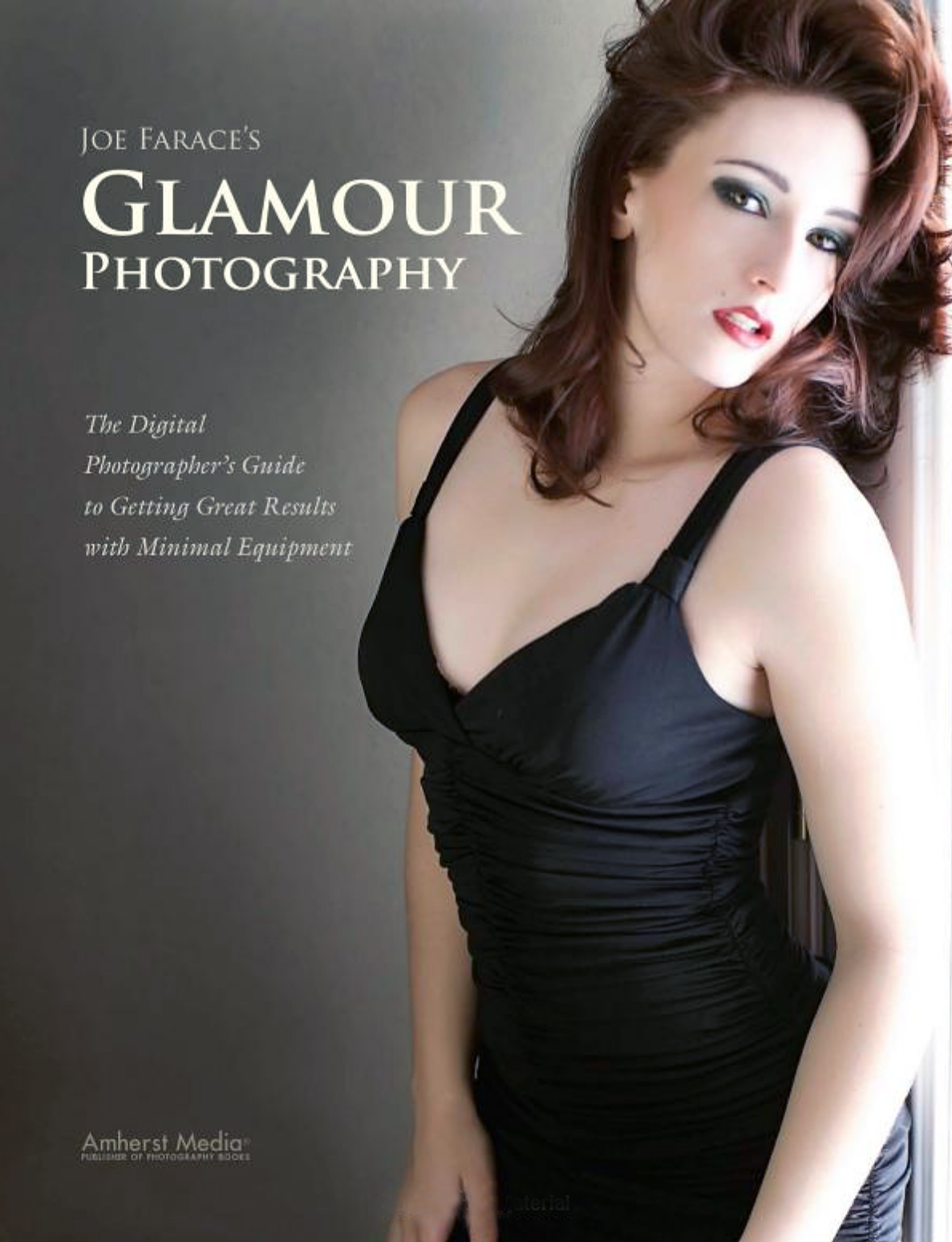
My book Joe Farace’s Glamour Photography is full of tips, tools and techniques for glamour and boudoir photography and includes information on all of the cameras used as well as the complete exposure data for each image. New copies are available for $40.88 with used books starting around thirteen bucks.as I write this. The Kindle version is $19.99 for those preferring a digital format.