
It’s National Pigs in a Blanket Day, a holiday celebrating one of my favorite comfort foods–pork sausage baked in pastry! I love pigs in a blanket, so why did IHOP take it off their menu?.
Today’s Post by Joe Farace
“Comparison is the thief of joy.” ―
Am I wrong or does it seems like photographers tend to shoot more images during a session when using a digital camera than they might have previously done when shooting film for a similar kind of project?
Film vs. Digital Capture
Flashback: When I photographed aspiring models for a modeling agency during the film era, I would usually expose a maximum of two or three rolls of 35mm film for a test shoot. Sometimes these were 24-exposure rolls, so a model shoot might consist of my making around 72 to 108 images. When I started shooting these same kinds of sessions with a DSLR or mirrorless camera, I tended to make many more exposures. How many more? These days when photographing a talented model like Erin Valakari, I would typically make 300 or more shots of her, almost three times what I would have done during a film-based session.
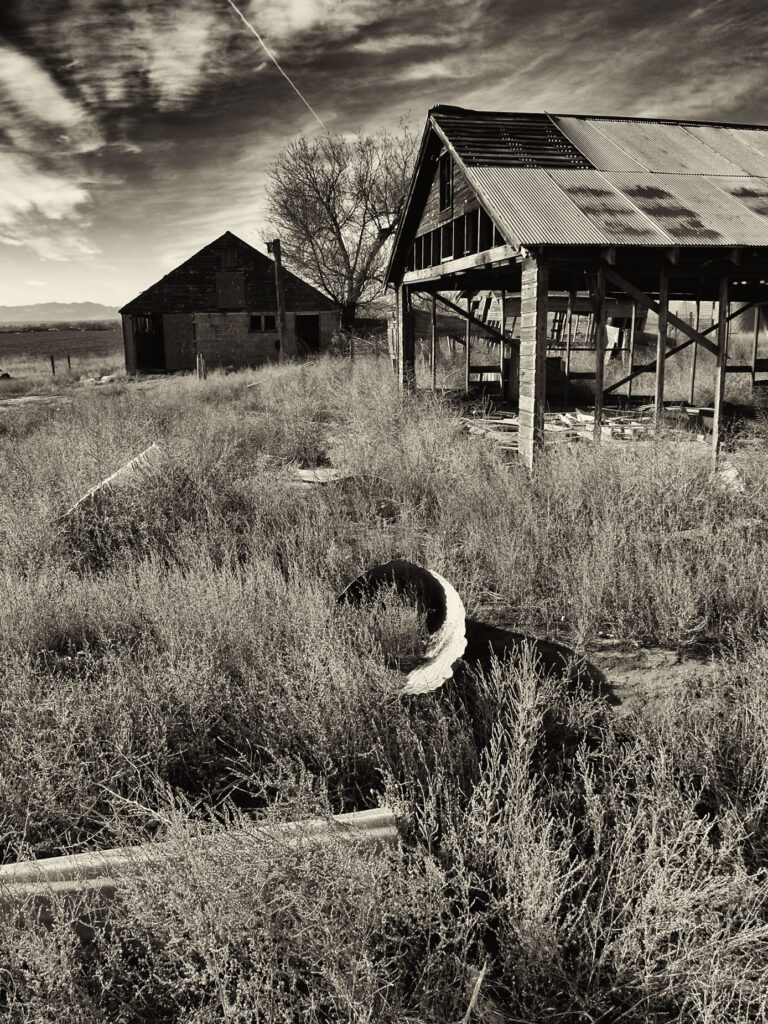 How I Made this Photograph: I photographed of an abandoned farm property near Brighton, Colorado using an Olympus E-300 Four-Thirds —not Micro Four-thirds—camera. That camera has an eight-megapixel (17.3 x 13mm) Kodak CCD sensor that is now beloved by shooters of older digital cameras because they believe it produces the most filmic look. The lens used was an Olympus Zuiko Digital 14-45mm F/3.5-5.6 lens at 14mm with an exposure of 1/160 sec at f/8 and ISO 100. It was originally captured in one of Oly’s Sepia modes that I find to be too orange, so I processed the monochrome JPEG file in Silver Efex using the Full Dynamic (harsh) preset with the plug-in’s sepia toning option. I wrapped it by cropping it slightly, while maintaining the original 4:3 aspect ratio.
The Big question and Some Other Opinions
The question I’m asking is: Are my photographs better today than back when I was exclusively shooting film? I may have convinced myself that not having to worry about the cost of film and processing lets me produce more images and faster but are they better? I also know that with my increased interest in shooting film these days is that the cost of film and processing does have an impact on how much I shoot, when compared to the same kind of shoot with a digital camera.
I asked some people I know if they thought that digital capture helps them produce better photographs. I started with a former Shutterbug editor who told me that “it could be true. For model shoots I would expose three rolls of 120 film and two rolls of 35mm but with my DSLR I’ll make 600 shots! When working with digital, I tend to shoot faster and make shots I might have passed on when shooting with film.”
One wedding photographer told me, “Just thinking about the cost film and processing costs increases my resistance to pressing the shutter.” He then said, “but at a wedding I did Sunday and found myself holding back toward the end because I was out of memory cards! I went through the images, deleting any that wouldn’t make the first edit.”
It’s not just on assignments where we shoot more digital frames than we would have made with film in the past. Another part of any studio photo shoot is making tests to check exposure, much as we would have used Polaroid film in the past. So maybe another question to ask might be: Does making all of these additional exposures add premature wear and tear on our digital cameras, especially shutters, than their film counterparts might not have experienced? I don’t know for sure but it almost has to, doesn’t it?
If you are a manufacturer or representative of a photography company or organization and would like to send me some 35mm film or any other photography–film or digital–gear to review or write about on the blog or in one of my YouTube videos, please e-mail me for my mailing address