
It’s #anythingcanhappenday on my photography how-to Blog and in addition to featuring a studio portrait of the stunning Pam Simpson, I’m going to toss around some thoughts about RAW and JPEG capture that might seem controversial. If you would like to offer your opinions on this subject, click CONTACT and tell me about it. I plan to suggest it as a topic for Barry Staver and my next podcast. In the meantime, you can see our most recent Pixel, Grain & Cookies podcast by clicking here.
Today’s Post by Joe Farace
It’s kind of fun to be sexy.—Tea Leoni
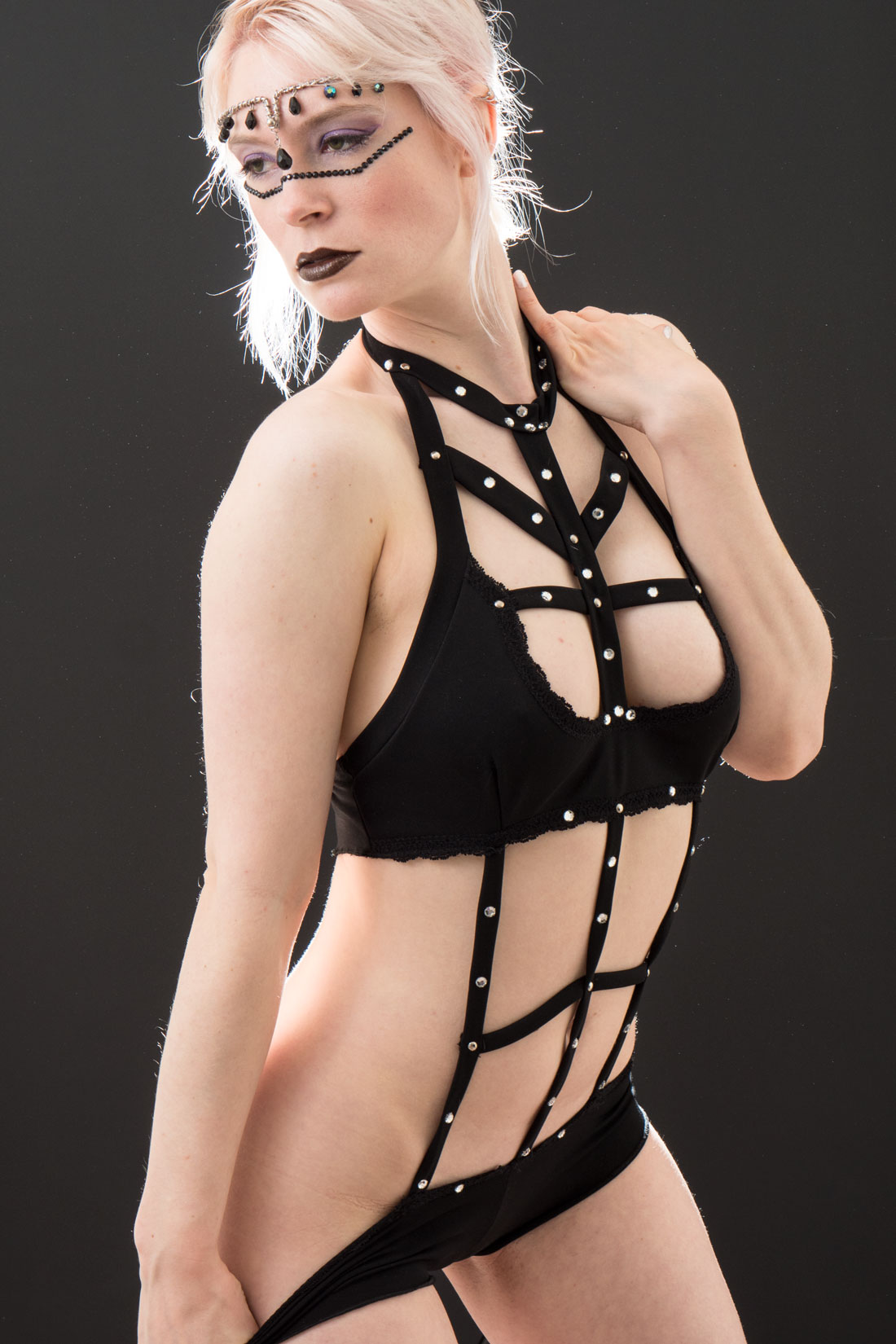 Monochrome photography is a genre of photography where each position (pixel) on an image can record and show a different amount of light, but not a different color.—from Wikipedia. Black and white is just one form of monochrome photograph; It can be any single color, including blue.
Black and white is wonderful way of making glamour or intimate portraits because the lack of color simplifies the image, causing the viewer to focus on the subject’s face and body instead of their clothing or surroundings. Sometimes the very nature of the portrait subject demands that the image be made in black and white. take today’s portrait of Pam Simpson for example.
When making a monochrome image in the studio, I typically shoot the original image using the camera’s RAW+JPEG option with the camera set in monochrome mode. This produces two files: one color and one monochrome and I use the latter as a preview to show the subject approximately what the final image will look like. Because there are many more tones in the color (RAW) file it’s easier to use that file for retouching and then convert it to monochrome as I did with the featured portrait.
A Bigger Question Remains
I have written before about the many advantages of RAW+JPEG capture but sometimes there can be some disadvantageous too. For this session with Pam Simpson in her Go Go outfit that I made in my home studio I (accidentally) compared the converted black and white image with the SOOC monochrome JPEG file and was astonished by how great that JPEG file looked. In fact, if I posted the monochrome image on social media I bet that nobody would be able to tell the difference between it an the converted image below left. I also think the average person might not be able to tell the difference in 11×14-inch prints comparing the two. There is, of course, a visual difference between the JPEG and RAW files but I had to look hard to see it. And yet these images were made with camera that has a puny 16-megapixel Micro Four-thirds sensors. What would the difference between the image files look like from a Sony a7R VI with 66.8-megapixesl? This is something to think about, During one of our previous podcasts, I told Barry Staver that I wanted to do a glamour session with a model and shoot part of it with a full frame and APS-C camera to compare it to my normal Micro Four-thirds gear. He asked, “why?” I didn’t have a good answer; now I do.
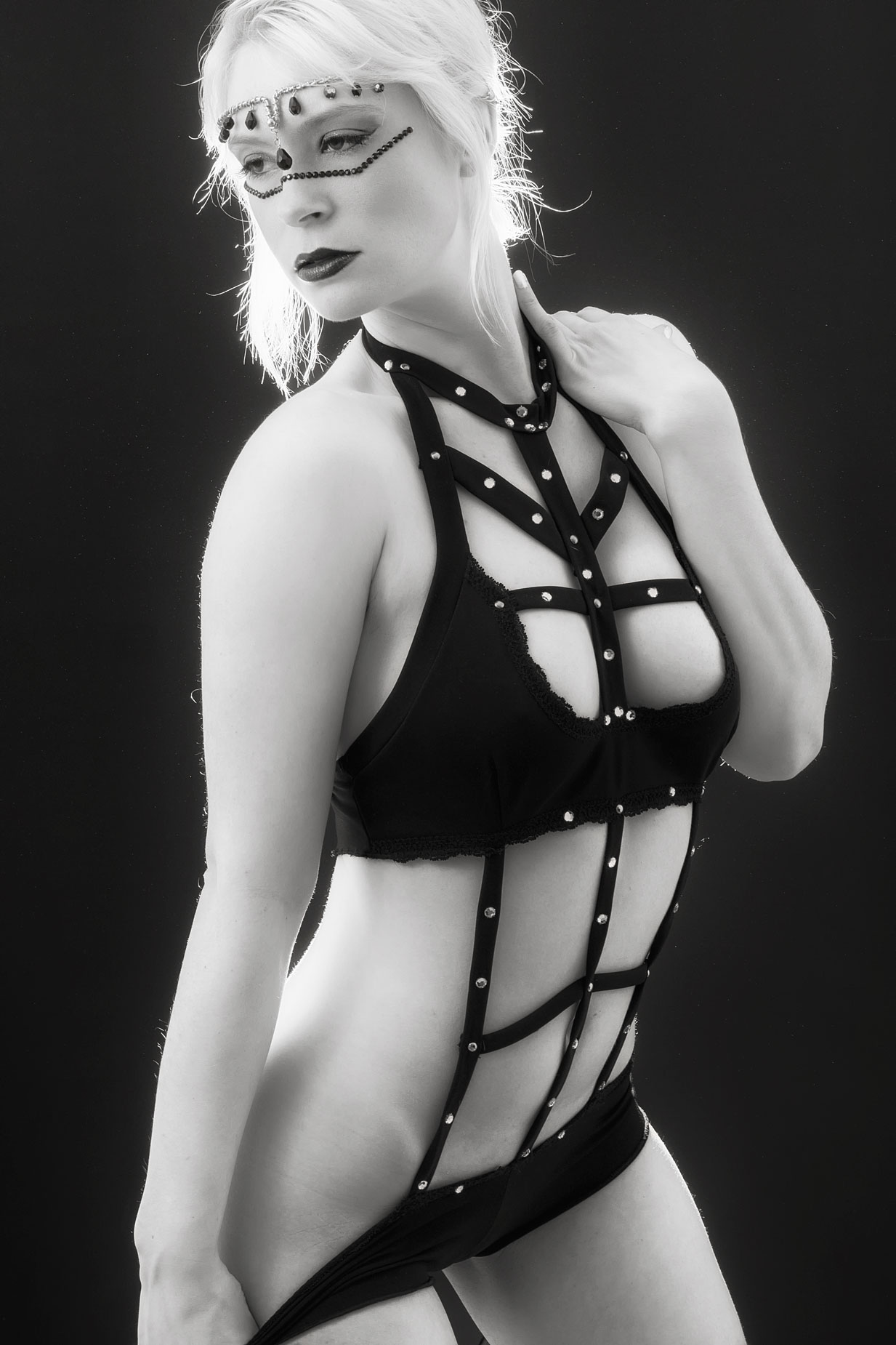 How I made this portrait: I photographed the always amazing Pam Simpson in my home studio with a Panasonic Lumix GH4 with a Lumix G Vario 14-45mm f/3.5-5.6 (at 40mm) lens. The exposure was 1/160 sec at f/9 and ISO 200. Lighting was provided by a Paul C Buff DigiBee 800 monolight with Plume Wafer softbox mounted, with an AlienBees 800 monolight with standard reflector was placed behind Pam to back light her hair and body. Paul C Buff is not a sponsor of me or this blog. I do not get a single penny from you clicking those links; they are provided for your convenience.The background was Savage’s Black Infinity vinyl backdrop.
For the featured image, the original color RAW file is shown at above right. After retouching, I converted it to black and white using Silver Efex’s Full Dynamic (smooth) filter and afterwards added a touch of soft focus with Color Efex’s Glamour Glow filter where I added a touch of warming with the Glow Warmth slider to produce the final result that you see here.
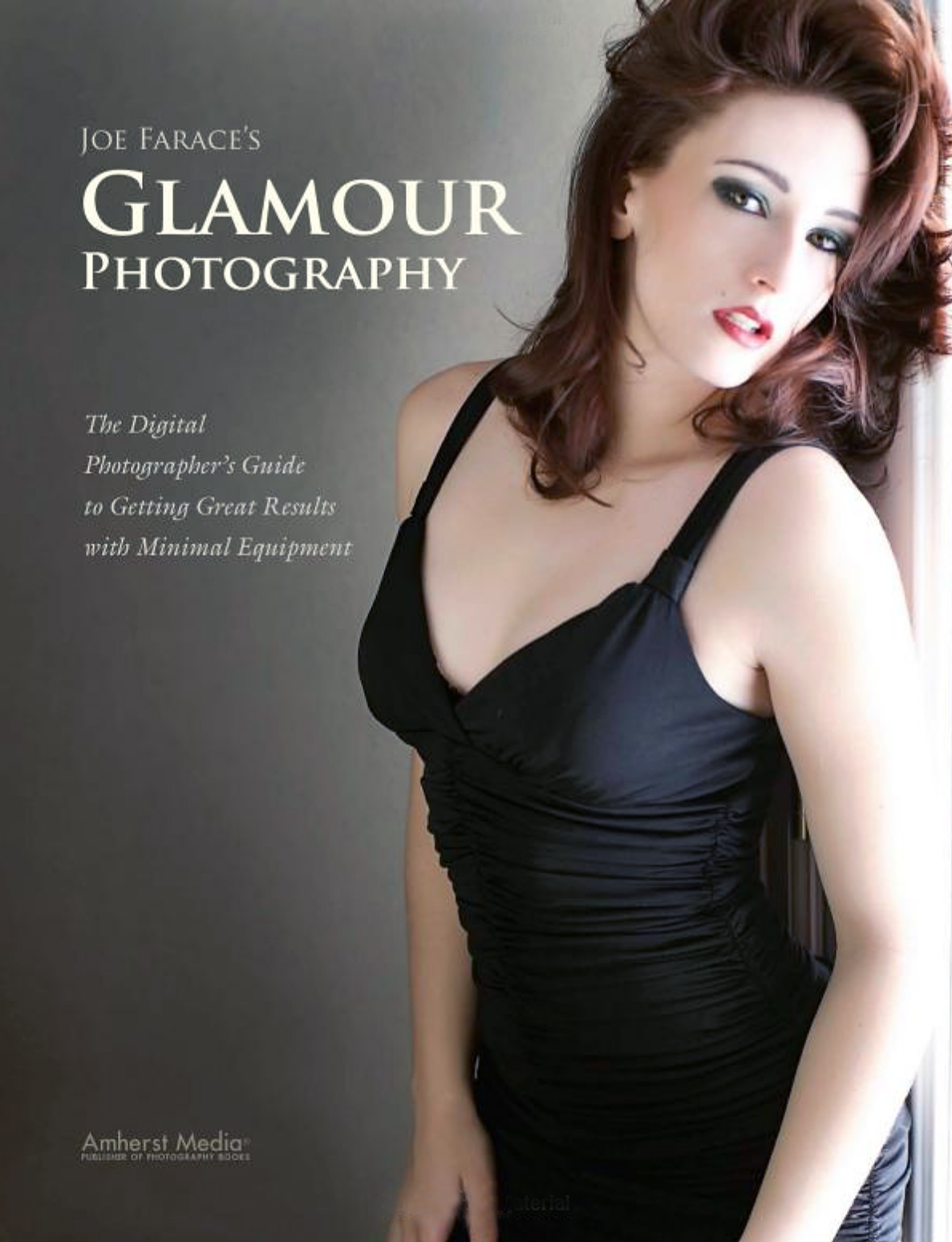 My book Joe Farace’s Glamour Photography is full of tips, tools and techniques for glamour and boudoir photography and includes information on all of the cameras used as well as the complete exposure data for each image. New copies are $35.45 with used copies start around thirty-one bucks.as I write this. The Kindle version is $19.99 for those preferring a digital forma