
My post for this Sunday’s Available Light Portraiture theme is another call-back to the #corsetmonday series from three years ago. Today’s portrait of Liz was captured in the living room of my former home using window light from two narrow South-facing windows and a North-facing window on the second floor.
Today’s Post by Joe Farace
“Ignore the critics… Only mediocrity is safe from ridicule. Dare to be different!” ―
If you’re interested in glamour photography, you might want to follow the Instagram feed of Dita Von Teese (@ditavonteese) because she posts great looking images. Each Monday one of her fan sites publishes a series of glamour portraits of her often wearing corsets, which inspired me to create my original #corsetmonday series in 2023. You can see some of those images by using the search function (magnifying glass icon) and typing “Corset Monday.”
How Wardrobe affects a Glamour Photograph
Women’s corsets first became popular in sixteenth-century Europe and for the wearer created a conical shape with a somewhat flattened bust. The wasp-waisted garment that’s associated with the term “corset,” reached its zenith in popularity during the Victorian era. While the corset has typically been worn as an undergarment, it has occasionally been used as an outer-garment.–excerpted from Wikipedia
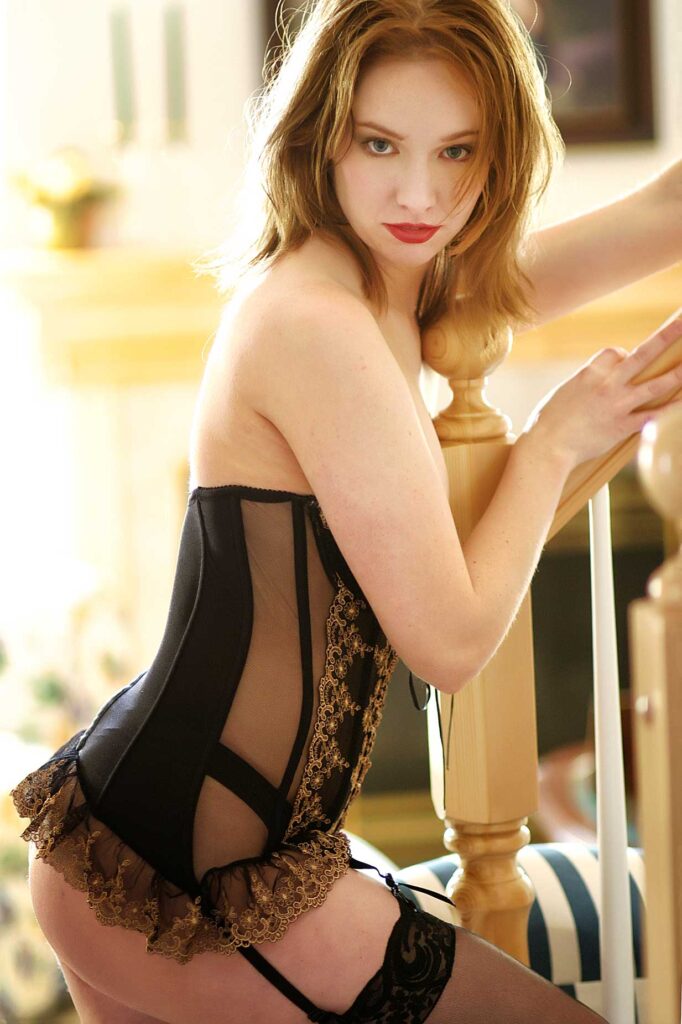 Whenever I make wardrobe suggestions to models for an upcoming shoot, I always suggest that they wear a corset, if they have one. More often than not they do. When writing and shooting images for lighting equipment reviews for the print edition of Shutterbug, I also produced images of women wearing corsets. My recollection is that the magazine never published a single one of these photographs, although in looking through my records I continued to summit them. I would like to continue to publish these kinds of available light images here and could use your help. (See the bottom of this post.)
How I Made this Portrait: Today’s image features a portrait that I made of Liz aka Liz Love, an aspiring model who was sent to me by a local modeling agency and while that is no longer a viable option for me, it was great while it lasted. I photographed Liz in the living room of my former home before I moved to Daisy Hill and had a home studio. Every shoot Liz and I had together was made on location, often in my home, as was the case for today’s featured image. When photographers look at some of these homegrown portraits, they sometimes ask, “How big is your house?” The truth is that my former home, where I made many of the images found in my last four books was an 1800 sq.ft. house, compared to the 2,266 sq.ft. avaerage at the time we purchased it.
I photographed Liz in the space between the foyer and the living room of my former home using available light from the two narrow South-facing windows that are behind her and a large North-facing, second floor window that was behind me. The camera used was a Canon EOS 10D with EF 85mm f/1.8 lens with an exposure of 1/60 sec at f/2 and ISO 400 with a plus one-stop exposure compensation. Some noise reduction from Dfine was applied, along with some light retouching and judicious burning and dodging from PhotoKit and Photoshop’s own Burn and Dodge tools.
Liz and I had three shoots together before she changed career directions. Like many of the models I’ve photographed over the years, I would really like to photograph her today because I think we could still create some great looking images together with her as a more experienced-in-life model.
Special Note: I am currently casting women who would be interested in posing for similar kinds of images for this blog. Immediately after a shoot and signing a simple model release, she will receive her choice of a CD or flash drive containing all the approx 200 photographs we’ll make that day. The model will also receive full rights to use the images however they like. If you or a woman you know are interested, click CONTACT and let’s talk.
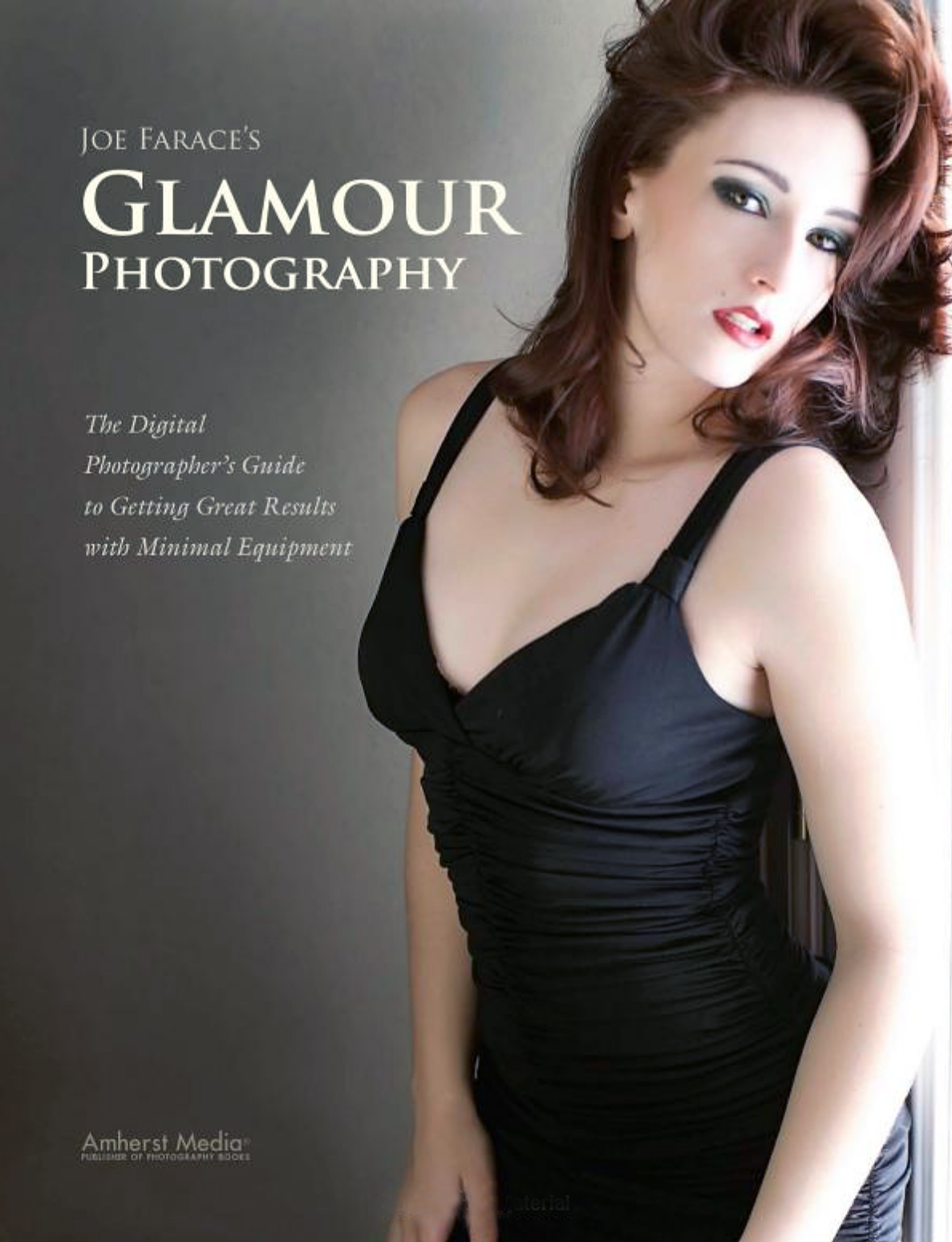
My book Joe Farace’s Glamour Photography is full of tips, tools and techniques for glamour and boudoir photography and includes information on all of the cameras used as well as the complete exposure data for each image. New copies are available for $25.62 with used books starting around twenty-one bucks.as I write this. The Kindle version is $19.99 for those preferring a digital forma