
Today is #anythingcanhappenday on this Blog and we’re looking at how-to take care of your camera filters, especially if you’re using INFRARED camera filters..
Today’s Post by Joe Farace
It seems as if an age of genius must be succeeded by an age of endeavour; riot and extravagance by cleanliness and hard work. —Virginia Woolf
If you’re interested in getting involved in infrared photography, I think the best way is to do it is by using use a camera that’s been converted for infrared-only but that’s not the least expensive method. In an upcoming podcast, my pal Barry Staver and I talk about CCD vs CMOS sensors and I mentions that I am going to try to get a CCD-powered DSLR converted for IR capture to, you know, see what happens. If you want to get into IR photography using the camera you already own. the least expensive way is to put a infrared filter in front of your lens. It’s how I got started in infrared photography and I think it will work for you too.
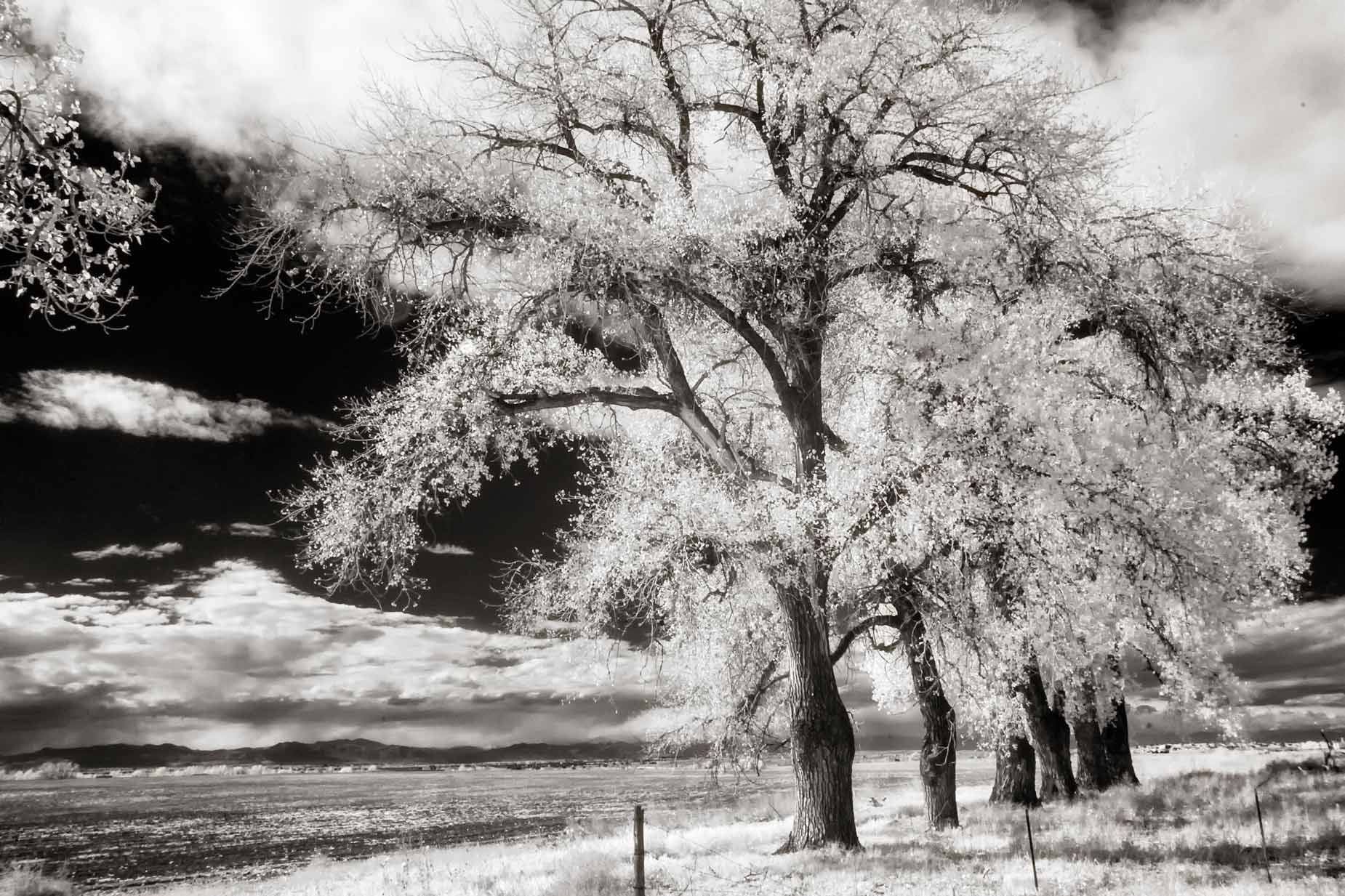
How I Made this photograph: I shot this image of a woodland area near Brighton, Colorado using a Canon EOS D60 with a Tamron AF 11-18mm f/4.5-5.6 Di-II (at 11mm) with a 77mm Hoya R72 filter. Not surprisingly, the bigger the filter, the higher its cost but it will still be less than having the camera converted for IR-only capture. The exposure was 1/60 sec at f/16 with a plus two stops exposure compensation for the filter factor but the image was slightly underexposed..
Let’s Get Started
Getting started with infrared photograph begins with checking to see if your camera infrared sensitive? If it is, you can use on-lens infrared filters. One way to check is to take the TV Remote test: Caveat: Some readers of my infrared book have told me this test isn’t infallible but it’s always worked for me.
Depending on their physical thread size, infrared filters are typically the least expensive solution for capturing IR images. You can watch my video about IR filters by clicking this link. The Hoya R72 filter is usually the least expensive way to try IR photography. A 52mm Hoya R72 Infrared filter, for example, costs around $55. The Cokin A007 filter, another one of my favorites, may be hard to find but examples can be found by poking around the Internet or eBay,. More powerful infrared filters such as the Singh-Ray 690 I-Ray cost around $160 but the difference in the images it produces are dramatic.
Some Tips: All of these filters are so dark they will require slower-than-normal shutter speeds. So you’ll need a sturdy tripod and may have to focus with the filter off the lens, then put it back on to make the exposure. Some mirrorless cameras I’ve tried will focus through the filter; it surprised me too, Then there is the question of keeping these filters clean…
Keeping Your Filters Clean
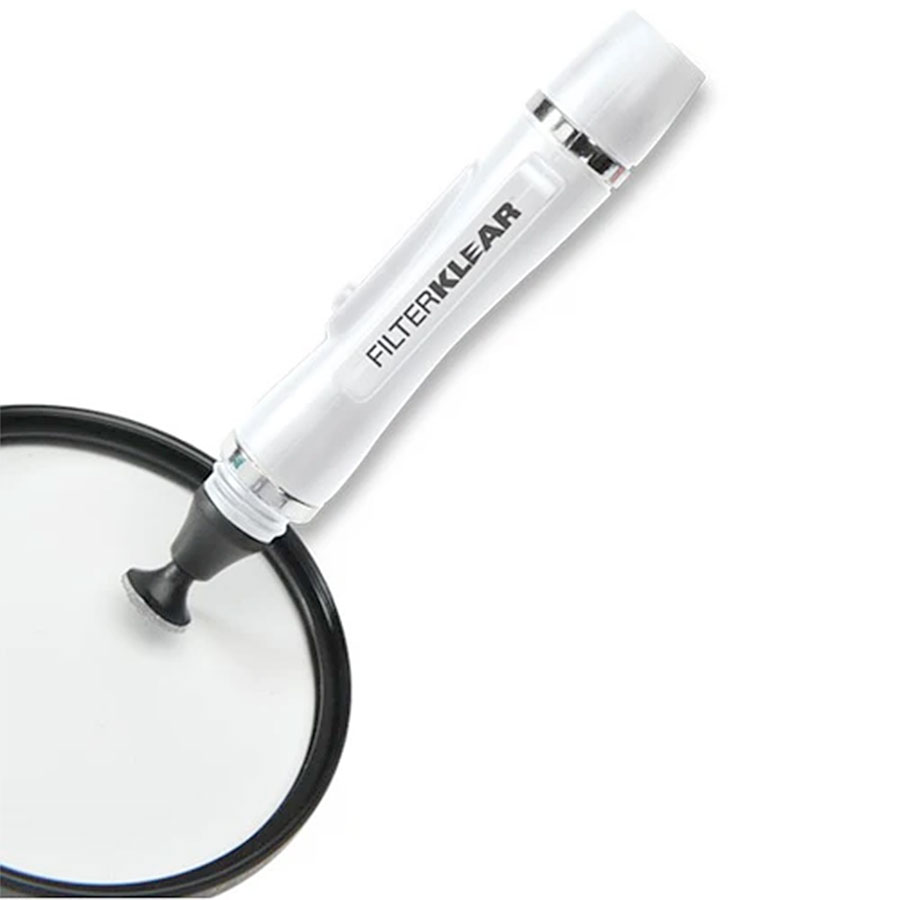 Whether you’re shooting with a DSLR or mirrorless camera, FilterKlear from LensPen is a indispensable accessory for anyone using any kind of filter on their lenses.
FilterKlear is specifically designed to clean camera filters and has a built-in. retractable natural hair brush, which is your first step to remove dust from a filter. The next one is to use its tip that has a special non-liquid cleaning element to finish the cleaning process. And that special cleaning element is designed to never dry out.
- FilterKlear measures 4.3-inches (11cm) long and has a round cleaning tip that measures 12mm in diameter and easily fits in a pocket or camera bag.
- Its cleaning tip is completely flat and is designed to match the shape of a filter
- The tip is covered with a special Invisible carbon compound that removes fingerprint oils. The Invisible carbon compound that’s found in all LensPen products is unique and has been formulated to eliminate fingerprint oils and smudges that somehow find their way onto your lenses, filters, eyepieces and screens.
Best of all a FilterKlear only costs $12.95, so you can afford to put one of them in each of your camera bags. It also makes a perfect gift for your favorite photographer or youself!
LensPen is a long-time sponsor of my sites and blogs but I was using their products long before I even had a blog. My wife bought me my first LensPen in 1994 just after I acquired a brand-new Nikon N90s film-based SLR! I would like to thank LensPen for their continued support.