
If you read a previous Saturday Post you may know that, according to my doctors. I am recovering from major surgery, slowly unfortunately. Keeping up to date with seven posts per week has been challenging so I’m going to revive a practice I used after I had hand surgery several years ago featuring a “best of posts” series. This time the series will feature the best guest posts. Today’s post features some thoughts about motorsports photography from my friend John Larsen.
Today’s Post by John Larsen
The basic techniques that are required to photograph a motorsports event can essentially be broken down into four categories: panning, head-on, three-quarter and close-ups.
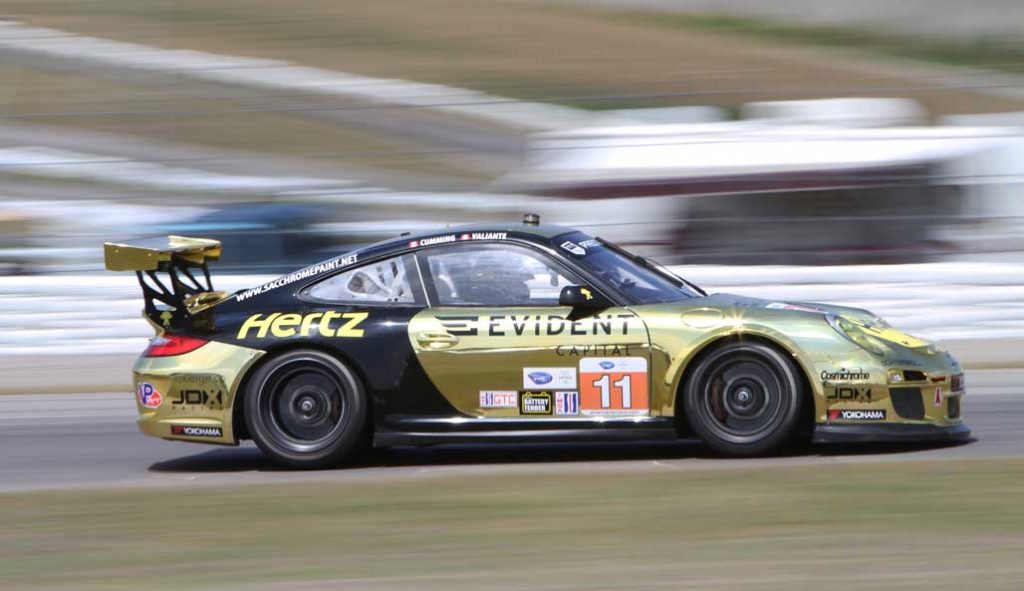 Panning photos with visual impact produces a blurred background and spinning wheels but with the car being a sharp point of focus. This effect is achieved by firing your camera while smoothly following the subject as it drives by. The photographer should start to follow the subject and rotate smoothly while simultaneously pressing the shutter button. When I shoot panned photos from a specific location, I start with a higher shutter speed of perhaps 1/500 sec and gradually slow it down to as low as 1/30 sec. This process could be considered warming up in a similar fashion to what athletes or entertainers might do. Zoom lenses such as a 70-200mm are ideal for panning as you can zoom out to possibly include more than one vehicle, or zoom in to try and get a closer image of a driver in an open cockpit racecar.
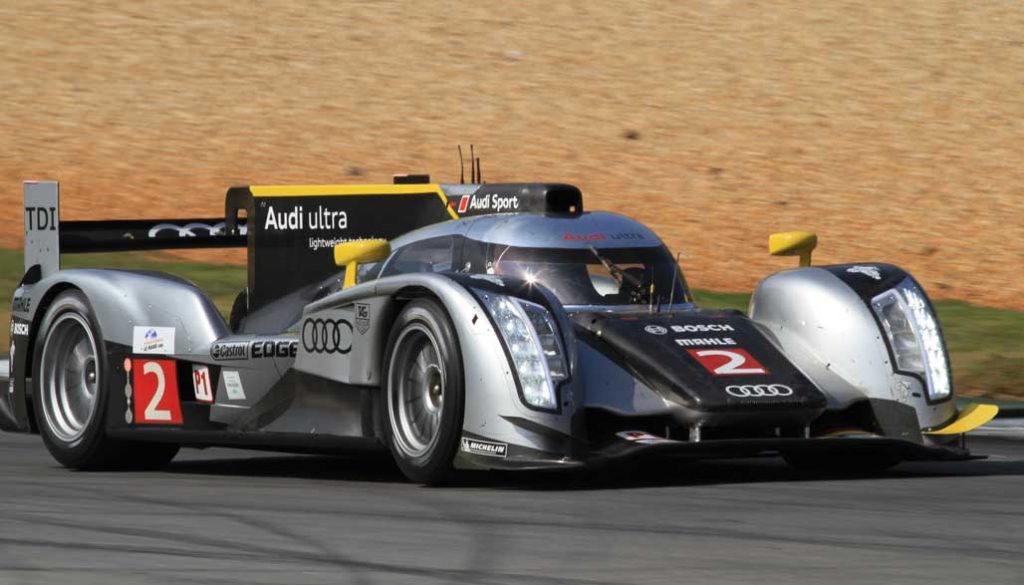 For many years I did not utilize Aperture Priority exposure mode because I did not believe that it was necessary (for the kind of photography that I do.) However, when I am shooting head-on images, I switch to Aperture Priority and set the aperture to the largest aperture. The camera then determines the fastest shutter speed possible given the lighting conditions and the specified ISO setting. This combination will usually result in a shallow depth-of-field and a blurred background. The longest lens you can get your hands on is the best one to use for these kinds of photographs. Remember that this technique can also be used to take photos from behind your subject!
 Three-quarter photos are usually of your subject as they are entering or exiting a corner. A successful three-quarter shot will contain a sharpness in the middle with blurred action or piece of track in front of, and behind, your subject. Given the variables of speed, location and angle of corners it is not possible to provide a specific shutter speed recommendation. The best method is to simply go out and try it and experiment with various settings. I recommend a zoom lens such as a 70-200mm for this type of photo as it allows for varying image cropping and location within a corner.
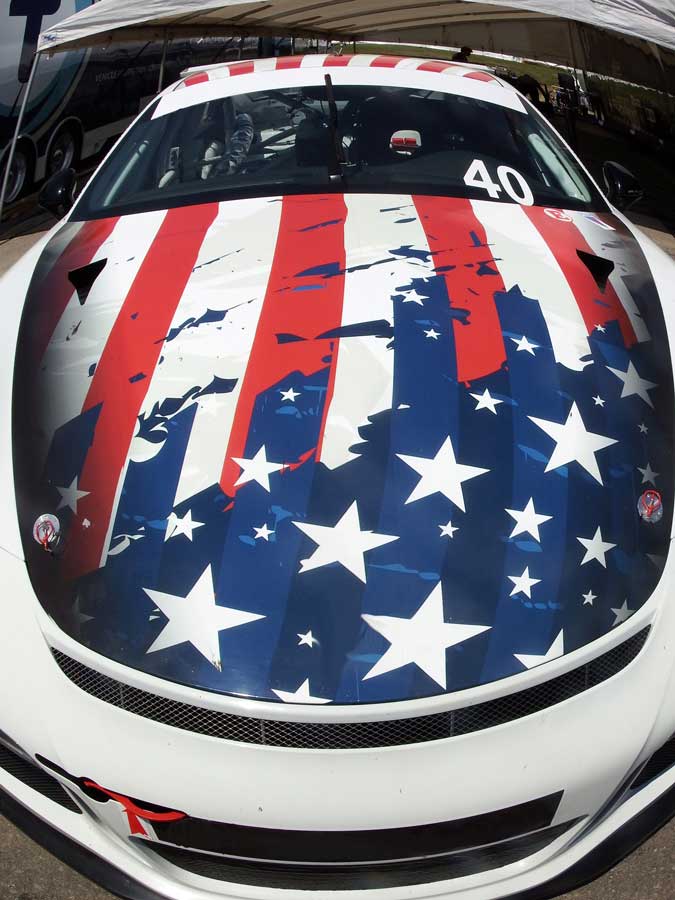
Most, but not all, venues will allow photographers to wander around the paddock area where the cars are being prepared by their teams. This allows you to get close to your subject. Given this is the case, a wide-angle lens will allow you to include more of a car within the frame or possibly some interior photos. I’ve started to use my Fuji S1 bridge camera with the fish-eye filter to achieve interesting perspectives for these type of images.
Please note that all of the images accompanying this post were taken without any media credentials.
John Larsen is this blog’s Senior International Travel Correspondent, whose website is www.photograffics.com.