
Today’s Post by Joe Farace
“Only bugs can truly appreciate the beauty of flowers”— Dov Davidoff
Mary and I have always been Volkswagen enthusiasts. Her involvement started when she was a baby and her Dad brought her and her Mom home from the hospital in their 1953 Volkswagen Beetle. Since we’ve been married she has owned two VW convertibles; a white 1985 Cabriolet and her current 2016 Beetle. During that same time, I’ve owned a 1999 New Beetle and a 2002 GTI 337.
Today’s featured images are a few photographs of Volkswagen Bugs that I made with my Olympus EM-10 Mark I mirrorless camera and Tamron’s 14-150mm f/3.5-5.8 Di III lens.
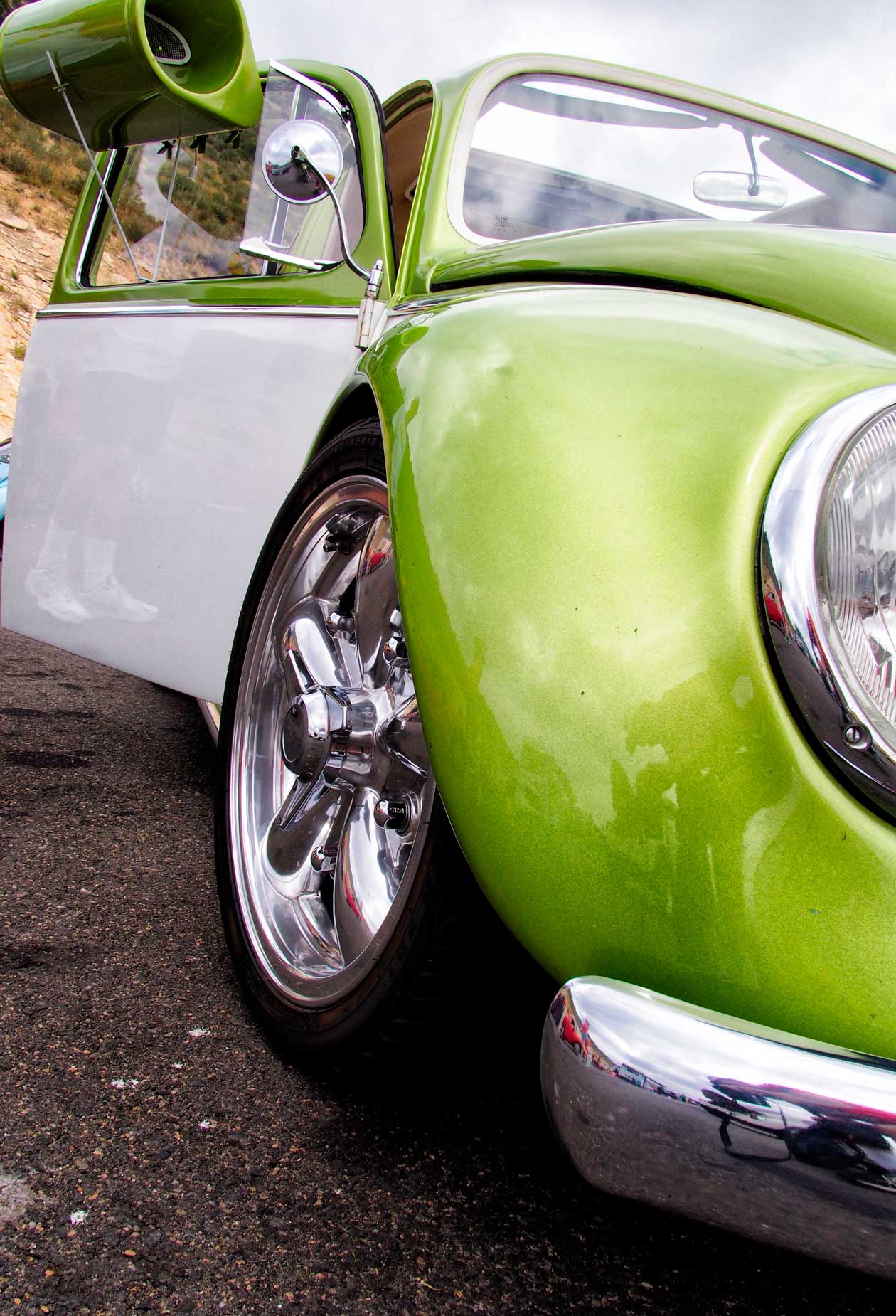 How I made this photograph: These days, one of the most popular styling trends for classic Beetles, like the one at right, is a two-tone look. This image was made as a kind of reverse Hail Mary shot–the EM-10 Mark I doesn’t have a fully-articulated screen– with the Tamron 14-150mm f/3.5-5.8 Di III lens set at 14mm and an exposure of 1/500 sec at f/11 and ISO 500.
Tamron’s 14-150mm f/3.5-5.8 Di III lens was designed for Micro Four-thirds system cameras. It has a metal barrel and is built to a high standard with top notch fit and finish. The lens has the equivalent angle-of-view of a 28-300mm lens. and a 52mm filter size.
The lens design uses one LD (Low Dispersion) glass element, two AD (Anomalous Dispersion) elements, two molded-glass aspherical elements and one hybrid aspherical element to reduce chromatic aberrations and improve image sharpness, clarity and color. Its autofocus uses a stepping motor that’s optimized for this lens and produces quick, precise AF and because it’s quiet. is well suited for video. The lens has a lock to keep the zoom from drooping when extended to 150mm but the example I tested had enough friction this was never a problem. Maybe as they said on the BBC’s Are You Being Served sitcom, it will “ride up with wear,”
I was never a guy to shoot lens tests using a resolution chart but prefer to make brick wall tests (so you don’t have to) and found at 40mm tat the 14-150mm was crisp in the center when wide open and slightly less so on the edges, which was identical to what I discovered at 150mm. As is typical for most lens designs the sweet spot is around f/8 and I was pleased with the crispness of my shots around that aperture. It’s DXO lens score of 14 indicates “lower-tier or budget optical performance, typically representing older kit lenses, compact camera lenses.” Make of that information what you will.
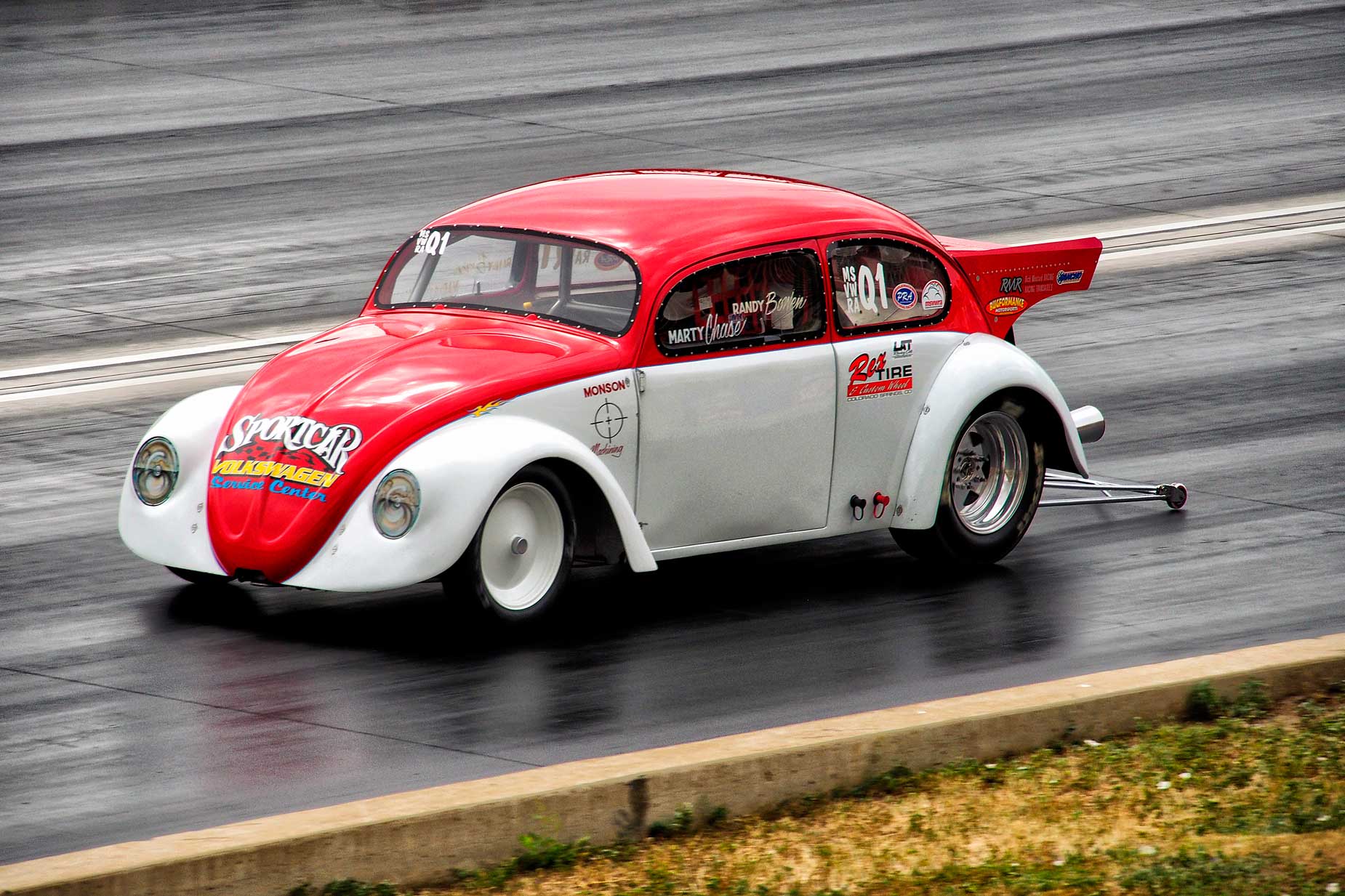
How I made this photograph: Two things to keep in mind when looking at the above image: It was one frame from a seven-shot panned series that was made in continuous mode from the stands at the (now closed) Bandimere Speedway. So it turns out that this “little lens that could” proved itself worthy of working in this kind of active environment. This image was shot at 150mm with an exposure of 1/160 sec at f/6.3 and ISO 320.
If you enjoyed today’s blog post and would like to treat me to a cup of Earl Grey tea ($3.50), please click here. And if you do, thanks so much.