
Today’s Post by Joe Farace
In order for the light to shine so brightly, the darkness must be present. —Francis Bacon
How I Made this Photograph
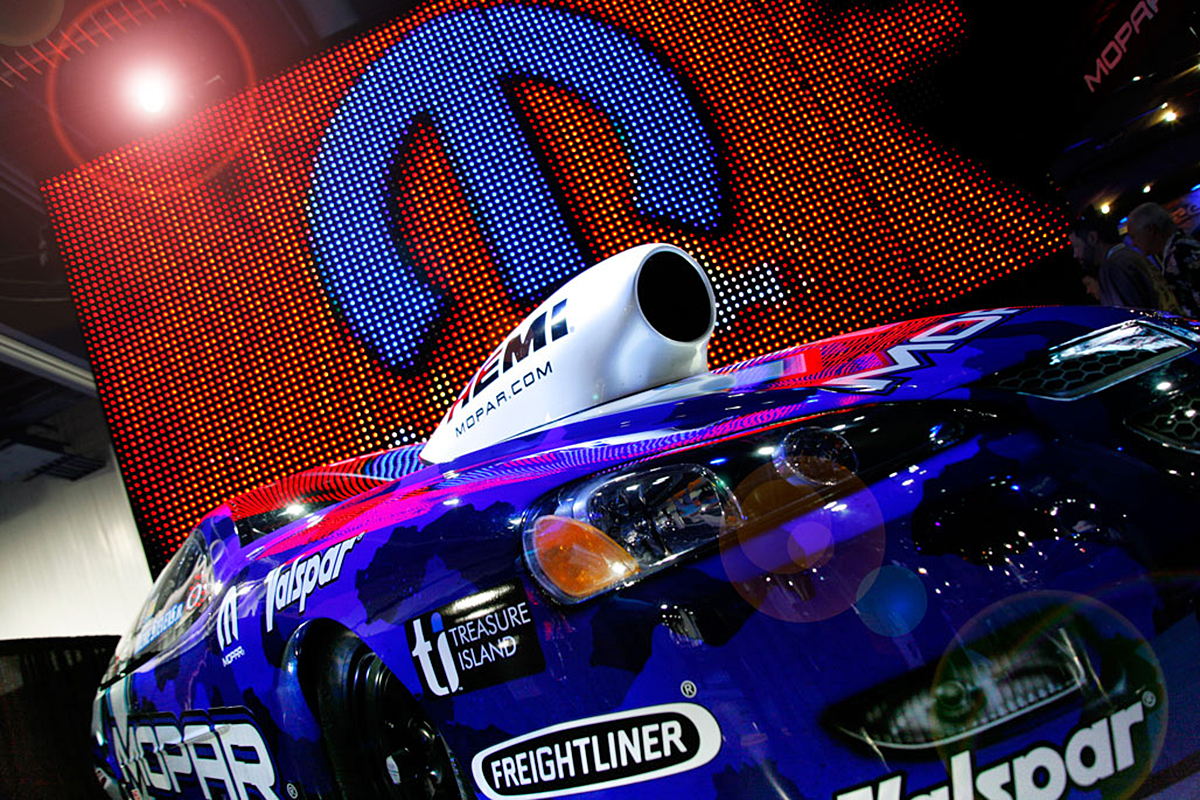
The above image is of a Dodge drag race car that I photographed at a SEMA show a few years ago. Obtaining “correct exposure” is a wildly popular topic on this blog. It’s been my belief that at some point, camera designers realized that no amount of automation will produce a perfect exposure under all possible lighting situation—although they continue to try— and what some people might like others might not.
The featured photograph was made using a Canon EOS 5D Mark I and an EF 28-135mm f/3.5-5.6 IS USM lens with an exposure of 1/50 sec at f/4.5 and ISO 800. At capture, I gave the image a plus one-third stop of exposure compensation but that was not quite enough to achieve a better, more accurate exposure, although ti helped with the background screen. Using the useful burn/dodge tools that are part of PhotoKit, I ended up doing some dodging to the bottom of the frame . Out of the box, the 28-135mm lens is far from flarey and I did use a lens hood but to balance the image I digitally added lens flare in the upper left-hand corner using Photoshop’s Render>Lens Flare command.

Along with photographer Barry Staver, I’m co-author of Better Available Light Digital Photography that’s available from Amazon for $21.50 prices with used copies starting at giveaway prices—five bucks—as I write this, which is less then your next cup of joe at Starbucks.