
Today’s Post by Joe Farace
Yesterday is but today’s memory, and tomorrow is today’s dream.—Khalil Gibran
Back when I used to travel a lot more than I do now, one question I would often get from readers interested in travel photography was: Do you prefer to use large capacity memory cars or smaller capacity cards? And why?
My answer is that I prefer to use large capacity cards. The other day on social media I saw a comment from someone who said they always uses small capacity cards because they felt that it discourages overshooting. There is certainly some truth to that statement and as a reformed “spray and pray” photographer, I understand an appreciate the concept. But like most of what you read on the Internet the suggestion is not the only way to accomplish that goal.
Case in point: When I was teaching a workshop in Miami a few years ago, I loaned all of my extra memory cards to some of my students and just kept one small capacity card for my own use. When the opportunity came to make a series of studio portraits of a lovely model I could only make a few photographs using my Olympus cameras at it’s smallest resolution settings resulting in a 293-kilobyte files that was more suitable for e-mail than making prints or for reproduction. But that’s a story for another time…
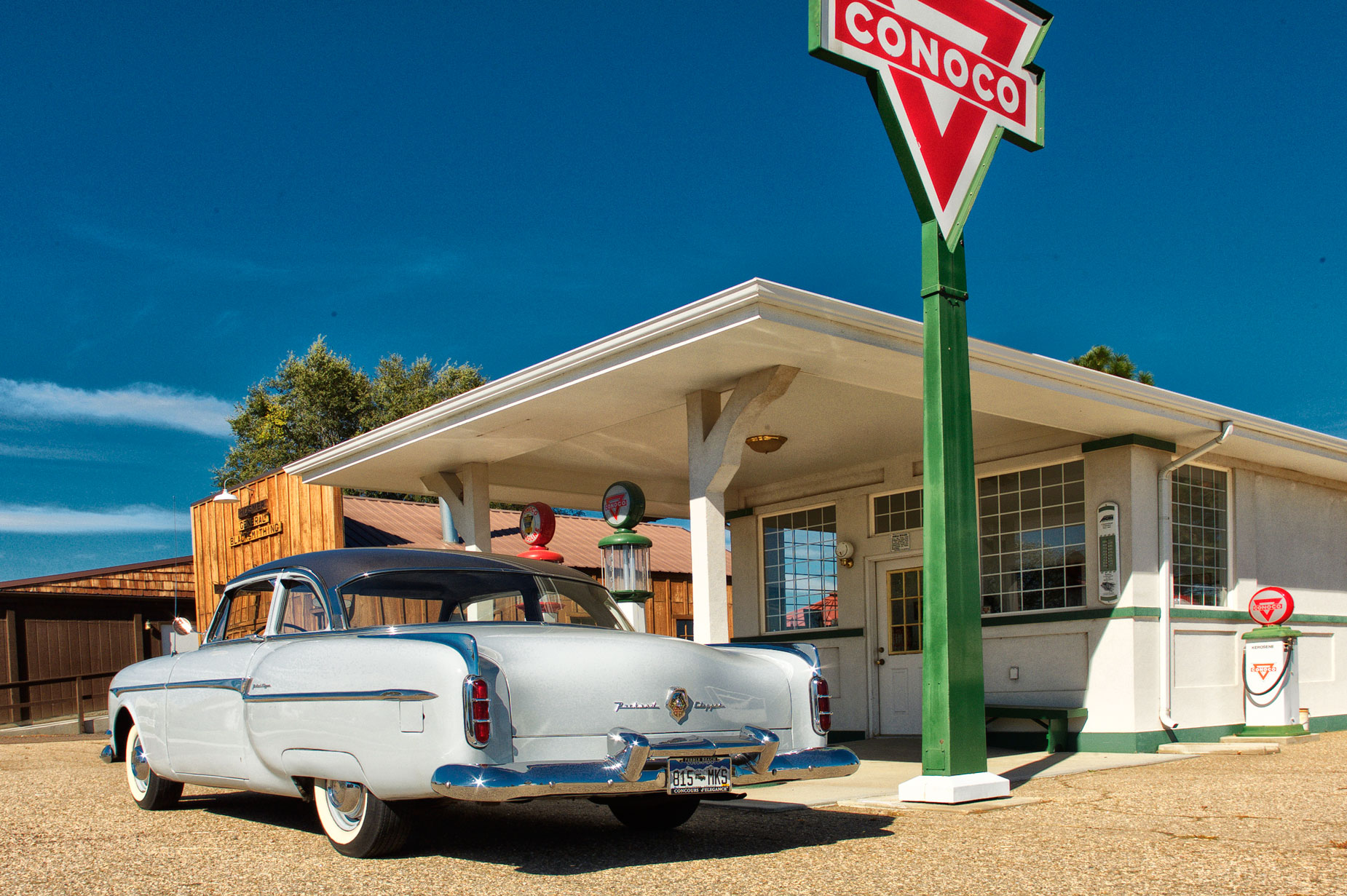
Caption: This image of my former 1953 Packard Clipper Club Sedan was made at the Adams County Historical Museum, near Brighton. Colorado. It was made using my dream camera: a (borrowed) Leica R9 with Digital-Modul-R back, which turned this classy film camera into a digital SLR. Lens used was a Summmicron-R 50mm f/2. Exposure was 1/250 sec at f/13 and ISO 200. On a personal note, every time I see a photograph of this old car, I miss it more.
Here’s Another Reason…
…that’s sometimes given for using more, smaller capacity cards than fewer larger ones: You’ll loose fewer images if you have a card failure or physically lose a card, something I’ve always disliked about the Wheat Thins-size of SD cards. Nevertheless,I still think you should use larger capacity cards. That way you won’t have as many to keep track of (or lose) or have to spend a an inconvenient time changing cards.
Please Keep In Mind
This is not a “my way on the highway” kind of blog and I prefer to tell you what I do, not what you should do. That’s why, you should make up you own mind about how any approach works for you—or doesn’t. No matter what system you use, when working with memory cards—especial in travel related situations—you might want to keep these following thoughts in mind.
 When putting a new card in the camera take the time to reformat the card. It just takes a minute or so and this simple step can prevent that card from becoming corrupted.
Don’t purchase memory cards with the Crazy Charlie Flea Market brand name. Really good cards from really good companies are worth the cost and the pain and misery they avoid.
Sometimes cards wear out. Flash memory has a finite number of write/erase cycles and the electrons inside can sometime get trapped where they’re not wanted and any voltage levels shift, will eventually cause failure. With newer, faster and cheaper cards coming along all the time think about buying new cards.
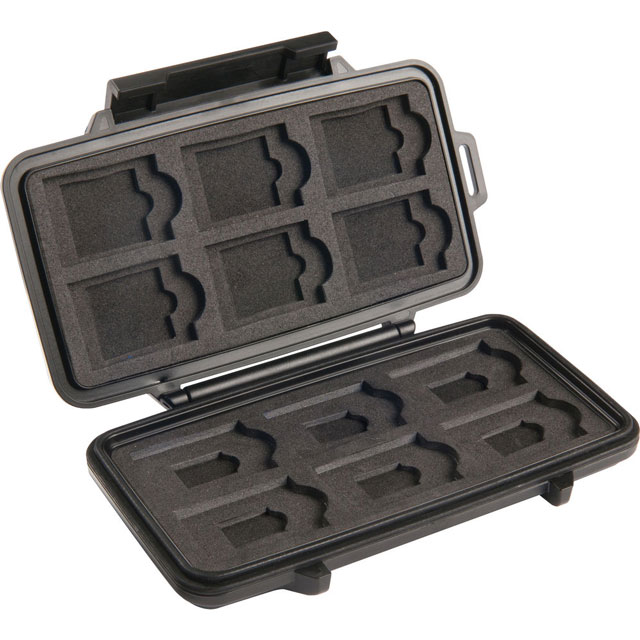
Protect your cards from loss and physical damage. To do that, I store the cards in the indestructible Pelican 0915 Memory Card Case. It costs around $25 and is cheap insurance.
If you liked this post and enjoy visiting this blog, you can show your appreciation by buying me a cup of Earl Grey tea ($2.50) by clicking here or you can just click on Contact and offer a simple “thank you.”