
Mary and I were having lunch one day and I told her I was having trouble coming up with a new theme for Tuesday blog posts and she suggested “Tricky Tuesday” as a way to share some of the tricks, tips and techniques I’ve used over the years in the studio when shooting portrait and glamour images. Here’s another try at this new theme…
Today’s Post by Joe Farace
I like styling girls that don’t normally dress in vintage clothes and don’t normally wear red lipstick; I like seeing those kind of girls restyled in a retro way. —Heather Renée Sweet aka Dita Von Teese
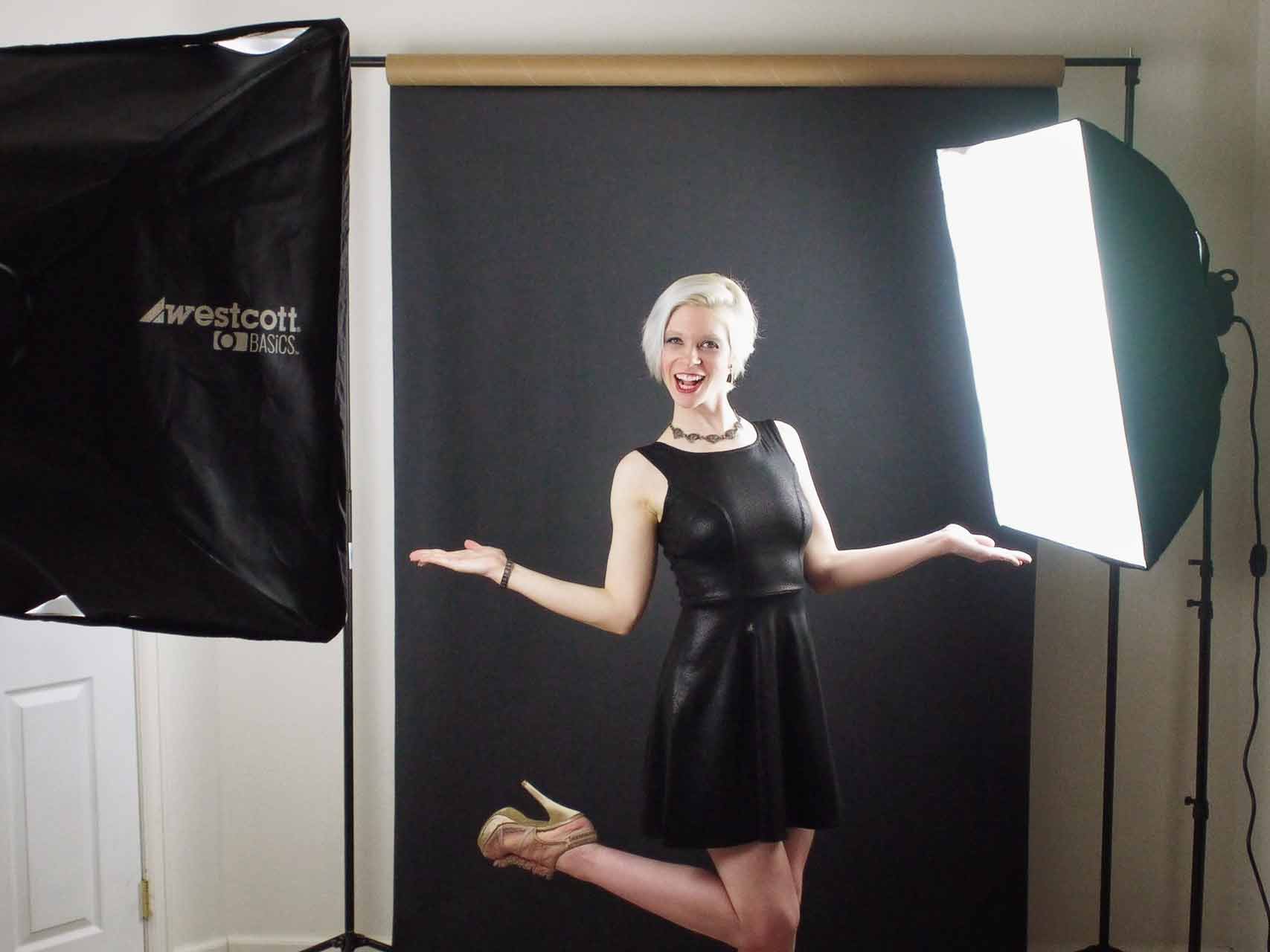 The problem with using traditional “hot” continuous lights for portraiture is that they are, well, hot and are not all that comfortable to work under for either the subject or the photographer.
Today’s featured portrait was made in my home studio using cold continuous lights, specifically Westcott’s Two-Light Daylight D5 Softbox kit as shown at right. This setup is no longer available and the company has replaced it with their (more expensive) U60-B Bi-Color LED 2-Light Softbox Kit.
LED vs Tungsten vs Fluorescent
In the not-so-distant past, daylight-balanced fluorescent bulbs were a perfect light source for digital portrait photography. fluorescent lights produce 30% heat to 70% light so they are efficient. Tungsten lights produce 93% heat and seven percent mostly red light. Fluorescent light is cooler, brighter, and comes out the winner for color balance. You would think that as LEDs, these lights would still qualify as continuous but “cold” but you would be wrong. Most of the electricity in an LED becomes heat rather than light with a ratio that’s about 70% heat and 30% light. So there’s that.
A digital camera’s chip is least sensitive in its blue channel and tungsten light has the least output in the blue and when combined with tungsten’s infrared (heat) output it can overcome a chip’s spectral response. The RGB output of daylight-balanced fluorescent lamps, on the other hand, more closely match the receptive RGB spikes of the imaging sensors found in most/all DSLRs or mirrorless cameras. But, see text at bottom of this post.
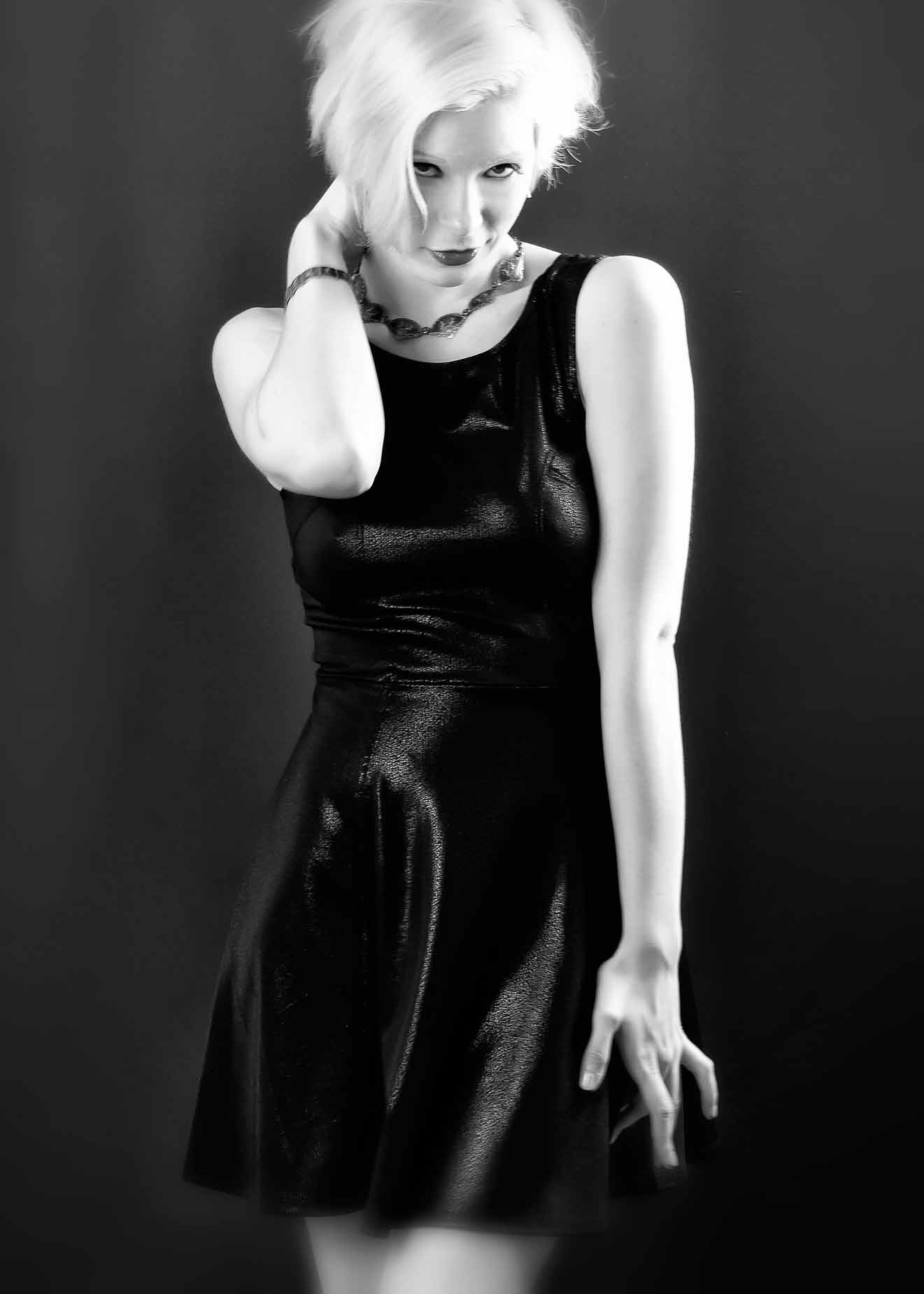 How I made this portrait: It seems like the last few Tricky Tuesday posts have featured images of Pamela Simpson and there’s probably several reasons for that. One is the longevity of of our photographic relationship—our first shoot was in 2012—and the other is that over all of the years we’ve worked together, even recently, she and I have shot in a variety of genres and styles. Here she is doing a wonderful impression of Jean Harlow—look her up on IMDB.
Pam was photographed using a Panasonic Lumix GH4 with a Lumix G Vario 14-45mm f/3.5-5.6 lens (at 45mm) and an exposure of 1/30 sec at f/5.6 and ISO 640. The background was a Savage Infinity black vinyl backdrop mounted on JTL background stands. The color image was converted to monochrome using Silver Efex with the Vignette Blur filter from Color Efex added to soften the edges and add to the overall retro feel.
Notes About Fluorescent Lighting: While the D5 and similar fluorescent portrait lighting systems were inexpensive and produced excellent continuous lighting, there was a problem with bulb disposal that killed off most of these kinds of systems. Because the bulbs contain mercury and other hazardous materials, fluorescent lights, including CFLs, can’t be disposed of as regular trash and are considered to be household hazardous waste and need to be recycled or disposed of properly through designated programs.
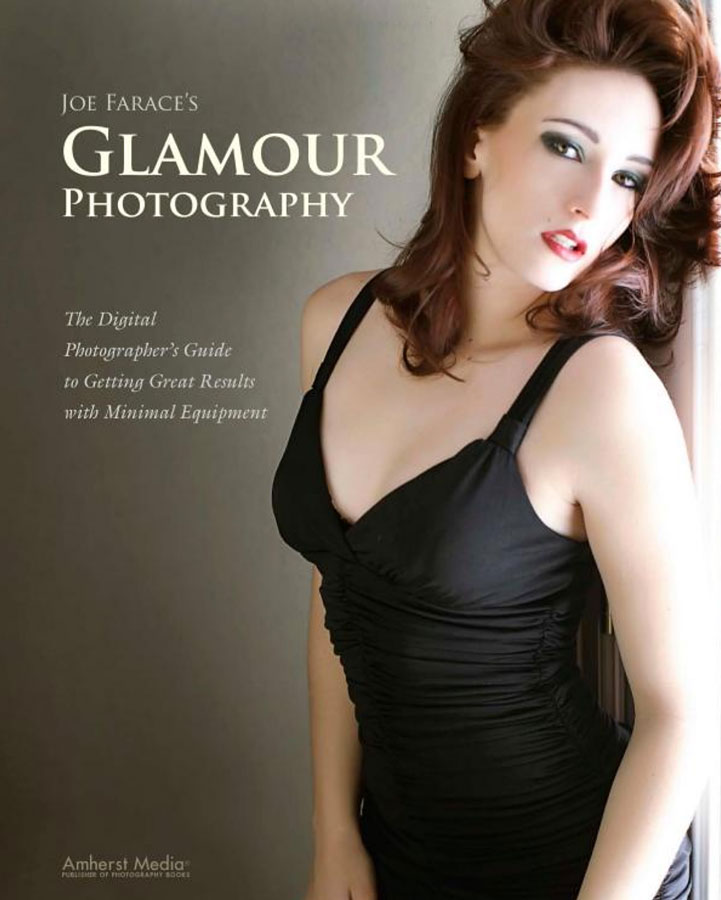 My book Joe Farace’s Glamour Photography is full of tips, tools and techniques for glamour and boudoir photography and includes information on the cameras and lenses used as well as the complete exposure data for each image. New copies are available from Amazon for $30.54 with used copies starting around ten bucks as I write this. The Kindle version is $19.99 for those preferring a digital forma