
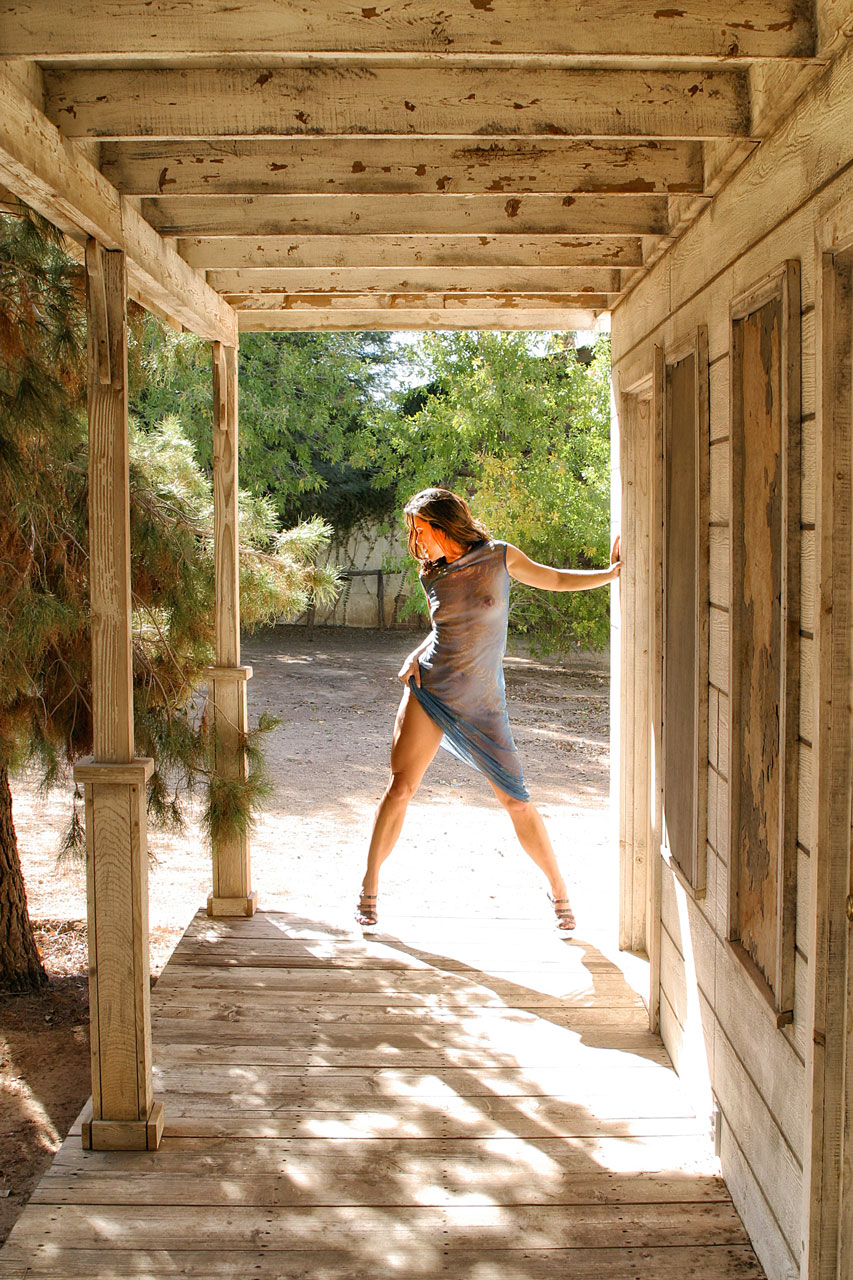
It’s #anythingcanhappenday and today’s post features a photograph of the incredibly talented model Tomiko, who I photographed the first time during a group model shoot in Phoenix, Arizona,
Today’s Post by Joe Farace
I close my eyes, then I drift away, Into the magic night, I softly say a silent prayer like dreamers do—Roy Orbison
 Virtually everyone dreams each night, even if some of us don’t always remember them. In talking with my friends, some don’t remember their dreams and when I was younger that was true for me as well but that hasn’t been the case for a while.
With Mary and I it’s different. When we sit down to breakfast, each morning we always talk about our dreams. This morning, as I write this, my dream was about my speaking to a large group of photographers about portraiture. I planned to talk about posing but since I usually don’t prepare an outline when giving these kinds of presentations, I just talk. In my dream, I spent most of my time taking about “seeing the light’ as if that was the most important part of making a portrait before jumping into a discussion on how to control exposure. And then I woke up…
In Dreams
Light has four major characteristics: quality, quantity, color and direction. No matter what exposure mode you select on your DSLR or mirrorless camera, seeing how light appears in a scene affects a photograph’s impact and it’s the key to mastering the art of proper exposure. Yes, obtaining correct (for the scene) exposure s as much art as it is science because the choice of camera settings will control the image’s mood.
Chiaroscuro, as Italian Renaissance painters called it, is the use of differing contrasts of light to achieve a sense of three dimensionality within a two dimensional frame.
Part of learning to seeing the light isn’t just looking at what you think the subject of your photograph might be but, instead, involves looking at both the shadows and highlights within that scene, keeping in mind that the difference between the two determines its contrast. Sometimes you’ll hear the term dynamic range used in relation to the gamut of contrast in a scene and today’s featured image has plenty of contrast.
 If understanding how to see the light is part of making consistent and correct exposures, the other part is a working knowledge of the technology inherent in the process. And that involves practice. Learning to see the light isn’t all that difficult but involves not only making new photographs but also taking the time to analyze those images after you’ve created them. Tip: Try to make a new photo every day and then see if you can learn something, anything really, new from the experience.
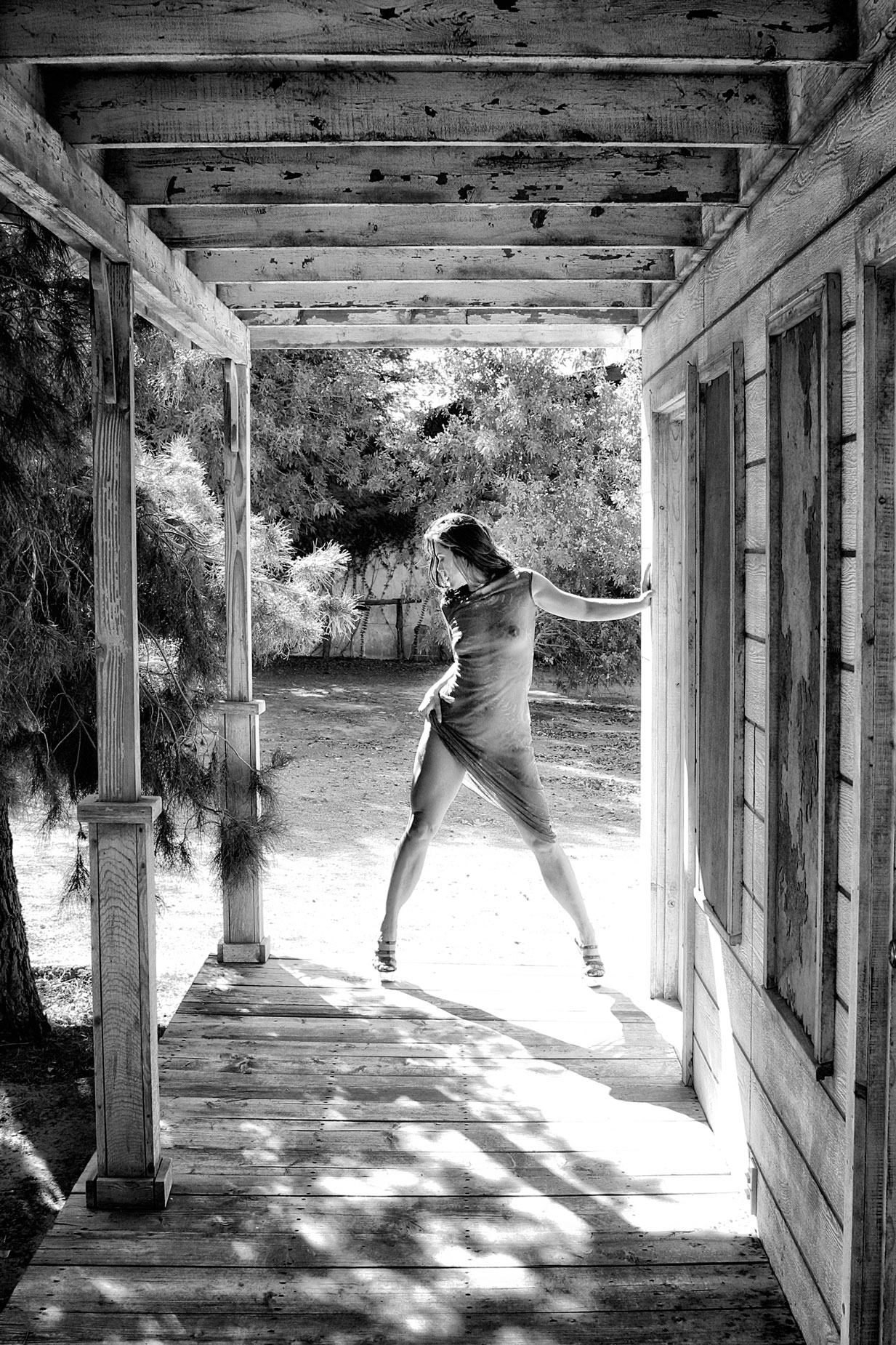
How I Made this photograph: I hesitate to call this image a portrait because Tomiko is so small within the frame but it speaks to me like my dream’s admonition to see the light when making a portrait. The image was made using a Canon EOS D60 with an EF 28-105mm f/3.5-4.5 II USM at 28mm, which is about a 45mm equivalent angle-of-view for an APS-sized sensor. There is some barrel distortion evident in the lens as you can see in the curve of the porch’s roof beams. This lens has a DxO score of 23 indicating that it’s a mid-to-high level of sharpness but that rating seemingly does not address the obvious distortion. The image’s exposure was 1/125 sec at f/7.1 and ISO 200 with a plus one-stop exposure compensation to compensate for the backlighting but was maybe not quite enough. No flash was fired although that might have helped too or maybe not because I was standing so far away from Tomiko.
I started processing the image as a color file so what you see above right is not SOOC. But then I got to thinking it might look better as a black and white photograph and I processed the file with Exposure X4 using its Panatomic-X preset, topped off with the Tonal Contrast filter from Color Efex. Which version do you like best? Let me know.
If you enjoyed today’s blog post and would like to buy Joe a cup of Earl Grey tea ($3.50), click here. And if you do, thank so very much.
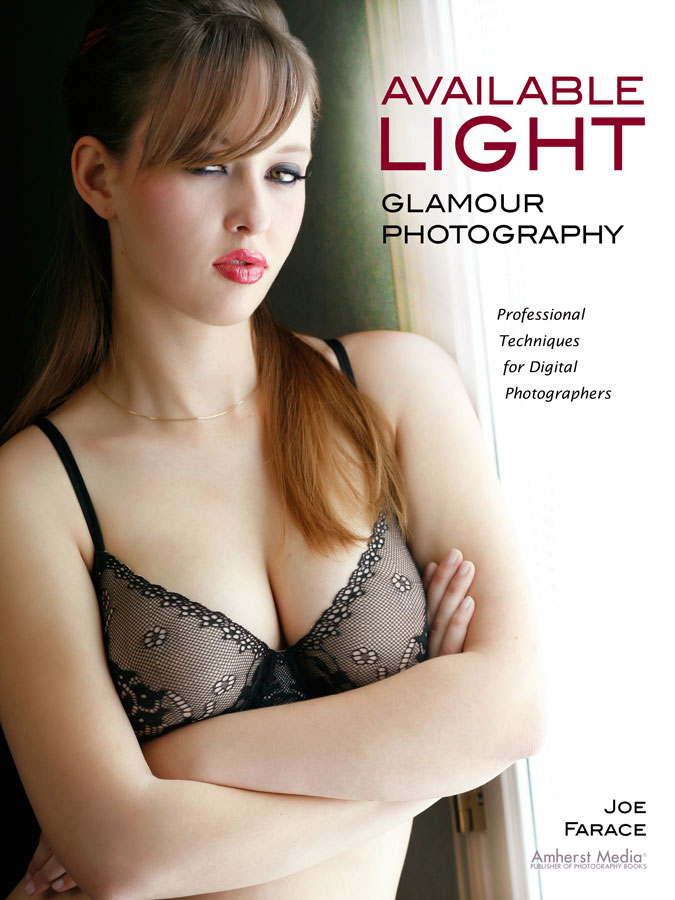
Several photographs of Pam appear in my book Available Light Glamour Photography that’s available from Amazon with used copies of the book for $49.94 as I write this. The Kindle version is $27.83 for those preferring a digital format.