
I stole the idea for the “Things I Promised Not to Tell” series from a political podcaster but no posts in this series will be about politics. Instead it will feature vignettes from my photographic and sometimes personal, life. Today, it’s all about some times when I was a judge at print/photo competitions.
Today’s Post by Joe Farace
What you see is what you get. What you hear is who I am.—Angie Stone
What you see is what you get. —Flip Wilson
As you can see by the above quotes, there’s more than one way of looking at a topic.
In the not-so-distant past I was occasionally asked to be a judge for photographic completions. During these events, while listening to other judges talking about a competitor’s images I was struck by how they almost always began by talking about it’s composition. I honestly believe that was because they didn’t really know what else to say and didn’t want to upset the person who entered the print. (More on that later.)
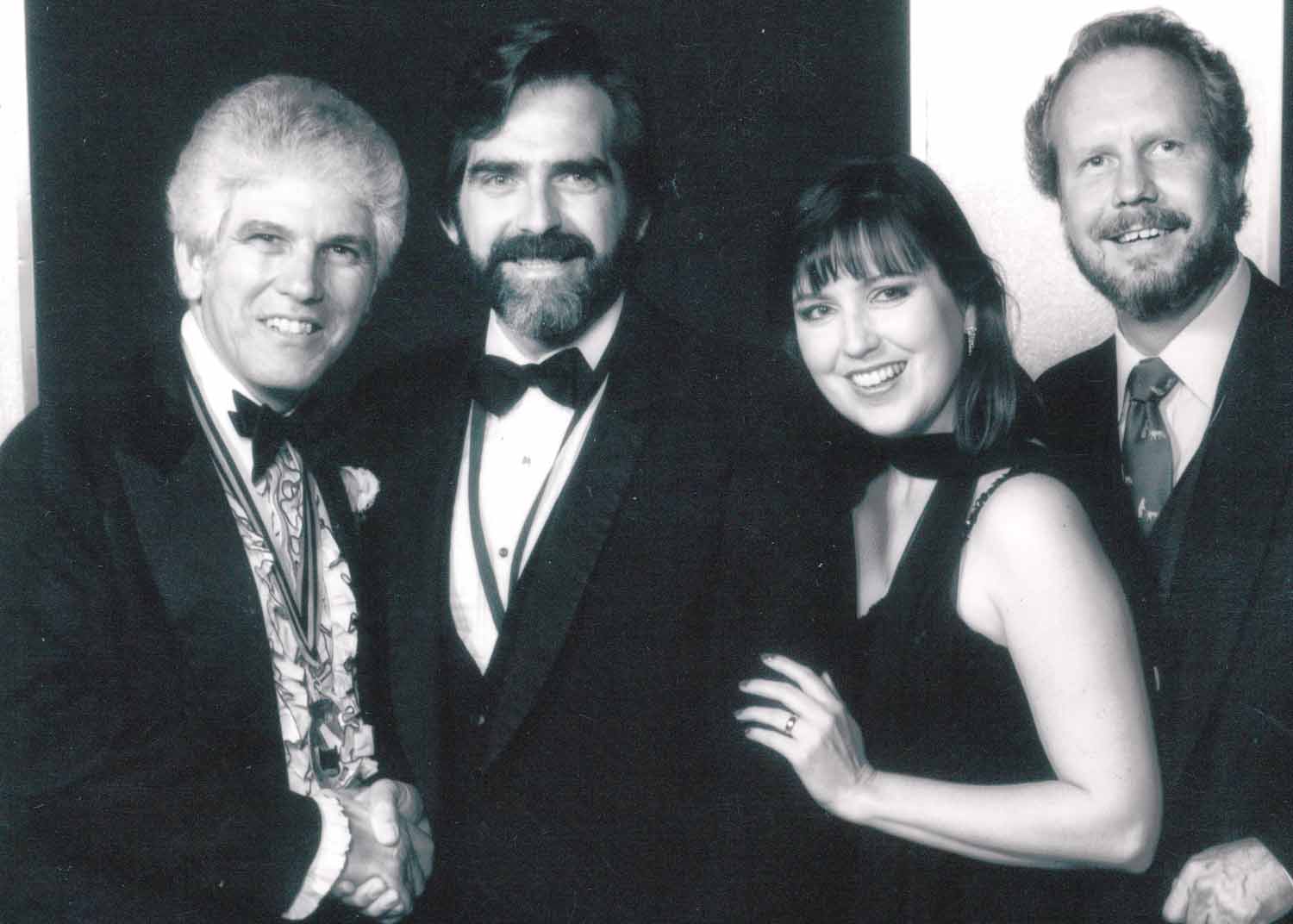
As a younger man—see below photo of me receiving my PPA Photographic Craftsman degree—I used to judge Professional Photographers of America (PPA) completions at different state conventions. In that setting, you have little time to make a decision and assign a score to the photograph, so I would ask myself the following questions:
- Does the image have impact?
- Does it present its subject matter in a way I haven’t seen before
That’s it. Keeping PPA guidelines in mind, I would assign an appropriate number number to the photograph but as mentioned above, sometimes there’s more to the story…
It Was Funny at the Time
 I was once asked by the PPA of a western state to be a judge for their print competition at their annual convention. The organization also asked Mary to do so as well; it was the first and only time she was a judge at a PPA event.
At the time PPA or the state organization had a rule (and may still do, I don’t know since I haven’t been a judge for a while) that if there was more than a ten point spread between the highest and lowest judge’s scores, it triggered an automatic challenge. The people giving high and low scores were required to state the reasons for the scores in the hope that they could sway the other judges to reevaluate the image. Then the judging was repeated with the final score being, well, final.
After a few prints were judged, an automatic challenge occurred and, guess what? The high and low scores belonged to Mary and I. (We were at opposite ends of the judge’s panel.) There was a stunned silence from the audience. After 10 minutes or so passed in the judging, another automatic challenge occurred. You guessed it; It was Mary and me again. This time the audience reacted in spontaneous laughter. And so it went during the entire judging process. Sometime Mary was low, Sometimes I was but each time a challenge occurred, the audience laughed their asses off.
And then there was this other time…A local camera club whose membership consisted of corporate and aspiring professional photographers had asked me for several years to judge their annual competition, which was somewhat private. Unfortunately, it always conflicted with my attending an out-of-state trade show. One year, the show was on a different date so I told them I was available to be a judge and it was a pleasant experience, at least it was for me, For some of the entrants who attended the judging and the organizers, it was not. It turned out that since these photographers had aspirations to become professionals, I judged their images as I would for a PPA event and that turned out to be a bad idea. The other judges were more sensitive to the entrant’s feelings and judged them, let’s say “sympathetically.” My scores and comments were, I felt, realistic but now I realize, in hindsight, that I might have been a little too critical, They never asked me to judge another competition.
There are more, similar stories…
Postscript: Right now, I don’t judge any kind of photographic competitions. The way that some of them are organized makes it an unpleasant experience for me and I personally feel the best way to improve your photography is to—“just keep banging those rocks together”—keep shooting images and have a friend or mentor offer insight that might help you improve the quality of your images. BUT don’t believe everything they say—even me—because you may be charting your own way in the world and what you have going may be priceless.