
Yesterday was #anythingcanhappenday but that day’s planned post was preempted because of my Post about September 11. So #anythingcanhappenday was moved to today! Recently, I’ve increased the number of portrait and glamour related posts appearing on the blog. Based on an increased number of page views, people seem to be enjoying them. (If you don’t; let me know.)
Today’s Post by Joe Farace
Taking pictures is like tiptoeing into the kitchen late at night and stealing Oreo cookies.”— Diane Arbus (1923-1971)
 Any photographer who’s ever shot a portrait knows what the late Ms. Arbus was talking about. I haven’t had an Oreo since my pal Barry Staver brought over two package of cookies in new flavors for us to taste for our next “Pixels, Grain and Cookies” podcast. In fact, Barry wrote a post—Cooking in the JPEG Kitchen —on this very topic.
Here’s The Recipe
For most photographers, all of the ingredients that are required for creating successful glamour portraits are easy to find: All you need are a model, a camera and some simple lighting equipment but like any good recipe it’s how these components are prepared that goes into cooking up a delicious portrait, starting with the posing.
For many women their personal experiences with posing for portraits goes back to their high school or wedding photographs that were, let’s be charitable, formulaic at best. Over all the years I have been creating glamour imagery, I’ve developed a few techniques for making poses flow smoothly during a session but also making the process enjoyable for the model. You can read about some of these techniques in this post. But to me, the most important consideration is making sure these women’s portraits don’t look the same as other images I’ve created.
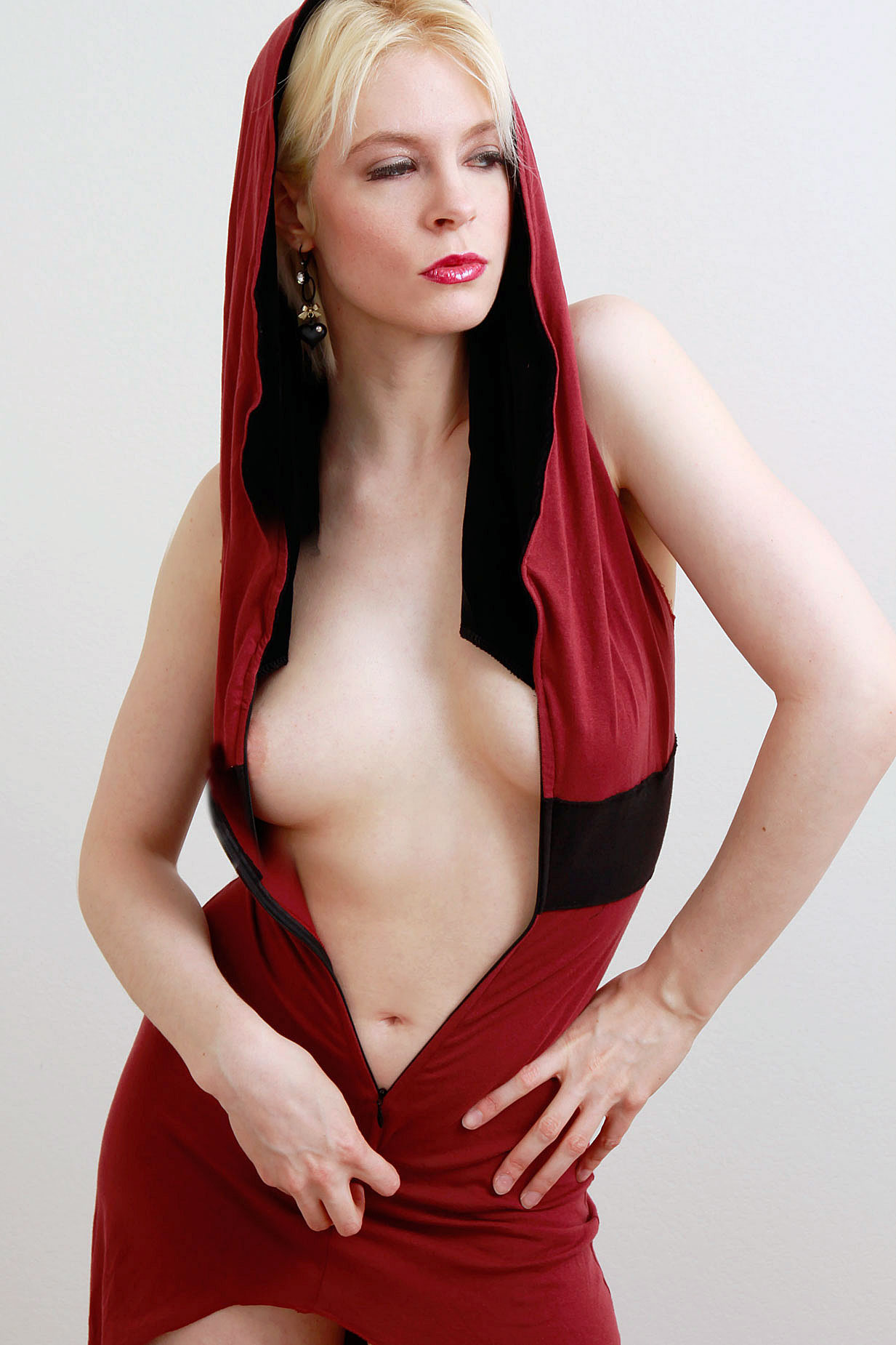 How I made this portrait: I photographed the dynamic Pam Simpson in my my home studio using high key techniques with the simplest background. Backdrops may not be a portrait’s main focus but they not only can enhance an image, they can improve it in many ways by placing all the photograph’s emphasis on the subject. Yet, a background can be as much an important part of the photograph as the person standing in front of it. Instead of a high key approach, you could use that same background, unlit and barely visible and the subject will remain the main focus while the background is reduced to a supporting role.
About the pose: For today’s featured image I asked Ms. Simpson to bend at the waist and unzip her dress “a little bit.” How much she chose to unzip/zip it was left up to her comfort level. (There were some poses that went beyond what you see here and could only be featured in one of my Password Protected posts, if anyone’s interested.)
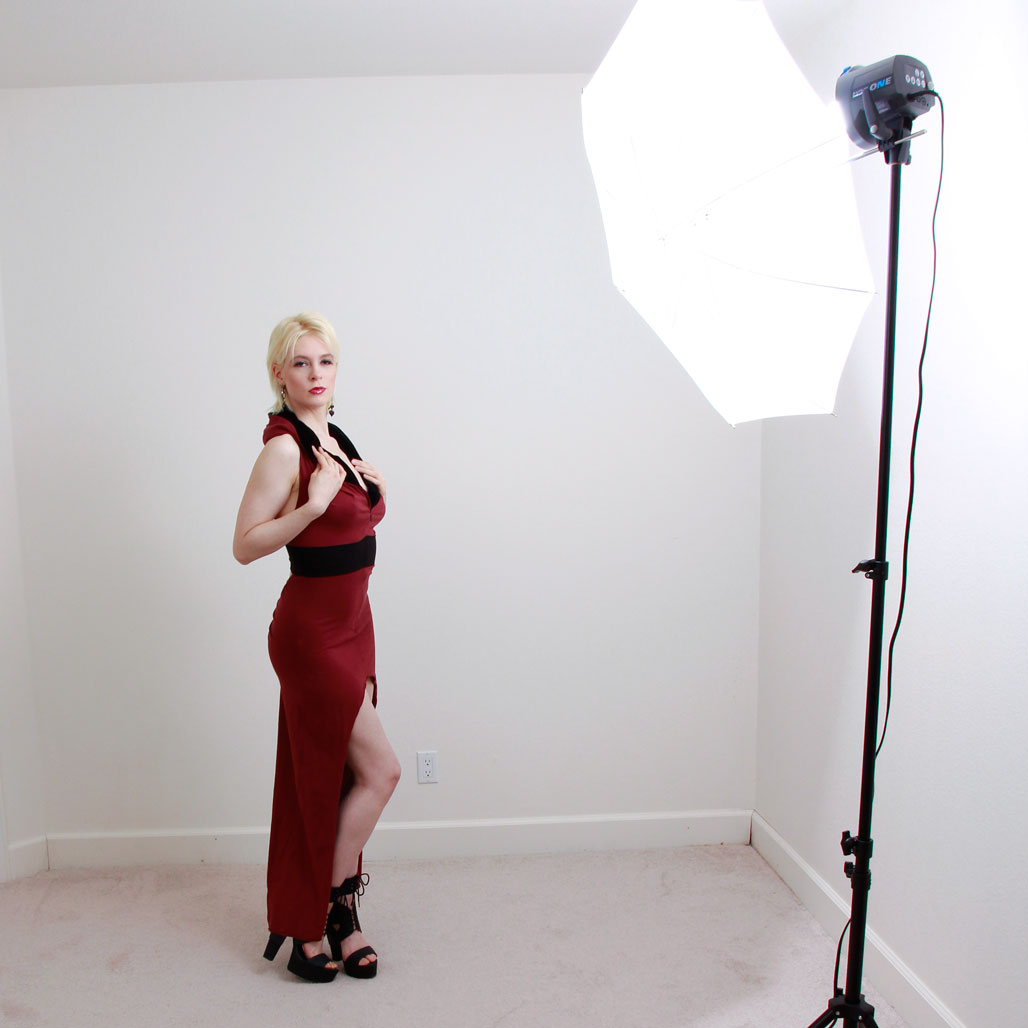
Photographing a portrait subject against seamless paper, or a blank wall in this case, is the ultimate test of a photographer’s ability to make something from nothing; you’re shooting without a net. To add this basic approach, the lighting for this portrait couldn’t be simpler. A single monolight with a 32-inch (81cm) umbrella in shoot-through mode was placed at camera right as shown in the above right setup shot. I didn’t even use an “official” photographic background. The formerly white (now grey) walls in my studio provided all of the high-key goodness I wanted and needed for this image.
The camera used was a Canon EOS 60D with EF-S15-85mm f/3.5-5.6 IS USM lens (at 55mm) with an exposure of 1/125 sec at f/11 and ISO 200. The original JPEG image file (before my current RAW+JPEG regimen) was retouched with Imagenomic’s Portraiture and then was enhanced with Vivenza.
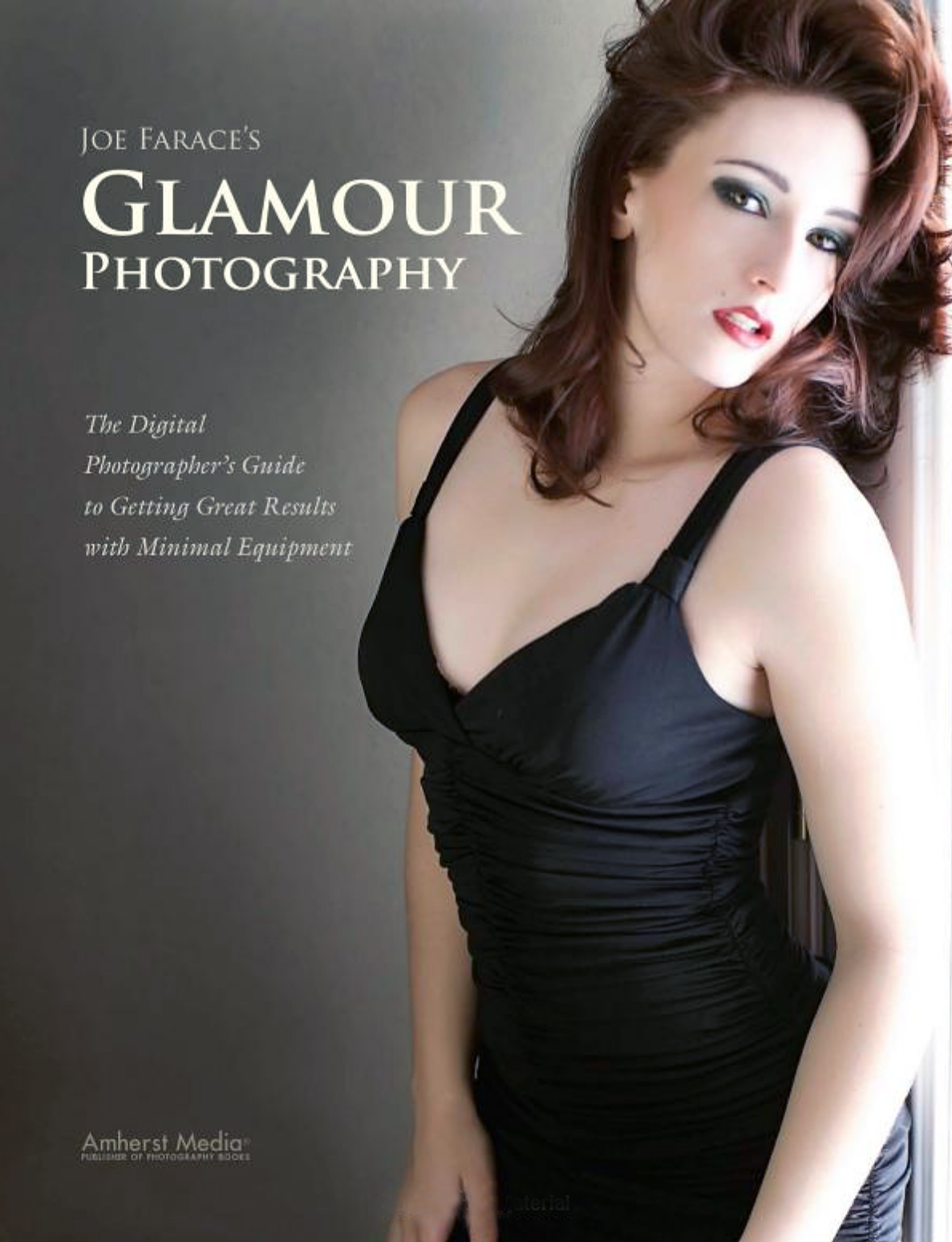
My book Joe Farace’s Glamour Photography is full of tips, tools and techniques for glamour and boudoir photography and includes information on the cameras and lenses used as well as the complete exposure data for each image. New copies are available from Amazon for $30.54 with used copies starting around ten bucks as I write this. The Kindle version is $19.99 for those preferring a digital forma