
It’s “Tricky Tuesday,” a way for me to share some of the tricks, tips and techniques I’ve used over the years when shooting portraits in the studio. This Tuesday’s post features Dahlia, a young model I only got to photograph one time. It’s also I Want You to be Happy Day giving each of us the opportunity to brighten someone’s day through simple acts of kindness and selflessness.
Today’s Post by Joe Farace
Black and white creates a strange dreamscape that color never can. —Jack Antonoff
 As a creative medium, what some traditionalists call “monochrome,” digital imagers might prefer the term “grayscale,” and to paraphrase Billy Joel, it’s still black and white to me. But there’s more to black and white photography than an absence of color.
Sometimes the nature of the subject themselves demands the image be photographed in black and white. Arnold Newman’s portrait of composer Igor Stravinsky could never have been made in color and have the same impact that it has in monochrome. Some professional photographers tell me me that they’re seeing a higher than normal demand for black and white portraits for both individual and family portraits.
Black and white is a wonderful media for making boudoir portraits because the lack of color immediately simplifies the image, causing you to focus on the true subject of the photograph instead of their clothing or the background.
 Filters & Factor
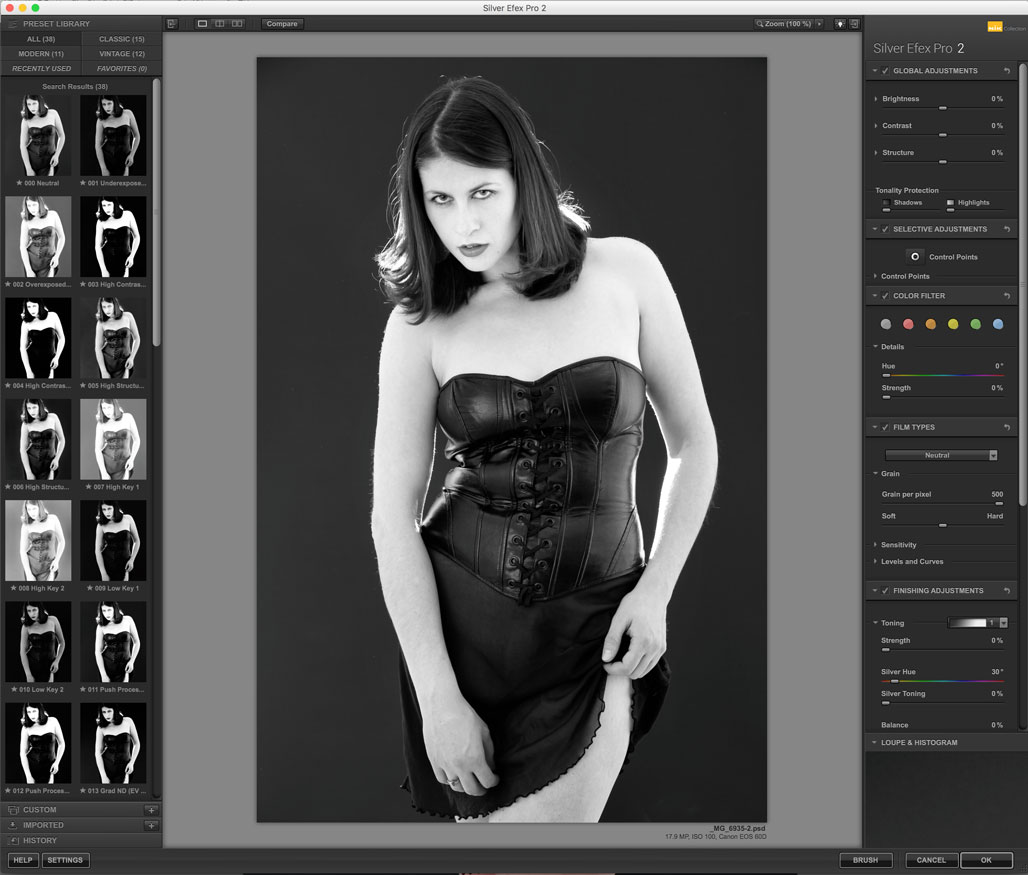
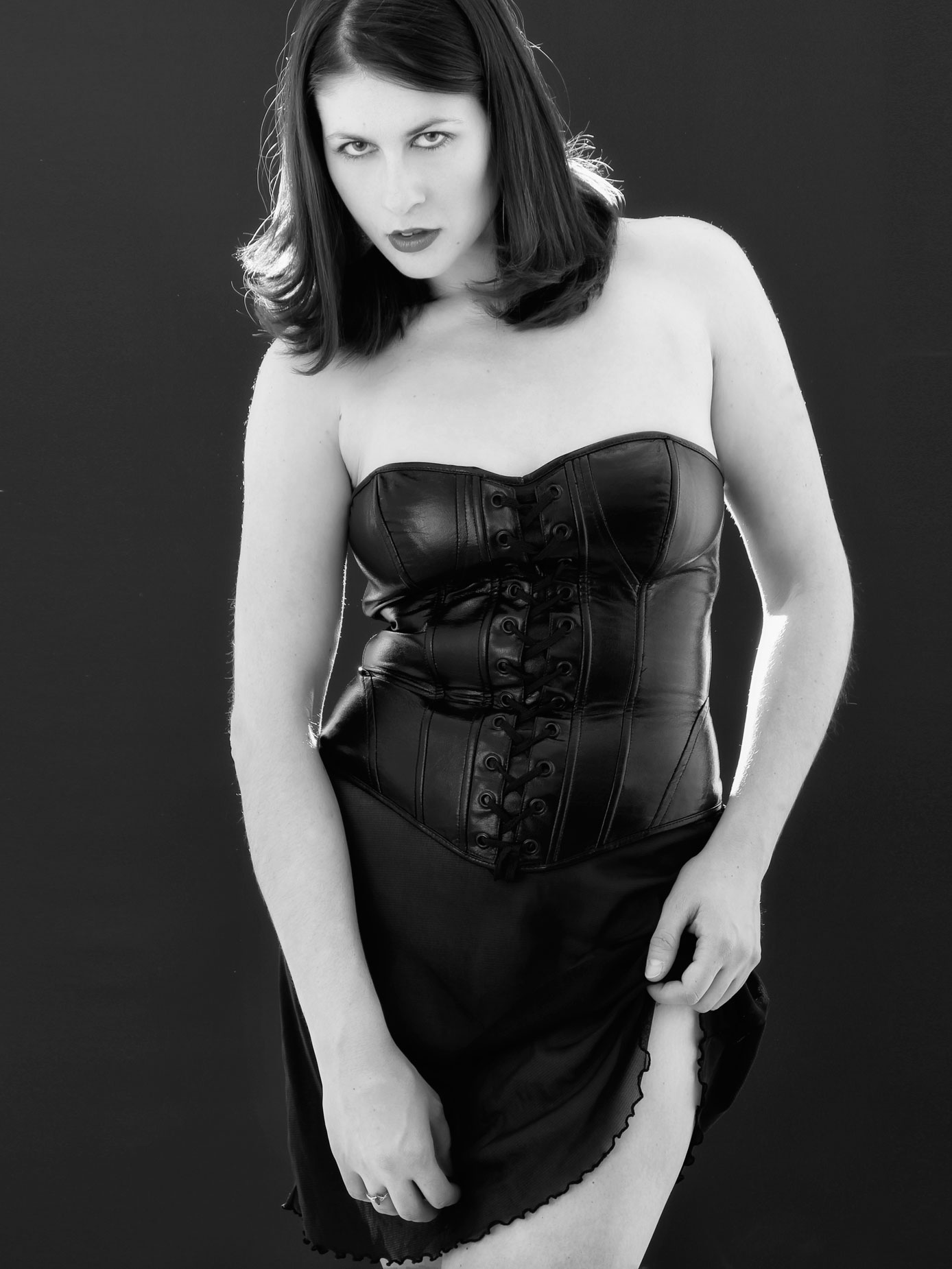
In analog photography, the term filter factor refers to the amount of light that a filter blocks from striking film and It’s typically shown as a number indicating the amount of light reduction. In digital images, the use of digital filters let you control the contrast and how colors are rendered in black and white by using Photoshop-compatible plug-ins such as Silver Efex. When shooting black and white film, you could use on-camera color filters to archive the same effects although there are some important caveats: While most in-camera metering systems automatically take filter factors into consideration, you still have to look through and compose through a colored filter whose factor might range from three and five. In addition, a purely digital solution is easier to use because the exposure for no filter is identical to one made with a green filter, such as the green filter that was used for Dahlia’s portrait at left.
How I made this Portrait: Dalia was photographed in my 11×15-foot home studio with a Canon EOS 60D and EF-S15-85mm f/3.5-5.6 IS USM lens (at t59mm) with an exposure of 1/125 sec at f/8 and ISO 100. The background is a Savage Black Infinity vinyl backdrop that hung from JTL background stands. The JPEG file was converted to monochrome using Silver Efex using their Neutral preset with a green filter.
Black and White photography. especially as it applies to making portraits, is themain topic of the Friday the 13th edition of the Pixels, Grain & Cookies podcast, where Barry Staver and I come to a startling and perhaps erroneous conclusion about monochrome photography. Barry, particularly, has some interesting comments about black and white wedding photography and what clients like and will pay for. You can find the podcat on my YouTube channel now.
 If you enjoyed today’s blog post and would like to treat me to a cup of Earl Grey tea ($2.50), please click here. And if you do, thanks so much.
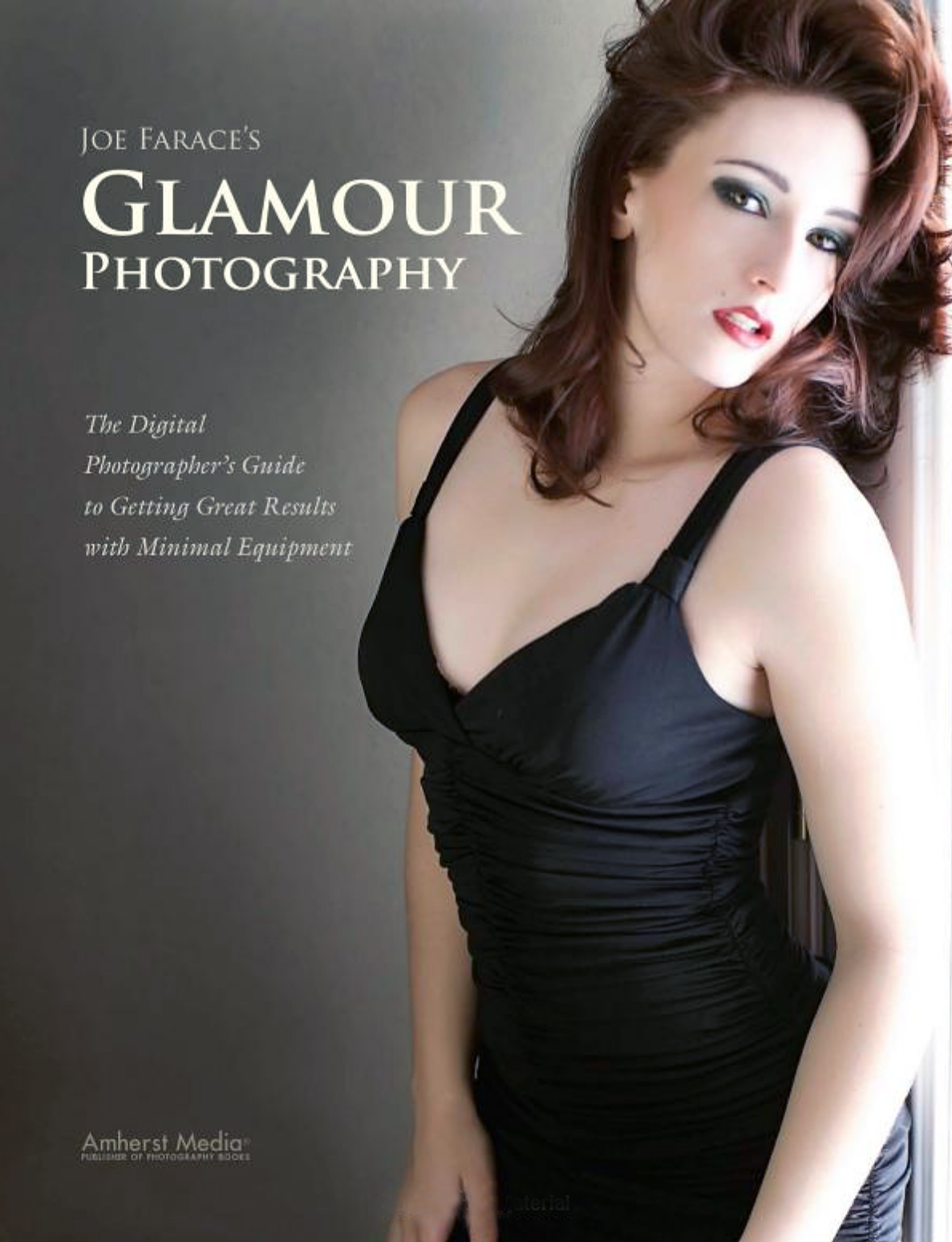
My book Joe Farace’s Glamour Photography is full of tips, tools and techniques for glamour and boudoir photography and includes information on all of the cameras used as well as the complete exposure data for each image. New copies are available for $39.65 with used books starting around thirteen bucks.as I write this. The Kindle version is $19.99 for those preferring a digital format.