
Today is #anythingcanhappenday on the Blog and October 20 is also National Day on Writing that celebrates the vital role that writing plays in everyday life. The day was established in 2009 by the National Council of Teachers of English to highlight the different ways people write every day–including this blog–and to encourage people of all ages and skill levels to value this craft.
Today’s Post by Joe Farace
To be natural is such a very difficult pose to keep up.—Oscar Wilde
One of the most important aspects when creating portraits is knowing how to pose your subjects. You may be able to technically photograph a person but if their pose appears awkward, it it will produce less than satisfactory results. That will be true even if you’re just making the portrait of a friend, just for fun,
 In the studio you may be working with people who haven’t been photographed since their wedding or high school senior portrait, so it’s important to understand a few basic posing techniques that will help make your subjectss look their best while being comfortable at the same time.
Here’s A Basic Pose to Start With
When photographing women standing, the basic pose I use starts by asking the subject to place their body in a three-quarter pose–not square to the camera–although with slender subjects. Then I ask them to put all their weight on the foot that’s farthest from the camera. If they’re comfortable in that position, that will be obvious by their expression.
Next, refine the pose by showing them how their head should be tilted and by having the subject move their hands and arms slightly, all the while changing your camera angle or zooming the lens to tighten or loosen the image’s composition. You may hear or read about “masculine” and feminine” head tilts but I never did understand that concept. Instead, I look at the subject and make a judgement about what looks best. It might even be straight ahead looking directly at the camera. as Alice is doing in the featured portrait.
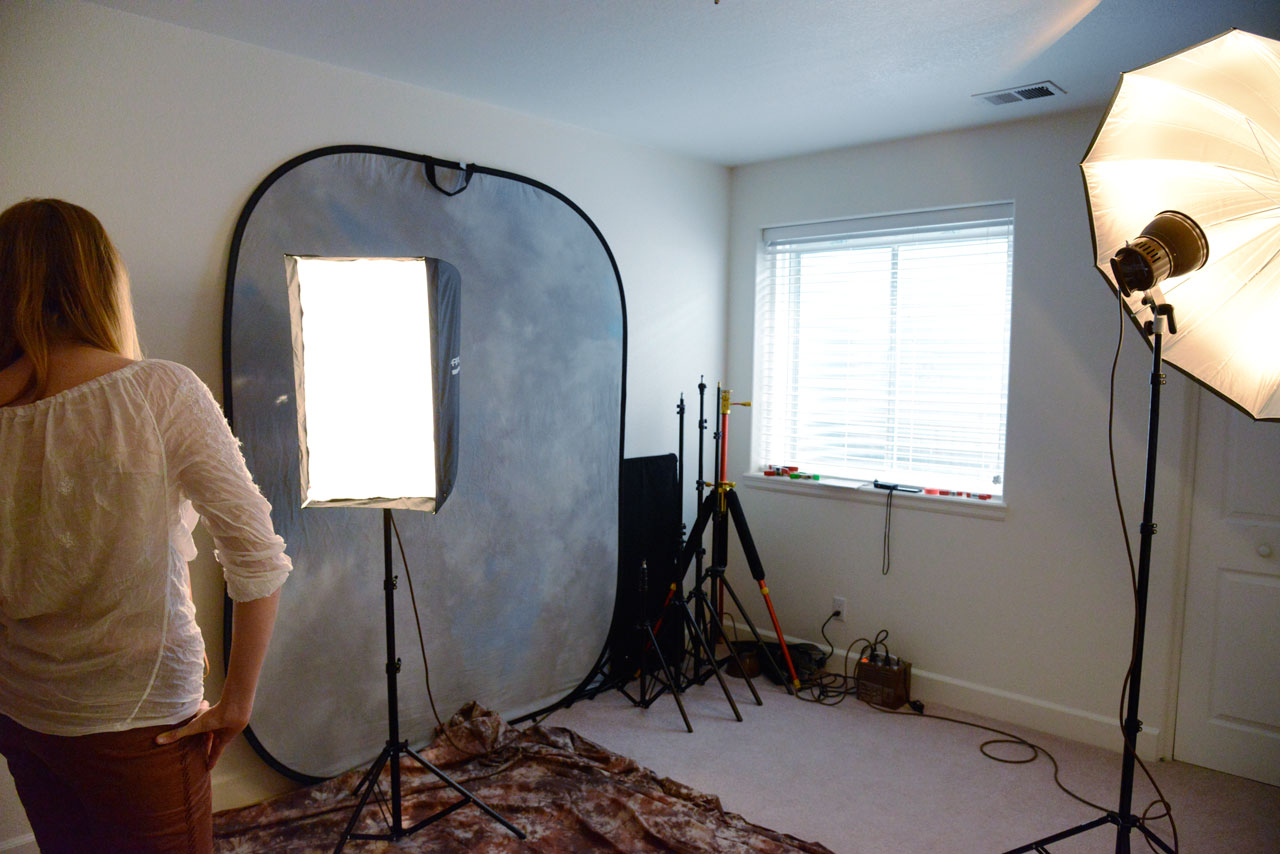
For full length portraits or headshots, I try to follow one basic rule–it’s really a suggestion–to make the portrait a little more dynamic: Have the subject’s body pointing in one direction and their face in the other direction. In the featured portrait, Alice’s body is tilted slightly to her left and and that’s the place where I place the main or key light. (See the lighting setup in the upper right.)
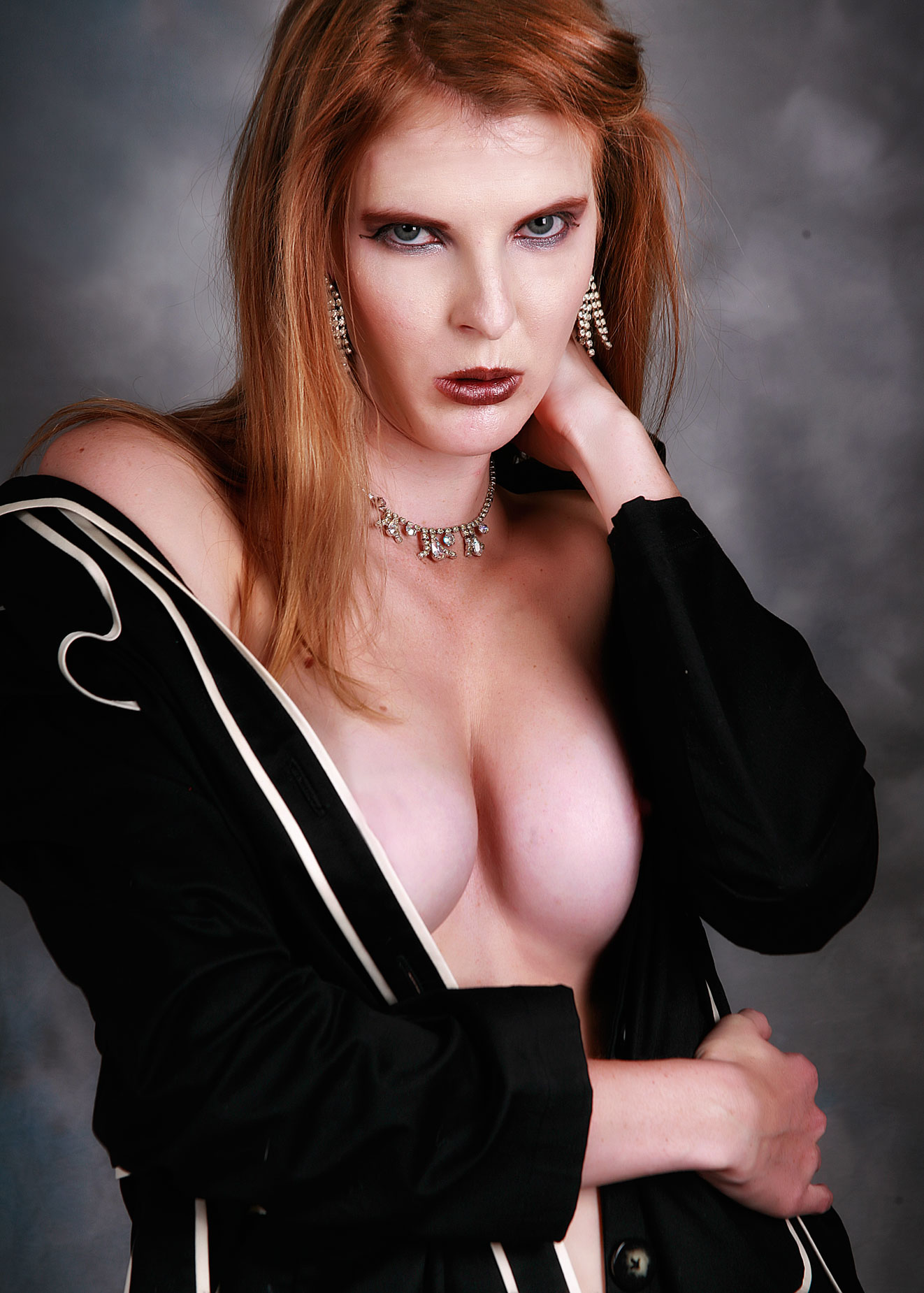 How I made this portrait: The lighting for this portrait of Alice consisted of Westcott’s Apollo Strip soft box mounted on a Speedotron Brown Line M11 head serving as the main light with fill coming from the second M11 head with a 54-inch Photek silver umbrella attached. Power on the pack was set at 400 Ws in Asymmetrical mode producing an exposure of 1/125 sec at f/10 and ISO 100. The camera used was a Canon EOS 5D Mark I with EF 28-135mm f/3.5-5.6 IS lens at 105mm. The background was Westcott’s collapsible Blue Skies backdrop.
One of the most challenging aspects of working in the studio, especially when shooting without any props, is that there’s nothing for the subject to interact with except their clothes but you can make that work for you. One of my favorite posing suggestions is to ask a model to “act like you’re ripping off your clothes” and this often elicits different poses than I imagined. Then I refine those poses and try to make them look better.
To demonstrate a move, I talk to the subject while moving my hands around my face and head and watch how the subject mimics it. I’ve found that the posing ideas a subject comes up with will not only always be one that’s comfortable and natural for them but will also the best as well. In general, I watch what a subject does and then turn what they do naturally into a pose, refining it as I shoot.
Tip: Be sure to look at both sides of your subject’s face. Most people, even supermodels, have one side of their face that photographs better than the other but don’t let that stop you from posing them one way or another.
Some final thoughts: Back in the seventies when I was just getting started as a professional photographer, I asked my mentor what was the worst thing I could do during a photo session. My guess was that it would be something technical but to my surprise he said, “not talking to the people.” This is important because of that old photographer’s axiom: ESP or Expression Sells Portraits. If you don’t talk to the people you’re photographing you’re never, ever going to make a good portrait.
 Readers who are members of my Patreon have access to posts that feature uncensored images of Alice from this session as well as more than two year’s worth of uncensored imagess featuring many other models. You can read all about what that access provides here.
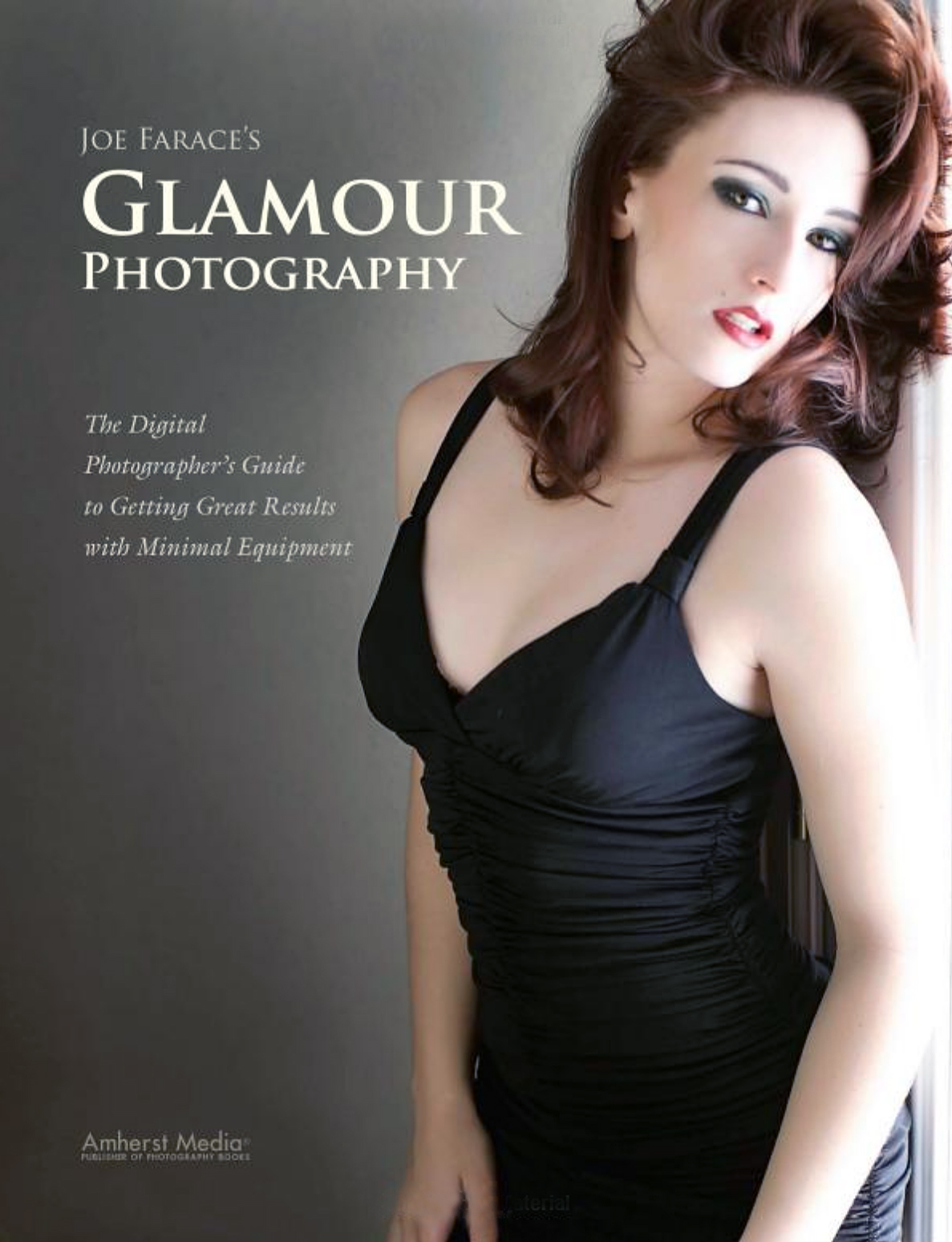
My book Joe Farace’s Glamour Photography is full of tips, tools and techniques for glamour and boudoir photography and includes information on the cameras and lenses used as well as the complete exposure data for each image. New copies are available from Amazon for $45.08 with used copies starting around forty-two bucks as I write this. The Kindle version is $19.99 for those preferring a digital format.