
Today’s Post by Joe Farace
Standing as I do, with my hand upon this staff, and under the folds of the American flag, I ask you to stand by me so long as I stand by it. —Abraham Lincoln
When I was eight years old, my parents gave me my first camera. It was a hand-me-down Kodak Brownie Number 2. This camera used 120 film that was introduced by Kodak for the Brownie No. 2 in 1901 and over the years Kodak made five different versions of this camera, models A through F. I don’t know which model I owned but it captured images that were 2 1/4-inches square. Later when I was in high school my folks gave me my first 35mm camera, an Argus C3 Matchmatic, for my birthday. I believe that both of these gifts changed my life.
My First Photograph
I remember the first photograph I made with that Brownie box camera. It was of a flag flying from a pole in Baltimore’s Collington Square Park that was next to a bandstand where the city’s Municipal Band gave free concerts when I was a kid. So that particular shot, in that particular place and time has a special meaning for me, so maybe that’s why I made it.
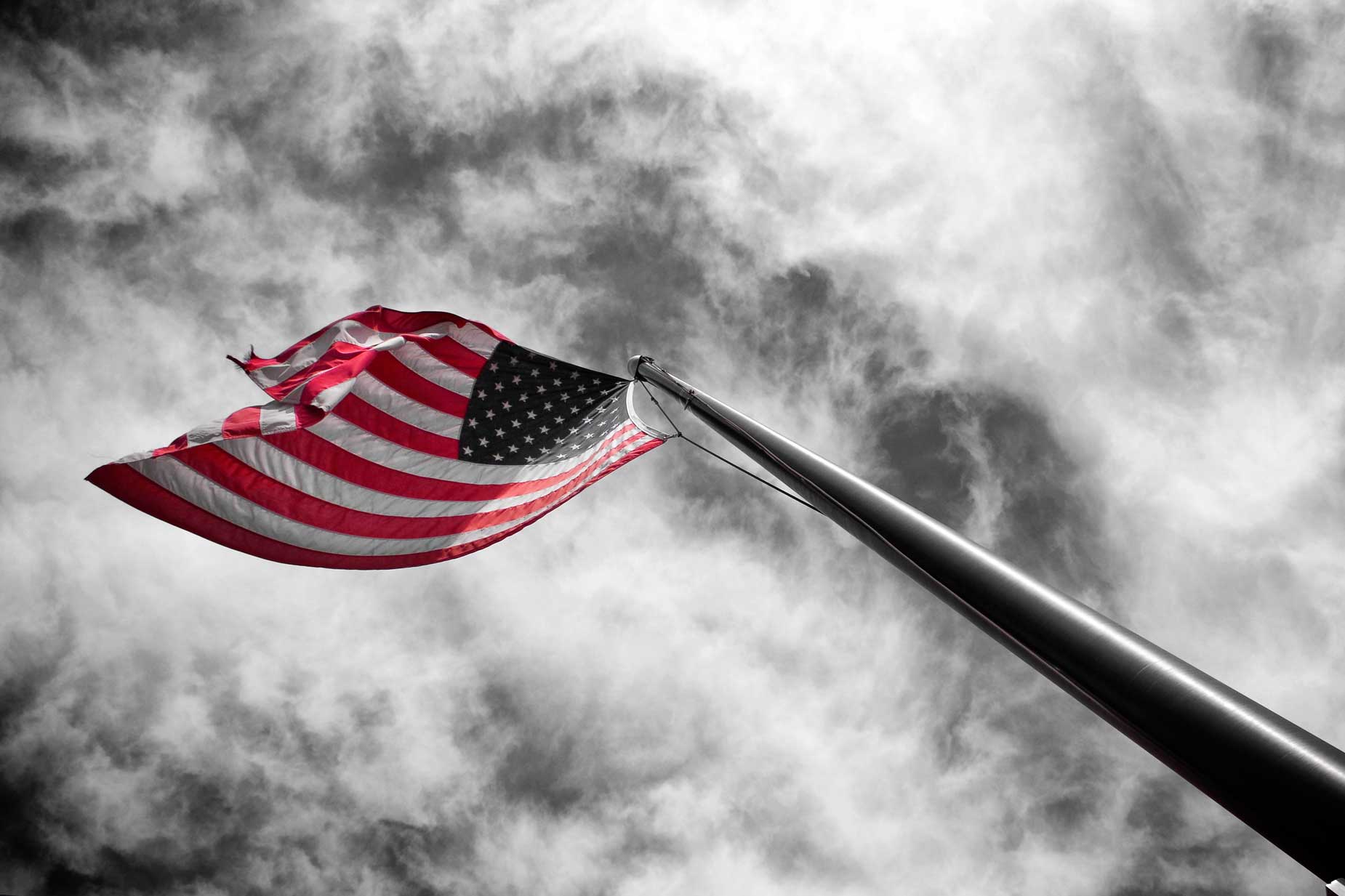
Because I was an eight year old kid, when I got my second roll of 120 film, I loaded it into the Kodak Brownie and went back to the same flag pole to make the same shot—again. I would love to have either one of those prints from that camera but they have long ago been lost in the wisps of time.
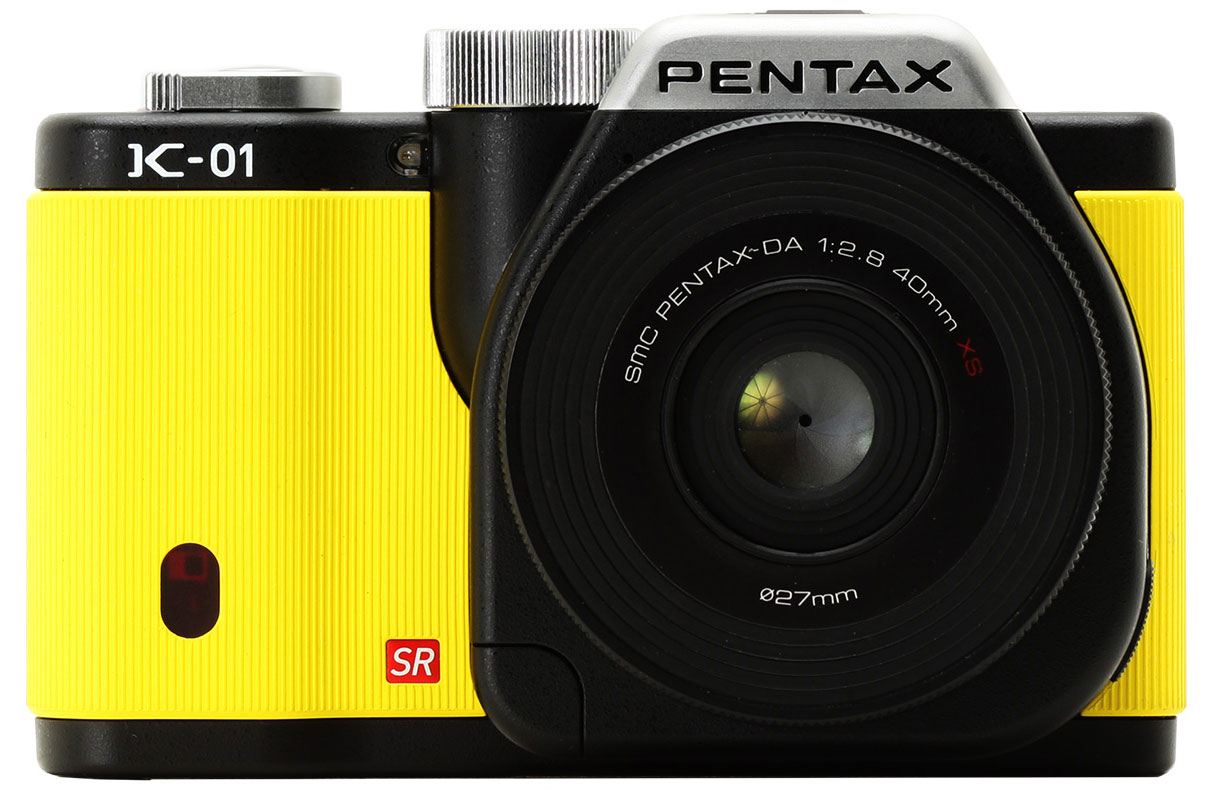 In more recent (digital) times, I tried making that same shot for a third time with the somewhat unloved (but I still thought it was cool) Pentax K-01 mirrorless camera. The camera was a yellow model like the one shown at right.
The K-01 had an APS-C sized (23.7 x 15.7mm) CMOS sensor and was compatible with the time tested K-mount lens mount that’s been around since 1975 , which means it has access to 24 million film lenses Pentax has produced. What’s more, the K-01 was the first interchangeable single-lens mirrorless camera that was compatible with lenses from a SLR without the use of an adapter.
Although the camera was not a hit at the time, copies of the K-01 in different colors, including yellow, are going for good money on eBay. A black or white model sells for $200-300, while the yellow one I tested (and would love to own) sells for mid-$400. If it had a CCD sensor, like the K100D, the used price would probably be much higher.
How I made this photograph: I used the K-01’s built-in Extract Color digital filter to create an homage to my first photograph but this new version wasn’t shot in Baltimore, Maryland, but instead was made on Wilcox Street in Castle Rock Colorado. The exposure for the flag photograph was 1/1000 sec at f/9 and ISO 400 with the 18-55mm f/3.5-5.6 kit lens set at 18mm.
The image came out of the camera mostly as you see it above with maybe just a bit of burning and dodging applied in Photoshop. Looking at the image on my 27-inch 5K iMac I was impressed by the K-01’s 16.28-megapixel resolution and the ability to have fun with its built-in Instagram-style special effects.
 If you enjoyed today’s blog post and would like to treat me to a cup of Earl Grey tea ($2.50), please click here. And if you do, thanks so much.
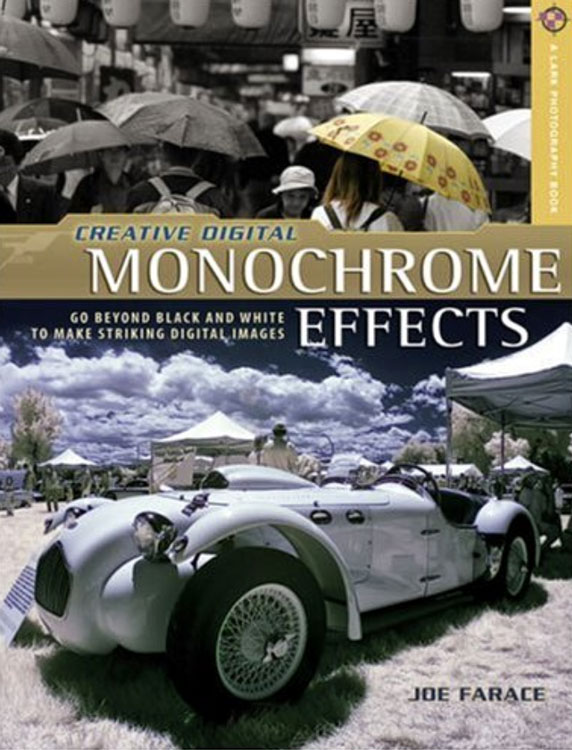
My book Creative Digital Monochrome Effects has a chapter on IR photography and is available new from Amazon for $11.46 with used copies starting around eight bucks as I write this.