
Today’s Post by Joe Farace
“Take rest; a field that has rested gives a bountiful crop.” – Ovid
 in 1925, when Oscar Barnack was developing a camera that came to be known as Leica, he decided it would use movie film that would move horizontally through the camera, effectively doubling it’s 18x24mm image area to 24x36mm. Trivia: One story about the 35mm motion picture film format itself, perhaps apocryphal, was that when Thomas Edison was asked by one of his workers how wide to cut the film for their newly designed motion picture camera, he held up his thumb and forefinger and said, “about this wide.”
Lately, with all of the new full frame mirrorless cameras popping up all over the place, 24x36mm is being treated like the Holy Grail of imaging. It’s not. Those first Leicas may have used the 24x36mm format but other early 35mm cameras, including the original film-based Olympus Pen, used 18x24mm and early Nikon, Minolta and other Japanese rangefinder cameras initially used 24x32mm before the industry standardized on 24x36mm.
How I Made this photograph: This image was made within walking distance of my front door if my home in the historic village of Dickeyville in Baltimore, Maryland. It was shot with a Hasselblad 500CM and 80mm Planar f/2.8 T* lens on Kodak Ektachrome 100, exposure unrecorded. It’s format is the 6×6 cm format that the camera captures with a Hasselblad A12 back.
What’s this have to do with sensor size?
Everything. When Nikon’s D1 was introduced in 1999 it used a 23.7×15.6mm CCD sensor. Later, when Canon introduced its D30 DSLR in 2000, that camera’s sensor size was 22.7×15.1mm. Even after Canon introduced its full frame EOS 1D in 2001, Nikon insisted their 23.7×15.6mm was more than adequate and didn’t join the full-frame parade until 2007’s launch of the D3.
Olympus, on the other hand, was always willing to go their own way and introduced their Four-Thirds system at photokina in 2012. I was there at the launch looking at a wooden prototype while listening to a German professor explaining why the camera’s 18×13.5mm was the “perfect sensor size” for digital imaging. The Four-Thirds system is now long dead but its format lives on in sensors used by Micro Four-thirds mirrorless cameras from OM Systems and Panasonic.
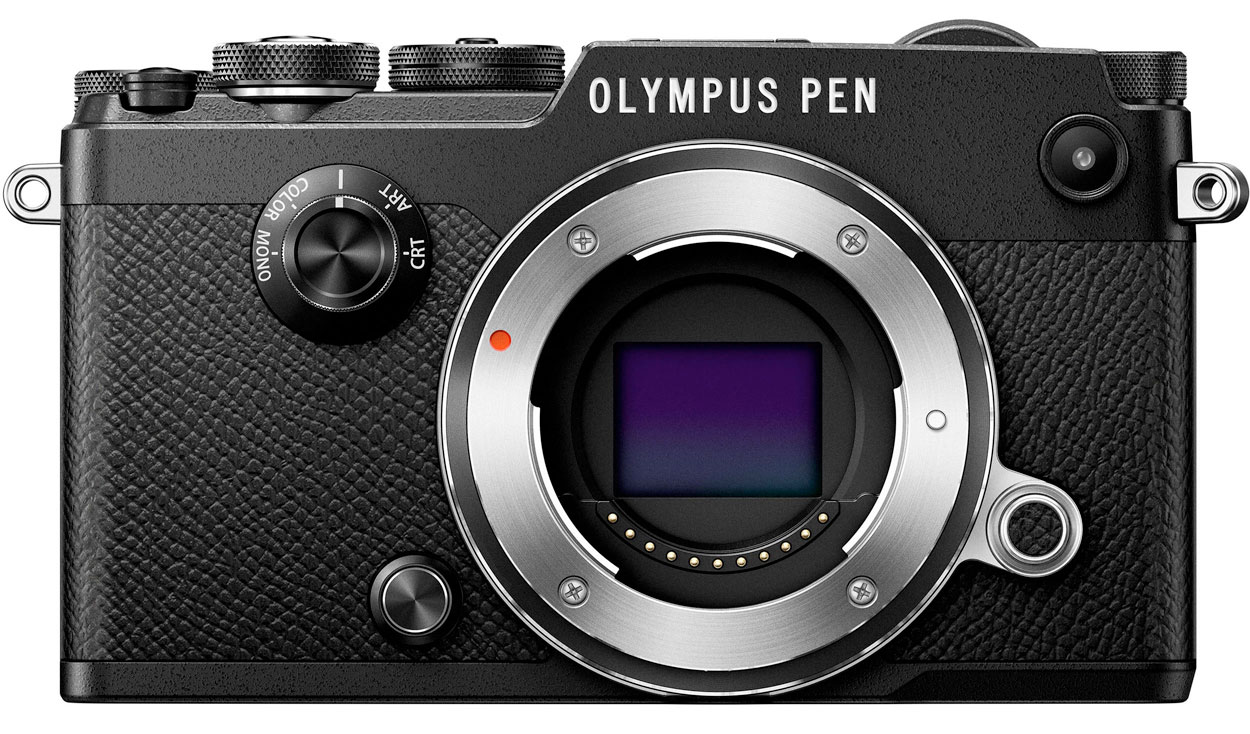 Speaking of which, for a long time people, like my friend Jack, thought the term “mirrorless camera” was synonymous with the Micro Four-thirds system but that’s obviously no longer true. That’s because many different mirrorless cameras from many different companies use full-frame sensors, while others, like my wife’s Nikon Zfc, use the APS-C (23.5 x 15.7mm) while yet others have a 23.5×15.6mm format.
Some background: For my younger readers the term APS refers to the Advanced Photo System, a film format that Kodak launched in 1996 under their Advantix brand. It was an interesting experiment in film formats but before it could catch on with the public, it was overtaken by digital capture and quickly became obsolete. The APS system used a multi-format capture system, including APS-C or 25.1×16.7 mm, which as you can see is not quite the same as what digital camera makers call this same named format today.
And so, dear readers what does “crop sensor” mean? If film shooters refer to roll film as 6×6, 6×7 and 6×9 and sheet film as 4×5, 5×7, and 8×10, why can’t we refer to the sensor size by its actual measurements because as you can see, their ain’t nothing standard about ”crop.”
If you enjoyed today’s blog post and would like to buy Joe a cup of Earl Grey tea ($2.50), click here. And if you do, thanks so much.