
Flashback: Recently, my wife and I were having lunch and I told her I was having trouble coming up with a new theme for Tuesday blog posts and she suggested “Tricky Tuesday” as a way to share some of the different tricks, tips and techniques I’ve used over the years in the studio. Here’s another try at this new theme…
Today’s Post by Joe Farace
“What I like about photographs is that they capture a moment that’s gone forever, impossible to reproduce.” – Karl Lagerfeld
 Ansel Adams once famously said that the difference between a good picture and a bad one was “knowing where to stand.”
How It All Works
I think it’s obvious that LED studio lighting is a trend that isn’t going away anytime soon. If you’re new to working in the studio with LED lighting, it brings you face-to-face with jargon like lux, lumens and foot-candles. Don’t let these buzzwords freak you out; there was a time when “megapixels” was alien too. Let’s start with lumen:
Lumens* = Light Output. In simple terms, Lumens (lm) are a measure of the total amount of visible light from a lamp or light source. The higher the lumen rating the “brighter” the lamp will appear.
Lux is a unit of illumination that’s equal to one lumen per square meter or the equivalent of 0.0929 foot-candles. One way to look at it is the 13 lumens that are produced by a candle or the 1,200 lumens created by a 100 Watt light bulb. A foot-candle is a unit of illuminance on a surface that is one foot from a uniform point source of light of one candle and equal to one lumen per square foot. As you can see these definitions are circular but don’t let that drive you crazy. If you poke around the Internet, you will find charts that compare Exposure Value to foot-candles and lux. When working in the studio with LED lighting, you can measure the light with your handheld meter’s incident mode, or you can ignore all this and use the light meter that’s built-into your camera, which is what I usually do,
 How I made this portrait:
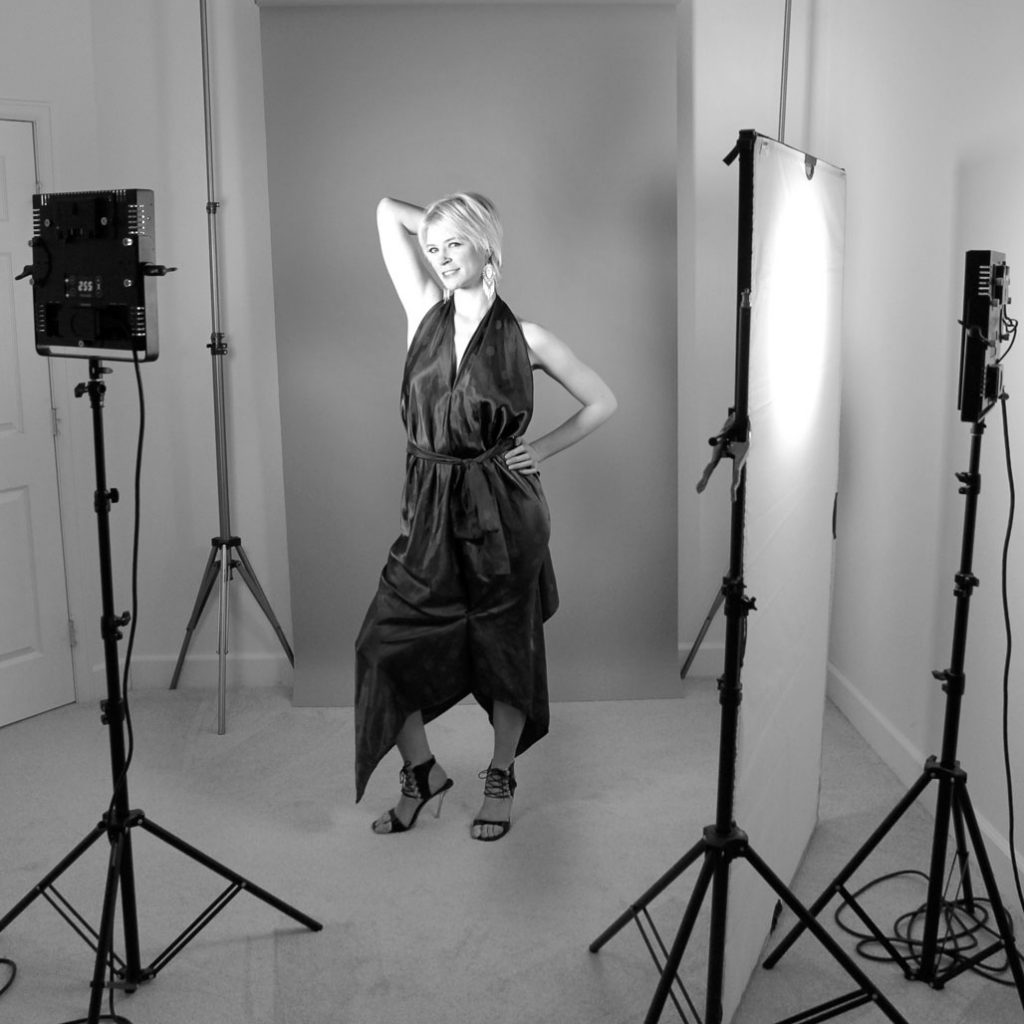
For studio photography you can add to Ansel Adam’s statement that the difference between a good picture and a bad one is also in knowing where to place the lights. It doesn’t have to be complicated. Here’s what I did for a casual portrait shoot that I had with Pam Simpson, when I was testing two Bowens Mosaic LED light panels.
This lighting set-up shown above right was designed to mitigate any potential shininess created by the subject’s makeup. At camera right there’s a 42 x72-inch (106x182cm) Westcott Scrim Jim Cine panel that is covered with Full Stop Diffusion fabric with an LED light panel placed directly behind it. A second LED light panel was placed at camera left for fill. The backdrop was a Savage Mocha seamless paper background.
The camera used was a Canon EOS 60D with EF 85mm f/1.8 lens with an exposure of 1/250 sec at f/4 and ISO 640 with a plus two-thirds stop exposure compensation. After retouching, I used the Bi-Color User Defined filter that’s part of Color Efex to punch up the image and that was layered with the Glamour Glow filter to produce the final look that you see here.
*This simple definition does not even begin to scratch the surface in defining what a lumen is. For a more detailed explanation defining what a lumen is, click this Wikipedia link.
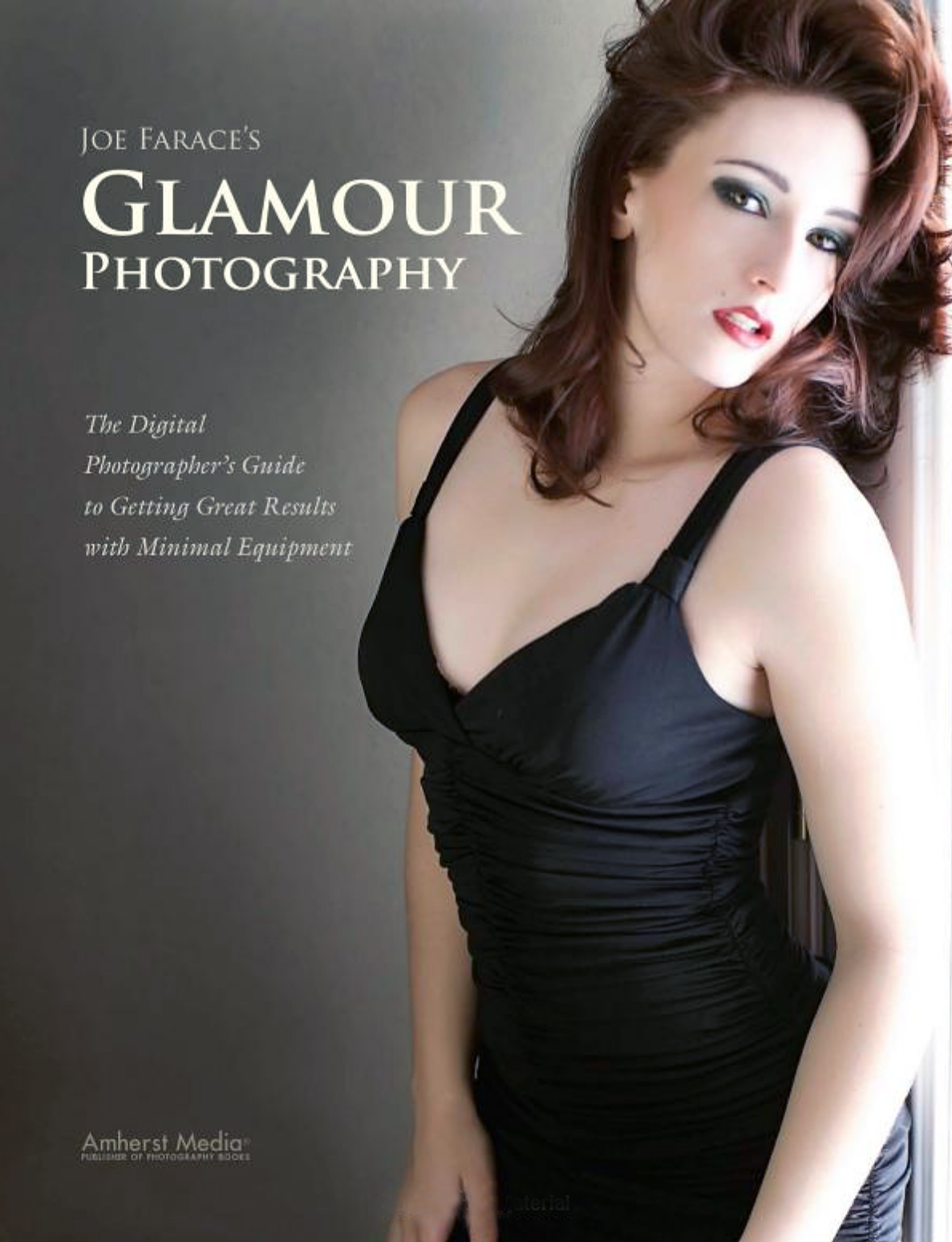
My book Joe Farace’s Glamour Photography is full of tips, tools and techniques for glamour and boudoir photography and includes information on the cameras and lenses used as well as the complete exposure data for each image. New copies are available from Amazon for $30.54 with used copies starting around ten bucks as I write this. The Kindle version is $19.99 for those preferring a digital forma