
Today’s Post: by Joe Farace
Back in the early days of digital photography, the person I think of as Shutterbug’s last great editor, George Schaub, asked me to write a column for the magazine that he wanted to call buzzwords. And for the next 26 issues—The English Alphabet consists of 26 letters, after all— i wrote a column about all the letters of the alphabet from A to Z as it relates to digital photography and the technology surrounding it. You see, I had originally written a book called The Digital Imaging Dictionary: and he thought I was an expert, which I still do not claim to be, That book is hopeless outdated today but, if you’re into digital nostalgia, you can pick up a copy on Amazon for six bucks.
All of which bring me to today’s post. But first some definitions from the Internet:
- Portrait Mode: “Portrait photography often uses a vertical orientation to capture an entire person or subject, or to place emphasis on a subject, as in a close-up head-and-shoulders headshot. Photos are taller than they are wide in portrait orientation.”
- Landscape Mode: “Landscape mode is an orientation of a computer screen display that shows content at a wider angle than when in portrait mode. This mode allows for more content to be seen on the screen, as it better utilizes the physical size of the monitor or device being used.” You notice this definition does not mention that the image is horizontal?
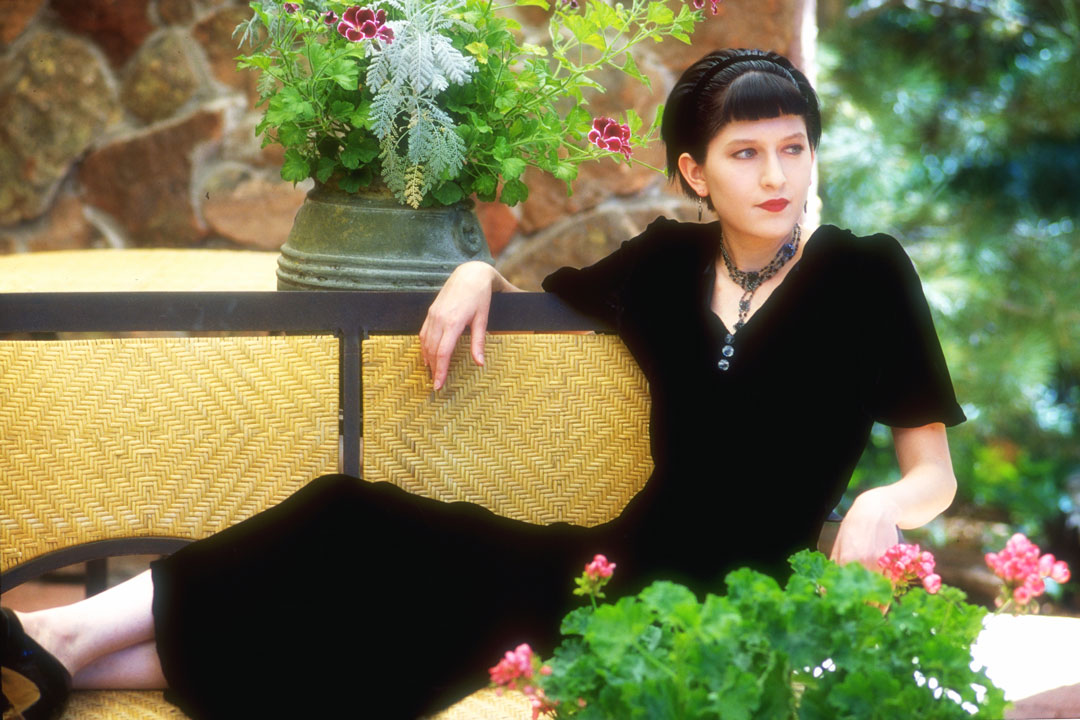
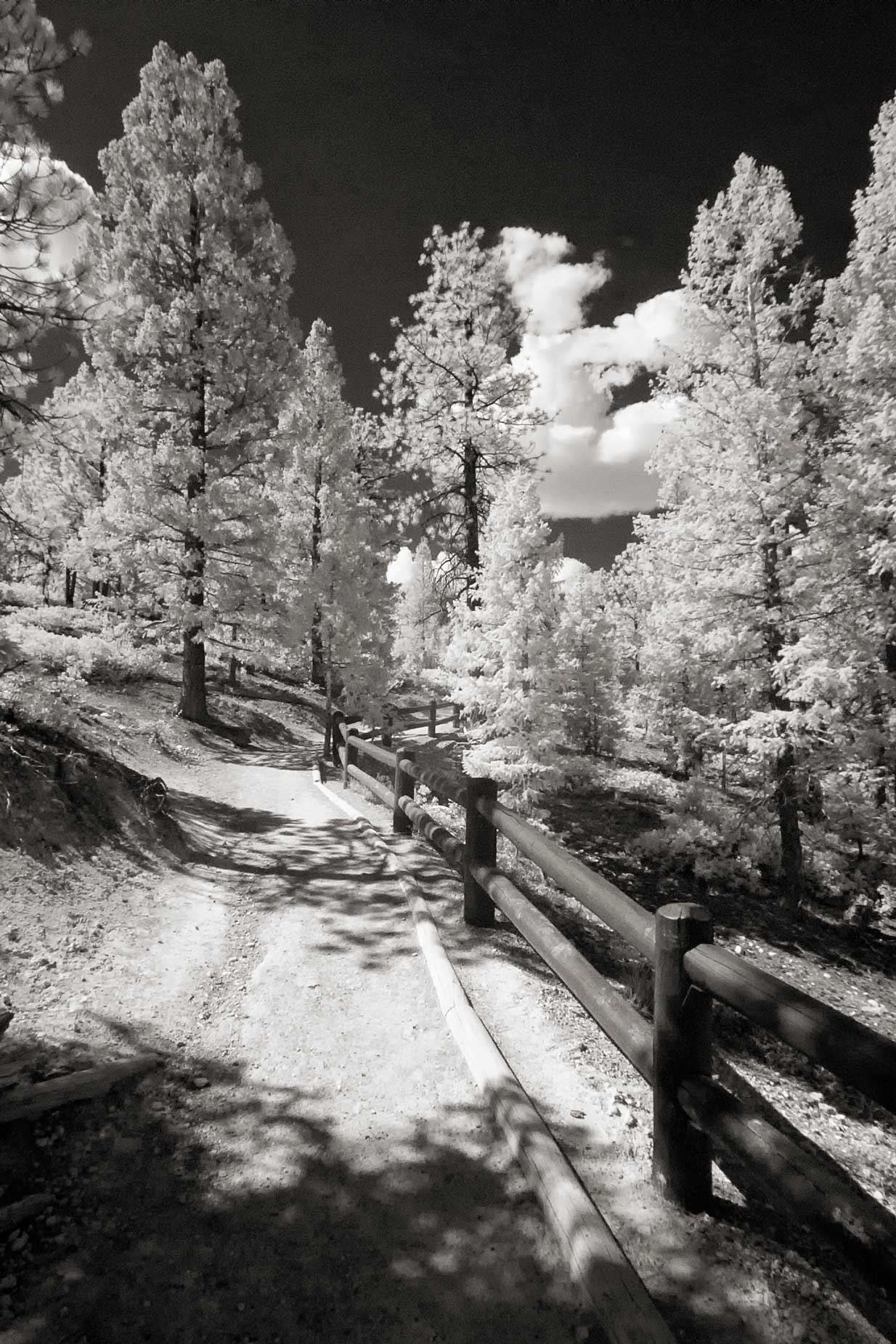 How I Made the above portrait: You can shoot a portrait horizontally; yep, in will be in landscape mode. And second, you can also shoot a landscape in portrait mode; yes, it will be in a vertical format.
I photographed this young model using a Contax 137 MD Quartz film SLR and a beautiful Carl Zeiss 85mm f/1.4 lens. The film used for this portrait was one of Kodak’s color negative films, Exposure was unrecorded.The scan was from Kodak’s Photo CD process and opened using Lemke Software’s GraphicConverter that produced fairly good quality files from a Photo CD disc. This image is decidedly a portrait yet is is clearly in a horizontal—or landscape format,
How I Made this landscape image: I made this vertical landscape image while hiking along a path at Zion National Park, a place that, I think, may be the best place in the USA to make infrared photographs. (My friend Juan Pablo who lives in Colombia insists that his entire country is an infrared paradise. Maybe someday,..) The camera used was a Canon EOS D30 that had been converted to infrared by a company that’s no longer in that business. I;m not sure what kind of filter he used in the conversion. The lens used was the Tamron AF 11-18mm f/4.5-5.6 Aspherical LD Di II SP at 13mm. Exposure for the RAW file was 1/160 sec at f/14 and ISO 400.
 I’ve found that Life Pixel does a great job with IR conversions and they’ve done most of the conversions for some of my Canon DSLRs and all of my Panasonic Lumix G-series cameras. This is not a paid or sponsored endorsement, just my experience.
My book, The Complete Guide to Digital Infrared Photography is available from Amazon with new copies available for $10 and used copies selling for around three bucks as I write this. Creative Digital Monochrome Effects has a chapter on IR photography and is available from Amazon new for $5.95 with used copies starting at $4.00.