
It’s “Tricky Tuesday,” a way for me to share some of the tricks, tips and techniques I’ve used over the years when shooting portraits in the studio, Today’s post features the amazing Pam Simpson proving once again that she is a woman of many looks. She and I have a shoot scheduled for next month, marking our 14th year of working together.
Today’s Post by Joe Farace
Chiaroscuro is Italian for ‘light-dark’ and represents the use of strong contrast between light and dark to achieve a sense of volume in modelling three-dimensional objects and figures with a two-dimensional frame.
 When looking at some of the glamour and boudoir portraits I post on Instagram (follow me @joefarace) my friend Barry Staver often mentions that some of them have my trademark high-key look. But I also shoot low-key portraits too.
Having the Right Key
One of the trends I’ve noticed on social media is the use of noticeably underexposed images, especially for portraits. There are many possibilities for the popularity of this style that I personally don’t get. The most obvious being that the photographer themselves may not know that the images are underexposed. It could be that they look “just fine” on their computer’s monitor and maybe a smartphone when cruising social media. Another possibility, for the more conspiracy minded among us, is that because a big chunk of these images might fall under the category of glamour or boudoir imagery, the photographer is trying to hide behind the underexposure so social media censors don’t ban the images.
But here is the one trait that people who may be trying to create low key portraits by underexposure are often missing. To have a true low key image the portrait needs to have some highlights so you can create that Chiaroscuro look. Here’s a few thoughts that you might want to keep in mind when planning the kind of “key” you might want to use during your next portrait session:
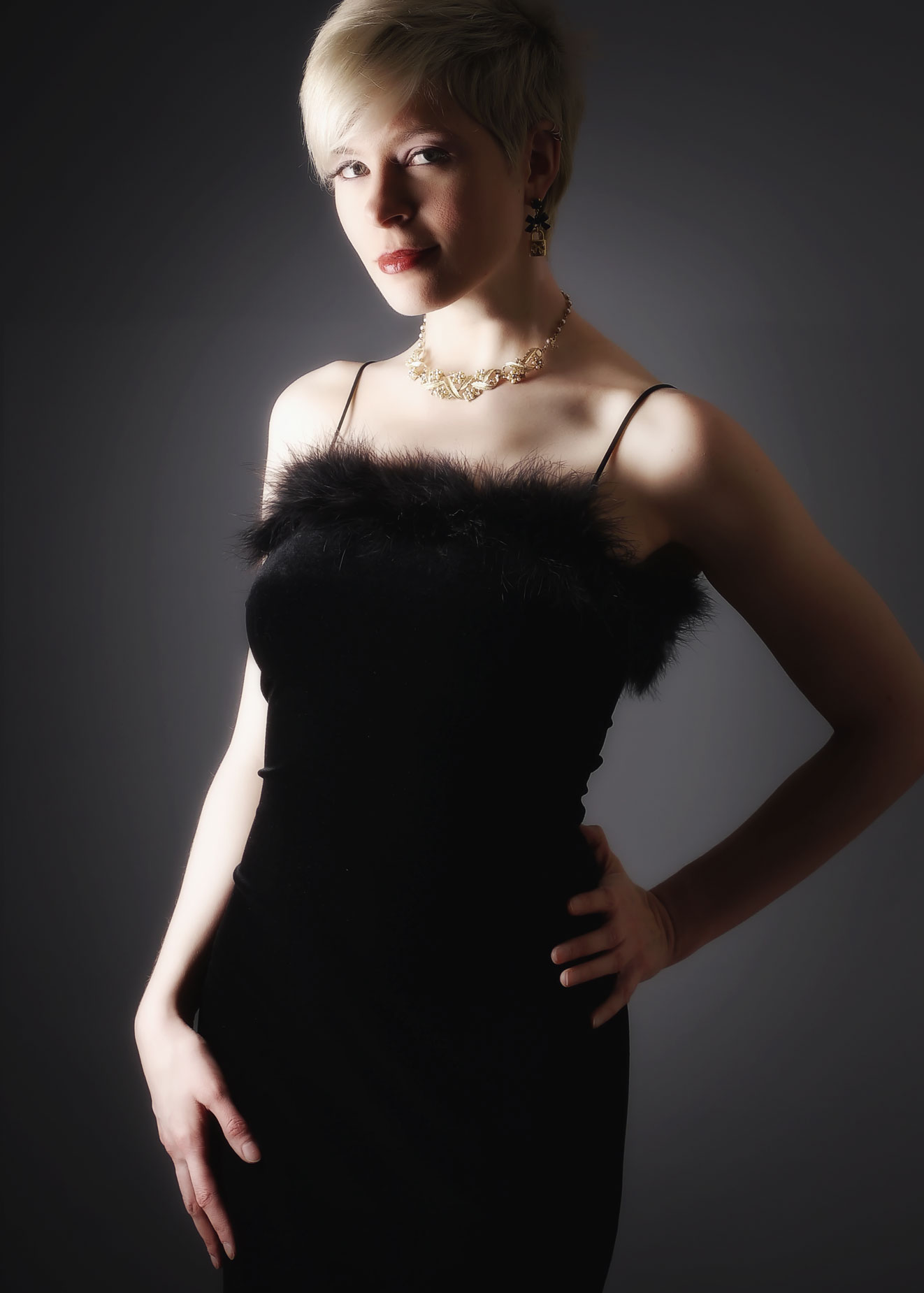 High key portraits can contain small darker areas to keep the images from being too flat and boring. Low key pictures, on the other hand, concentrate solely on the darker tones, conveying an atmosphere of mystery and use higher contrast lighting where most of the subject is in shadow and has relatively small areas that are brightly lit.
Low-key photography is a genre of photography that consists of shooting dark-toned scenes by lowering the “key” or main light that’s illuminating the scene. It can be used to create a moody atmosphere, letting the viewer experience the photograph through their own subjective interpretation. Wikipedia says that “Low-key photography is a genre of photography consisting of shooting dark-colored scenes and emphasize natural or artificial light only on specific areas in the frame.”
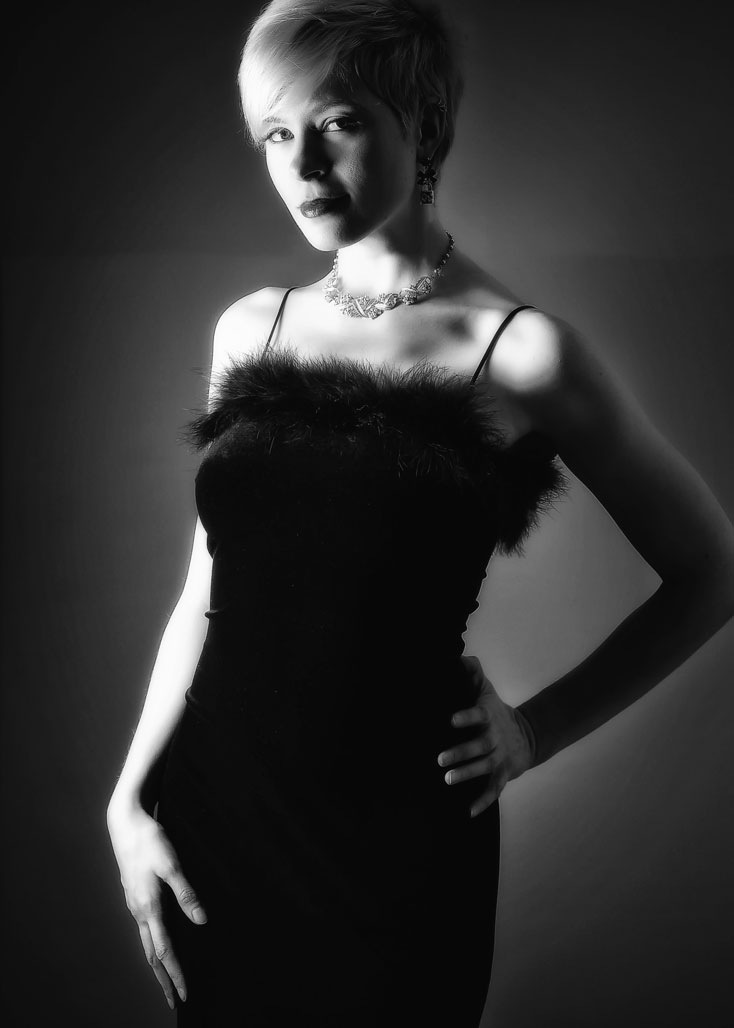
How I Made this portrait: No reflector was used in this photograph that shows off the 12×36-inch Westcott Strip Softbox at its most directional best creating a theatrical look. The camera used was an Olympus E-M5 Mark I with an Olympus Digital Zuiko 45mm f/1.8 lens with an exposure of 1/125 sec at f/8 and ISO 200. To accentuate the low key look of the portrait, the Low Key filter that’s part of Color Efex was applied and was topped off by Color Efex’s Glamour Glow filter.
Some photographers like to produce a monochrome version of their low key images, so I’ve created one (above right) using Silver Efex and the Low Key filter and Glamour Glow filters. Let me know which one you like best.
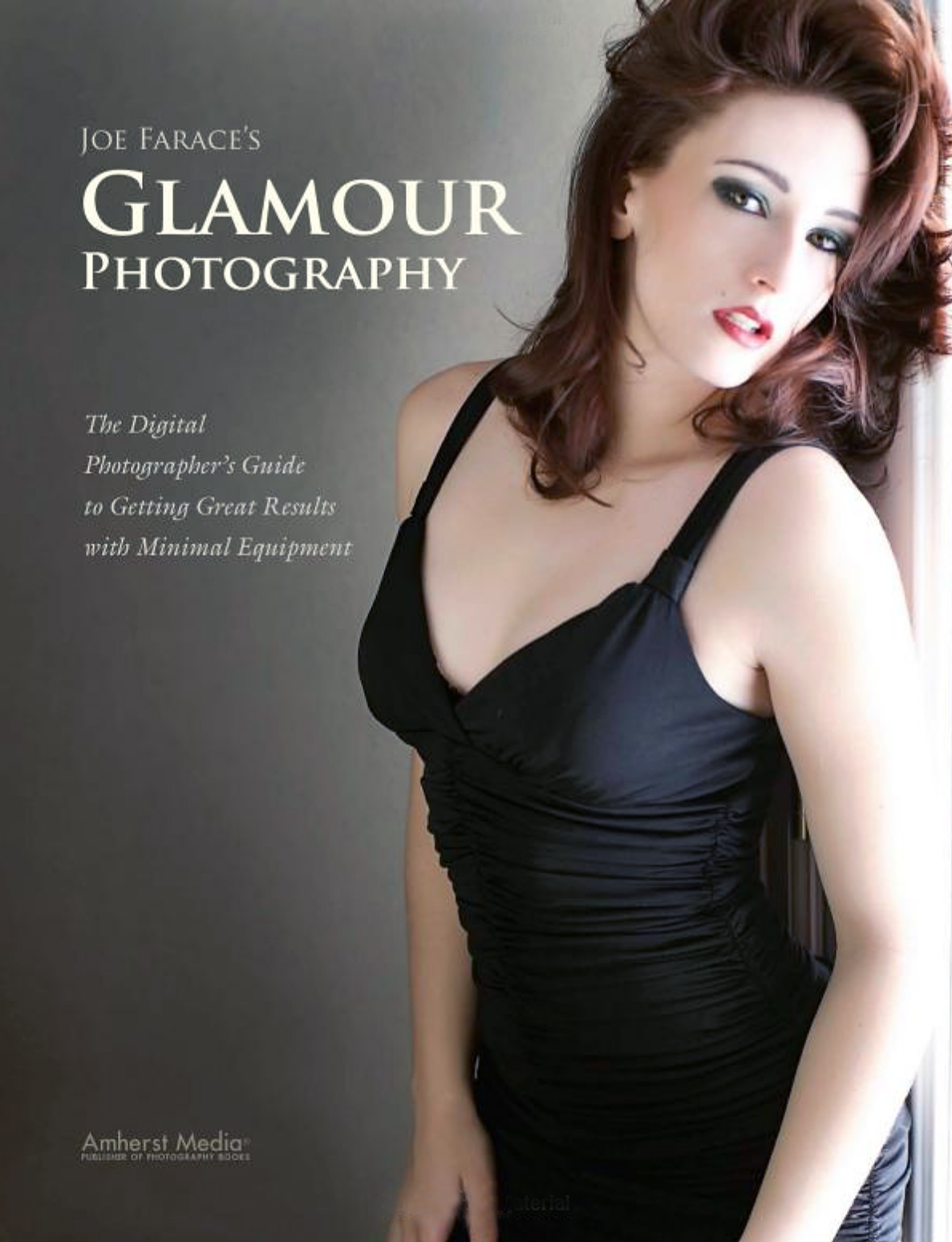
My book Joe Farace’s Glamour Photography is full of tips, tools and techniques for glamour and boudoir photography and includes information on all of the cameras used as well as the complete exposure data for each image. Used copies start around twenty-five bucks.as I write this. The Kindle version is $19.99 for those preferring a digital forma