
Today’s Post by Joe Farace
Writing isn’t about making money, getting famous, getting laid or making friends. In the end its about enriching the lives of those who will read your work and enriching your own life as well.—Stephen King.
Who am I to argue with Stephen King.
I couldn’t agree with him more and I freely admit that none of the things that Mr. King mentions in his first sentence ever happened to me as a result of writing any one of my 37 published books. But I would like to think that what he mentions in the second sentence did come to pass, at least a little bit…
 Here’s an answer to a question a reader who asked about what my favorite photography books are. They are:
- Discover Your Self Through Photography by Ralph Hattersley. This 1971 book was written by a noted photography teacher who was Contributing Editor to Popular Photography starting in 1957, where he wrote a column called ‘The Hattersley Class For Beginners.’
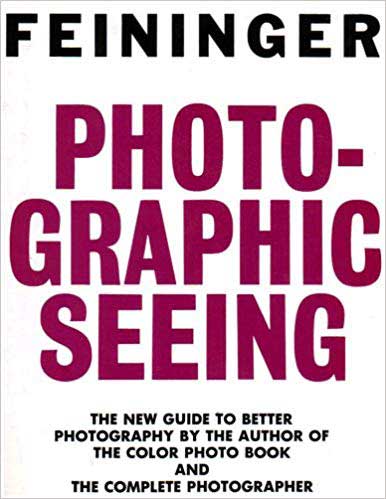
- Photographic Seeing by Andreas Feininger was published in 1973 and may be the definitive book on photographic composition. While I may rhapsodize over William Mortensen’s The Command to Look, a book I love, I recognize he’s an acquired taste while Feininger’s advice comes straight from the Golden Age of Photojournalism.
- Creative Color Photography of Robin Perry is aimed at studio photographers, especially those interested in special effects. This and Perry’s Photography for the Professionals, remain my go-to books on the subject of special effects.
Admittedly these are old books but they are still available and the information that’s found within their pages about the vision that’s required to produce creative imagery is timeless. I’ll try to include new and interesting photography books in the Club as they arrive on my front porch.
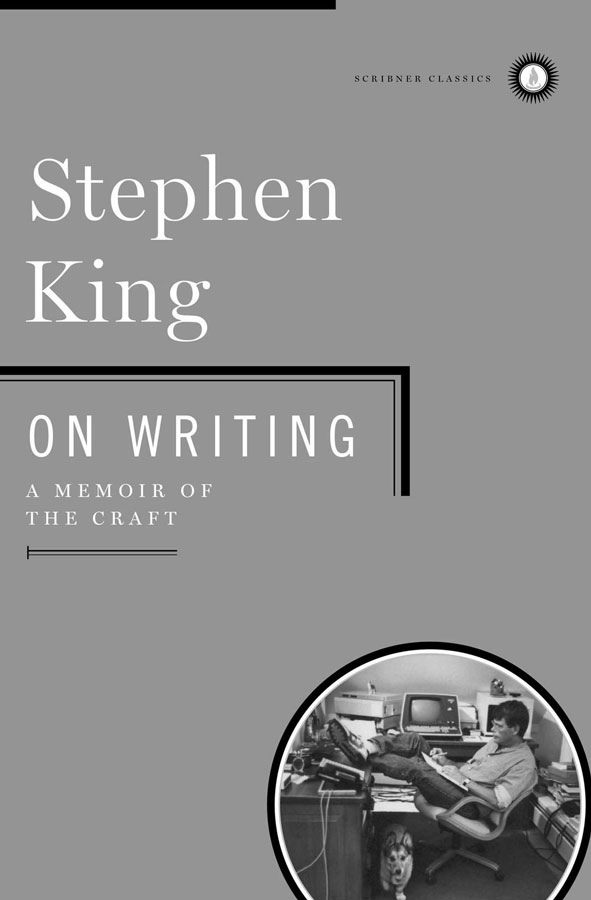 Book of the Week: On Writing by Stephen King
Stephen King’s first book, Carrie, was published in 1974 but my personal personal introduction to the author came late in 1970s when a friend, who managed a bookstore, asked if I liked King’s book. “No,” I told her, “I’m not much on horror movies or books.” She insisted I read The Dead Zone and gave me the copy I still have today. When King published On Writing in 2010, I know I needed to have a copy. After all, a guy who has sold 350 million books has to know something about writing. And he does and kindly shares it with us. This book is King’s most personal because he not only offers useful information about how to improve your writing but places it within the context of his own work, making the book as much an autobiography as it is a how-to book.
In doing this, he faces some painful realities about his own life, his struggles to succeed as a published writer along with addictions that were almost his undoing. At one point King admits that he doesn’t even remember writing Cujo. But the story has a happy ending. You learn about how he beat these addictions and went on—and is still writing—best sellers but there is a stunning postscript: On the afternoon of June 19, 1999, King was walking near his Maine home when a driver, who he later describes as “a character from one of his novels” ran over him with a van. King sustained multiple serious injuries and was in the hospital for nearly a month. In the last part of the book he describes the crash in almost cinematic detail and it’s one of his most gripping pieces of writing in the book because it’s all true. This is a small book, the paperback is 400 pages but it’s such a meaningful story about overcoming personal demons mixed in a gumbo of practical advice on writing with a personal story that’s as heartbreaking as it is ultimately uplifting.
No mention of Stephen King in this Book Club would be complete without a recommendation for what I consider his magnum opus—11/23/68. It’s a time travel story about a school teacher who goes back in time attempting to stop the assassination of John Kennedy. The catch, he goes back several years before 11/23/68 and during the protagonist’s interim years King weaves a tale combining the actual facts about the assassination along with his hero’s fictional journey and a bittersweet love story that makes this, I feel, the best thing he ever wrote. I originally got the book from the library and loved it so much that I immediately went out and purchased and read the 880-page paperback. It’s a big book but it is so wonderful that you don’t want it to end.
Tip: Skip the Hula mini-series and read the book.