
This morning Barry Staver and I will be attending the Colorado Pen Show. If you are interested in fountain pens and plan on being here, please stop us and say Hi!
Today’s Post by Joe Farace
Collect books, even if you don’t plan on reading them right away. Nothing is more important than an unread library.” — John Waters.
In response to a reader’s question about USPS Book Rate postage:
In 1938, President Franklin D. Roosevelt established a special, low postal rate for books. It’s goal was to help rural Americans access educational materials regardless of how far they lived from major publishing hubs. In 1942, Congress codified the low rate into law, making cheap distribution of books permanent. Through the 1970s: The classification evolved into Special Fourth-Class Rate, which expanded to cover sheet music, sound recordings and educational films. In the 1990s, the U.S. Postal Service branded the educational tier as Media Mail. This classification remains a discounted tier based on weight, although it’s subject to inspection by the USPS to ensure its contents qualify.
How I Found Nero Wolfe
 Nero Wolfe is a brilliant and eccentric fictional armchair detective who was created in 1934 by American mystery writer Rex Stout. From 1934 to 1975, Stout published 33 novels and 41 novellas and short stories featuring Wolfe with most of them set in New York City.
I came to reading Nero Wolfe somewhat by accident. While I was aware of the character and the many books about him, I hadn’t read any of them. One night when Mary was perusing an email from Barnes & Noble and was getting ready to buy some books for me, she ran short of spending enough to get free shipping, I suggested she pick a Nero Wolfe book, any book That book was Fer-de-Lance that was published in 1934 but is still in print in paperback. She got free shipping and I ending up with a love of this book series.
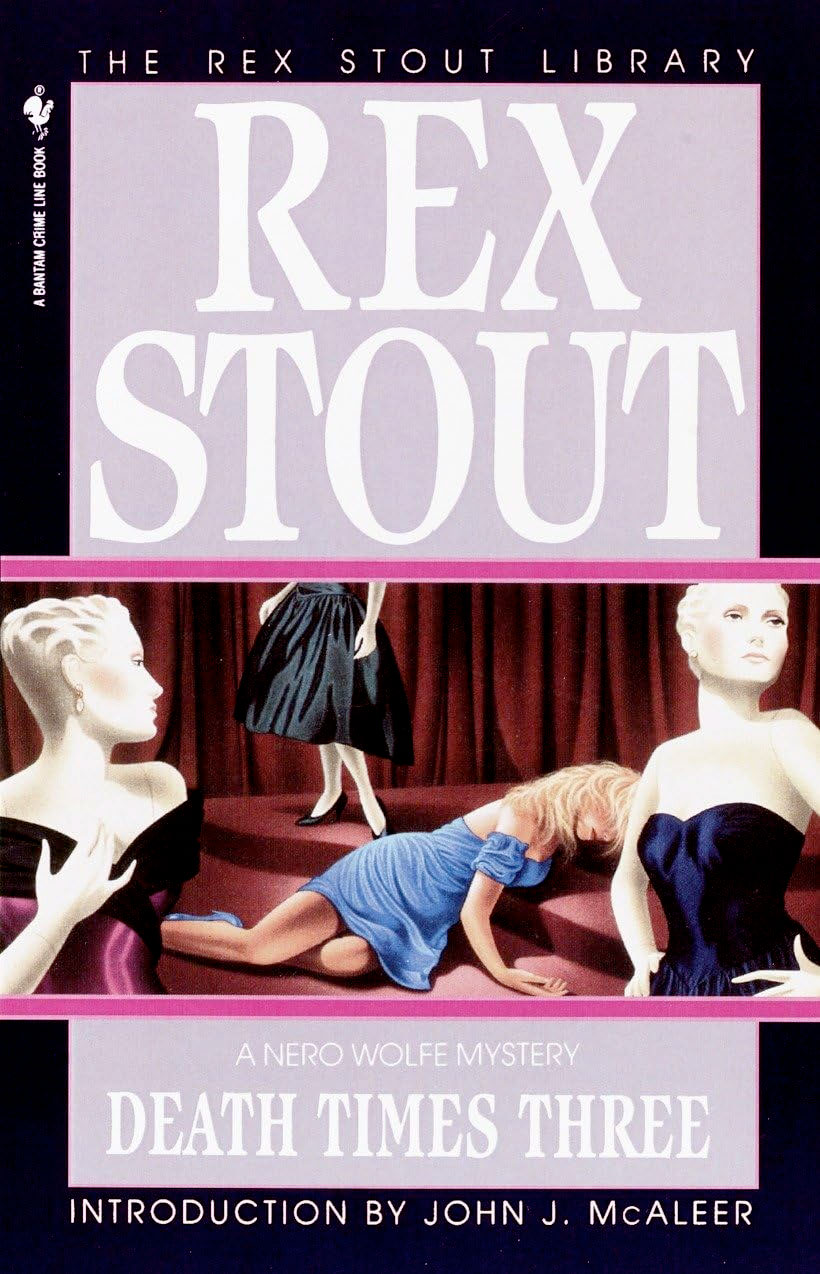
The most recent Nero Wolfe book I picked up from Amazon was the 1995 paperback reissue of Death Time Three with an introduction of Stout’s biographer John. J, McLeer. Stout’s books that have numbers in the titles indicate the number of novellas that are collected in that volume and this one is extra special. One of the stories is a “lost” novella that was only discovered while Stout was cooperating with McLeer on his biography. Stout had written te book but it had not been submitted to his publisher. Stout never edited his work; he wrote the story and shipped it. While this approach does produce occasional mistakes from time to time, they amount to nitpicking for his fans. (Conan Doyle also made similar mistakes form time to time and they, like Stout’s fans, recognize and enjoy them.) The second story was one that appeared serialized in the Saturday Evening Post but had never before appeared in a book. The third story is a reworking of a previously published novella about counterfeiting that Stout, expanded and changed including who the murderer was! This is a highly recommended book that long time fans or first time readers will enjoy.
by William Kent Krueger
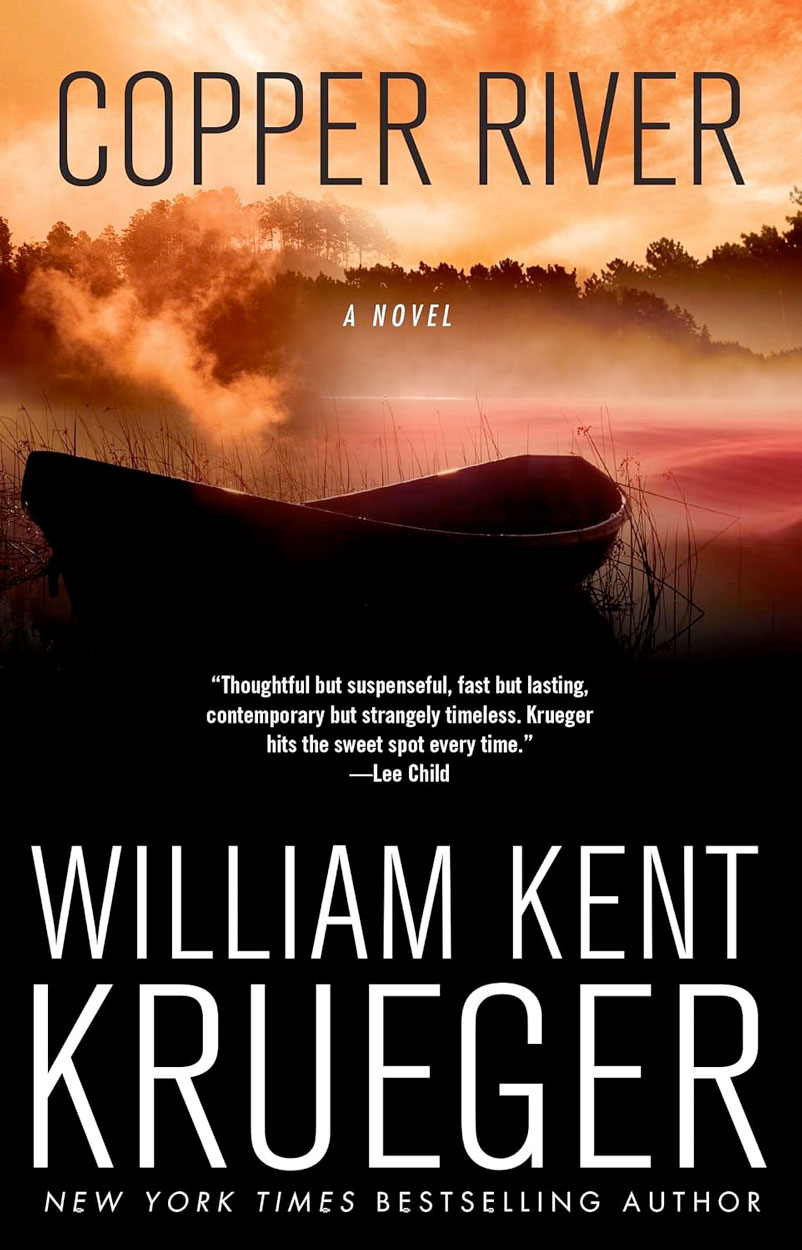 Regular readers of the Book Club know I’m a fan of Krueger’s writing and I just finished his 2009 novel Copper River. Like many of his books this one features the adventures of Cork O’Connor, who during this time period was Sheriff of Tamarack County.
Unlike other books in the series that are set in Minnesota’s North Woods, this one is set in Michigan’s Upper Peninsula. And unlike other books in the series it’s a sequel to the terrific Mercy Falls and similar to that book this one has elements of a Thriller.
In this one, O’Connor plays a smaller role than normal and spend the entire book dealing with a bullet wound to his leg. This novel is tale of murder, sprinkled with small town political intrigue and just a touch of mob action. All of the characters–there is no carry over from the gang back in Aurora, Minnesota–revolve around the people in Michigan, including Cork’s relatives who are not all that happy he dropped by. This is a tale of three young people who spot a body floating in, where else, the Copper River and that later turns up in town, triggering mayhem and more murders. There’s a subplot of a hungry cougar and as in many of Krueger’s books, lots of family interaction. Highly recommended.
What I’m Reading Now
I am now on Book 42 for the year and it’s the non-fiction book Push the Wall by Frank Miler. I’m not bragging about the number of books I’ve read so far; the truth is that I’m running behind my peak book reading year of two years ago. Nor am I alone in logging the titles and authors of the books I’ve read. In talking with one of the proprietors of the Books are Awesome bookstore in Parker, Colorado, she also keeps a log of all the books she’s read on her smartphone. Me? I use a Moleskine notebook and write in it with a fountain pen. Right now the pen I’m using is an Esterbrook Snoopy pen that’s filled with ink from Diamine, a 150-year old UK ink manufacturer.
I’m not finished reading Push the Wall but so far the book’s concept appears similar to Stephen King’s On Writing that combines how-to with biography. This one, however,,is written for artists and writers but the book has much better production values than King’s original book–there is a 25th Anniversary Classic Edition that may be more upscale. Miller’s artwork appearing every few pages adding interest while providing context to the text. I consider On Writing to be indispensable for any writer, whether experienced of aspiring, and i think Push the Wall may be a useful reference to be read again and again.
Punctuation Marx
The one thing I noticed in reading Push the Wall is that Frank Miller likes to use the Em Dash in his writing and so do I or, at least, I used to. For those who are not punctuationally inclined, an Em Dash is as wide as the uppercase letter “M” and acts like a comma, parenthesis, or colon to create a strong pause, show an break in thought, and can add dramatic emphasis. An En Dash, on the other hand, is as wide as the uppercase letter “N” and is used primarily to mean “to” or “through” when connecting spans of numbers, times or dates.
Why should you care and, more importantly, why should a writer care about these dashes? It’s because when AI detection software and some online critics notice the use of an Em dash in any writing, it’s seen it as a indication of Ai-generated text because large language models, such as GPT, Gemini and Claude, overuse this punctuation mark, turning a legitimate literary tool into an inadvertent digital watermark. At least, one author has lost a book contract when this detection software determined their book was written by Ai, although the author claims it was not. I’m guessing that Frank Miller being the kind of guy he is and at 69 years old probably doesn’t give a damn. But me? I have for a while now, eschewed the use of Em dashes for blog posts and instead use two En dashes. Maybe it helps with my Google ranking but who really knows in the dystopian world of Ai we currently live in.