
Today’s Post by Joe Farace
Old books that have ceased to be of service should no more be abandoned than should old friends who have ceased to give pleasure. —Bernard Baruch
Well, we are at the half-year mark and it’s time to see how my count of Books Read in 2025 is going. I started off the year with fewer books read than normal but for some reason the pace picked up and the count now stands at 57, with three books on my TBR list. One is from a new author, to me anyway, Tom Spencer and the book is The Mystery of the Crooked Man, that’s somewhat in the genre of Anthony Horowitz’s Marble Hall Murders. The book has a 3.42 rating on Goodreads and I’m 54 pages in, as I write this. Since this is a book Mary bought for me, I’ve put it on hold since two books from my Library List just arrived. Bad Lands is by Preston & Childs (I love these guy’s books) and I’m already halfway though and it’s mesmerizing with elements of Tony Hillman and . The other book is by Mark Stevens, another new author to me, and is a thriller called
Nero Wolfe and Race Relations
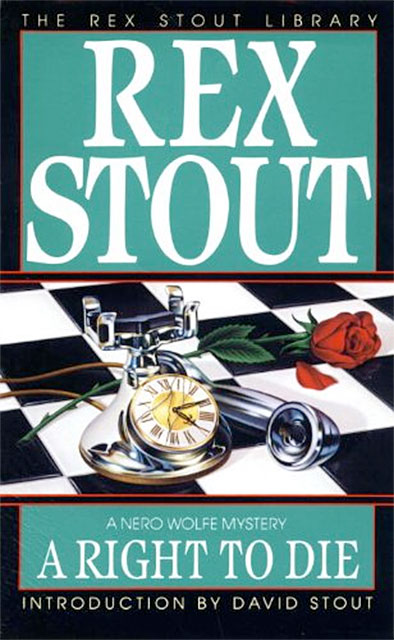 A Right to Die is a Nero Wolfe detective novel by Rex Stout that was originally published by Viking Press in 1964. Despite what the title seems to indicate this is not a book about euthanasia; It is about race relations during the tumultuous sixties. It’s also a sequel to Stout’s book Too Many Cooks that was published in 1938! A long time for a sequel to reach print but it revolves around an African-American character who appeared in the “Chef’s” book, now much older with a grown son who’s accused of murdering a white woman that he’s—the plot evolves around this—engaged to marry.
While that subject wasn’t completely controversial when the book was written, it was still a hot topic in 1964 and Stout handles the implications of this subject matter with sensitivity and intelligence. To be sure, Archie’s first person narrative is more subdued than in a normal Nero Wolfe novel and perhaps it relates to the topic at hand or it could be due to the fact that Stout was 82 years old when he wrote this book. He passed away in 1975, six month after publishing his last book, A Family Affair. I just ordered a copy of that final book from eBay and will definitely be writing a review of ir.
Fans of mystery novels in general, let alone Nero Wolfe fans, should read A Right to Die. What the title means is delivered with hammer blows when the murderer confesses near the end of the book. Should you read Too Many Cooks first? It doesn’t matter but I think you will enjoy the second book a little more after having read Too Many Cooks first. Order both paperbacks together and sit back and read how Stout and Nero Wolfe evolved from 1938 to 1964. Highly recommended.
Lost in Translation
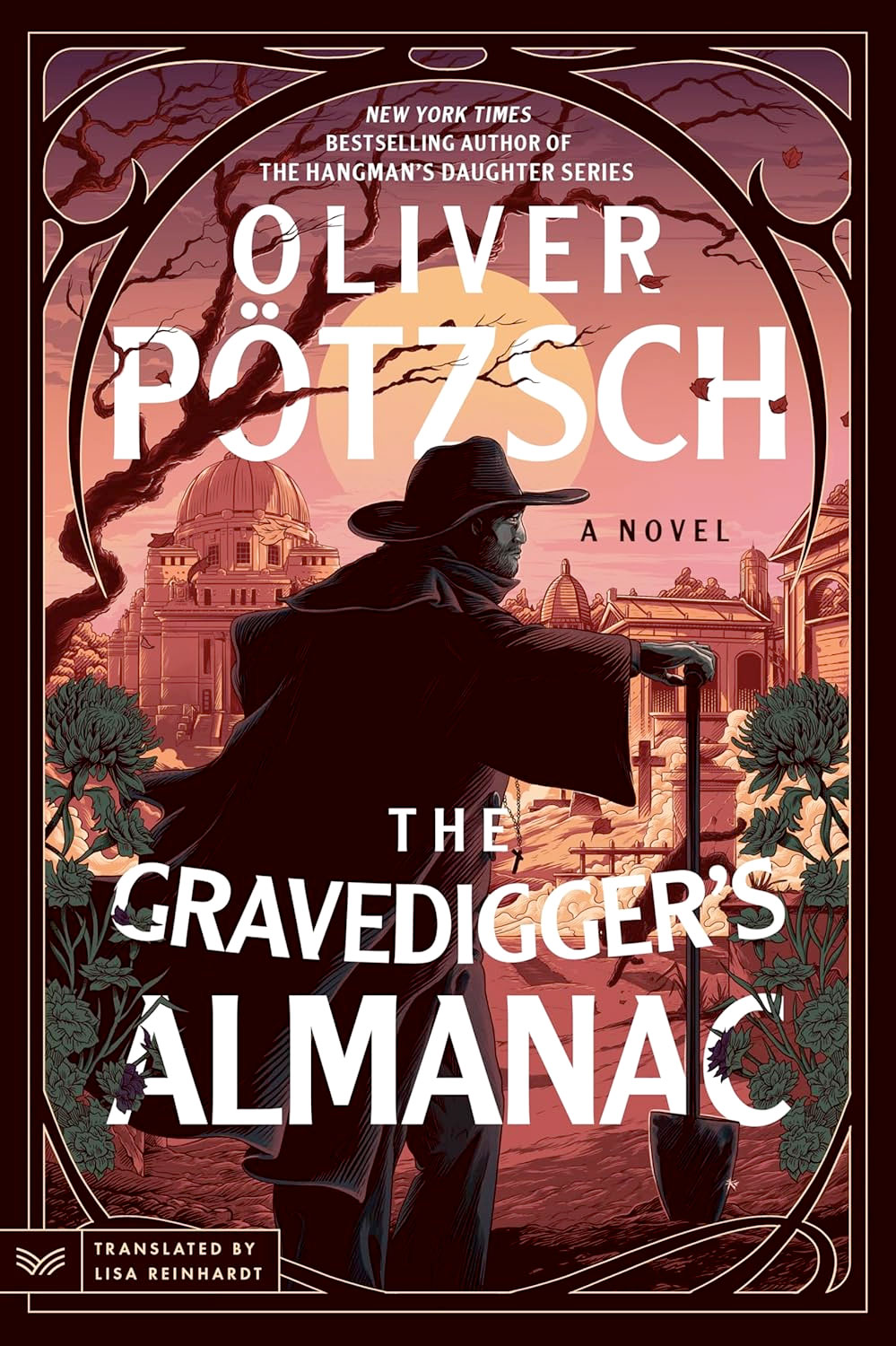 When I read The Girl With The Dragon Tattoo I never once stopped once to think that Stieg Larsson had written the book in Swedish and I was reading a translation written by Reg Keeland. The thought that I was not reading the author’s own words didn’t occur to me until reading Jules Verne’s 20,000 Leagues Under the Seas for my (real-world) Science Fiction Book Club. That’s when it hit me that Verne had written the book in French! All of which brings me to the new novel by Oliver Pötzsch called The Gravediggers Almanac that’s set in 1893 Vienna and was written in German.
Regular readers know I’m a fan of historical mysteries, even true crime stories and this one has all the trappings I love and is wrapped around a touch of the supernatural including zombies (or revenants) and even vampirism. The ook tells the story of a handsome young policeman, fresh to Vienna, inserting himself into a curmudgeonly Chief Inspectors’ gruesome murder case creating Harry Bosch-like conflict within the political structure of the security service. Then there’s an apparent suicide that the protagonist is forced to wrap up until he finds that the two cases are intertwined. Along the way the young policeman meets a lovely police switchboard operator who gets too involved in helping his off-the-books investigation but more importantly there is the gravedigger. He’s a unique fellow from a long line (no kidding) of distinguished gravediggers who’s writing an “Almanac,” passages of which show up at the beginning of each chapter. Like a classic Buddy Cop story, the gravedigger doesn’t immediately get along with out heroic young copper but they end up—sorry if that’s a spoiler—as friends because ol’ digger keeps popping up in various plot intersections, often to save the day. This is an interesting tale but…
The translator who gets a credit on the cover keeps getting into the way of my enjoying the book. Part of that has to do with their use of mpre modern colloquial slang that doesn’t fit the era when the story is set. For instance, in 1893 she call the police “fuzz,” something that works great in Ed McBain’s 1968 mystery novel called, what else, Fuzz. In an Afterward she explains that Pötzsch used several different German and Viennese dialects in the story and rather than translating everything into standard English, she decided to use a Scottish dialect for one character. The book is set in Austria. This kind of stuff drove me crazy but you may not even notice it unless you are more pedantic than I am. So while not highly recommended, it’s an engaging read, if only for all the atmospheric details.