
Because it’s World Photography Day, #wheelswednesday, which would normally appear, today will return next week on Wednesday August 26, 2026.
Today’s Post by Joe Farace
You don’t make a photograph just with a camera. You bring to the act of photography all the pictures you have seen, the books you have read, the music you have heard, the people you have loved.—Ansel Adams
 World Photography Day is celebrated on August 19 as an unofficial holiday to honor the art of photography and the photographers around the world who work to create lasting images. Without their talent and vision, the images and art they create and we admire would not have the meaning and impact they have on society. This celebration pays tribute to all the photographers–portrait, photojournalists, fashion, architecture, and landscape– by giving them the credit they deserve.
Let’s Celebrate!
The idea of celebrating World Photography Day goes back to France in 1837. A French inventor named Joseph Nicephore Niepcce developed heliography, a technique he used to create the world’s oldest photographic process.
Around the same time, Louis Daguerre, a French scientist and artist, created the first photography process that could make permanent photographs. On January 1837, the French Academy of Sciences formally proclaimed the development of the daguerreotype. It’s believed that ten days after that announcement, the French government acquired the patent for this innovation and gave it to the world with no copyright considerations.
While that French discovery is regarded as the beginning of photography, in 1839 William Henry Fox Talbot developed a more adaptable method for creating prints on paper that competed with the metal-based daguerreotype. Then in 1884, George Eastman from Rochester, New York perfected this method by replacing the copper plate with a dry gel that he called film.
 Eastman’s technology eliminated the need for photographers to use and transport copper plates and dangerous chemicals. In 1888, Eastman created the Kodak camera that made it possible for almost anyone to make a photograph. All this progress is the reason that film and digital photography can immediately capture expressions, sentiments, ideas, and moments immortalizing them for future generations.
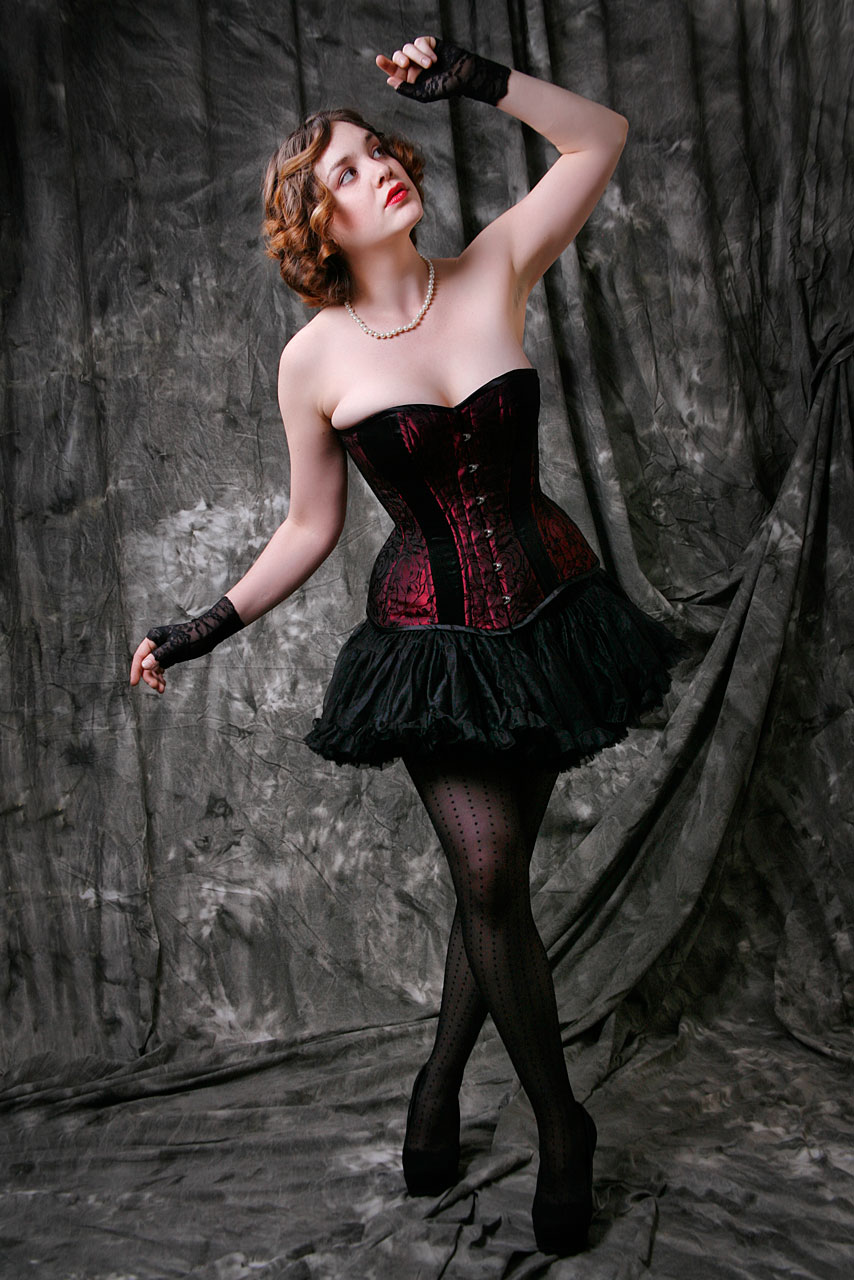
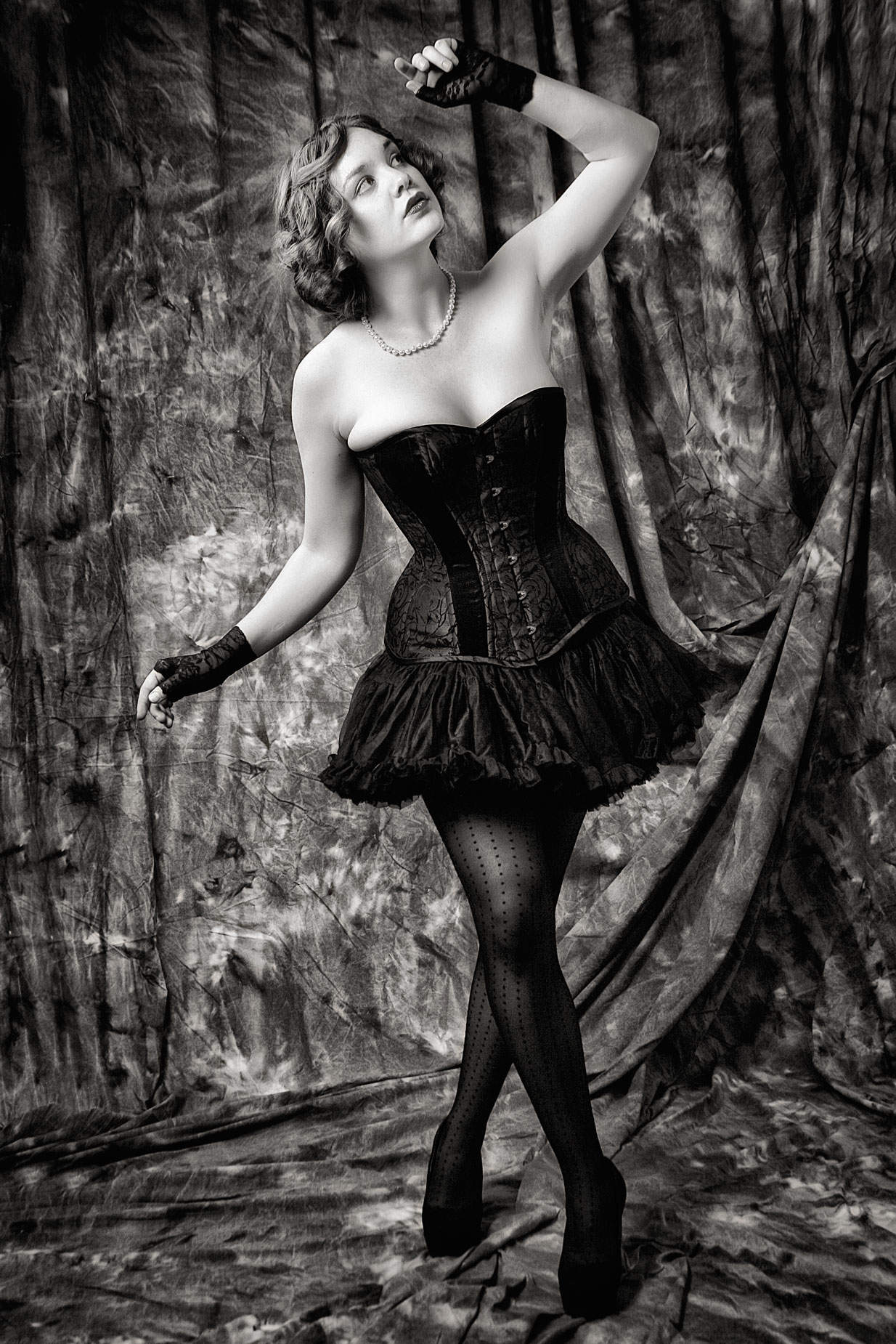
How I made this portrait: This portrait was made as an homage to the photography of E. J. Bellocq (1873-1949), an American photographer who worked in New Orleans during the early 20th century.. I photographed Courtney in my 11 x 15-foot home studio. Lighting was provided by a 320 Ws Smith Victor FLC300 monolight that was fitted with a 24 x 24-inch soft box and placed at camera left. Fill light was provided by another FLC300 with a 45-inch umbrella mounted that was located at camera right and located near the back corner of my camera room. A Smith Victor 110i monolight with 24 x 24-inch soft box was used as a hair light, although to be honest the effect appears minimal.
The camera used was a Canon EOS 5D Mark I with a EF28-135mm f/3.5-5.6 IS USM lens at 50mm. The exposure was 1/60 sec at f/14 at ISO 125. The original JPEG image file (above right) was converted from color using Silver Efex’s default preset, before applying the Tonal Contrast filter from,Color Efex that was followed by the Glamour Glow filter also from Color Efex with the Glow Warmth slider bumped to the right to add some warmth for an old timey look.
 If you enjoyed today’s blog post and would like to buy Joe a cup of Earl Grey tea ($3.50), click here. And if you do, thanks so much.
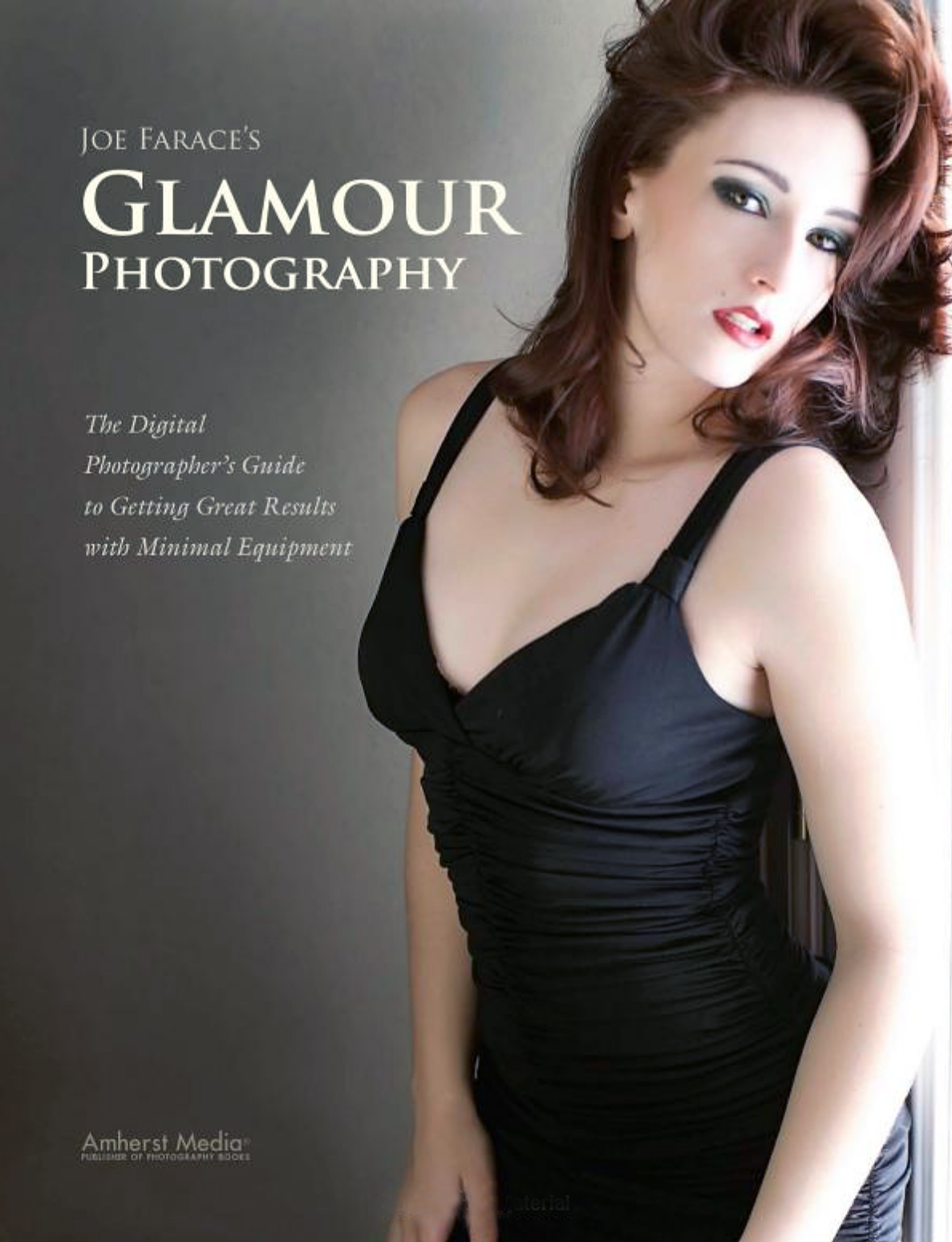
My book Joe Farace’s Glamour Photography is full of tips, tools and techniques for glamour and boudoir photography and includes information on all of the cameras used as well as the complete exposure data for each image. Used copies are available from Amazon for $45.08. as I write this. The Kindle version is $19.99 for those preferring a digital format.