
Today’s Post by Joe Farace
My life has no purpose, no direction, no aim, no meaning, and yet I’m happy. I can’t figure it out. What am I doing right? — Charles M. Schulz
In the Broadway musical Snoopy: The Musical there’s a song called “Clouds.” In it the Peanuts Gangs sings about what kind of shapes that they see in the clouds starting with, “Aren’t the clouds beautiful? They look like big balls of cotton!” Charlie Brown wraps up the song by saying what he sees, “Well, I was going to say ‘a horsie and a duckie’…but I changed my mind.”
One of My Photographic Heroes
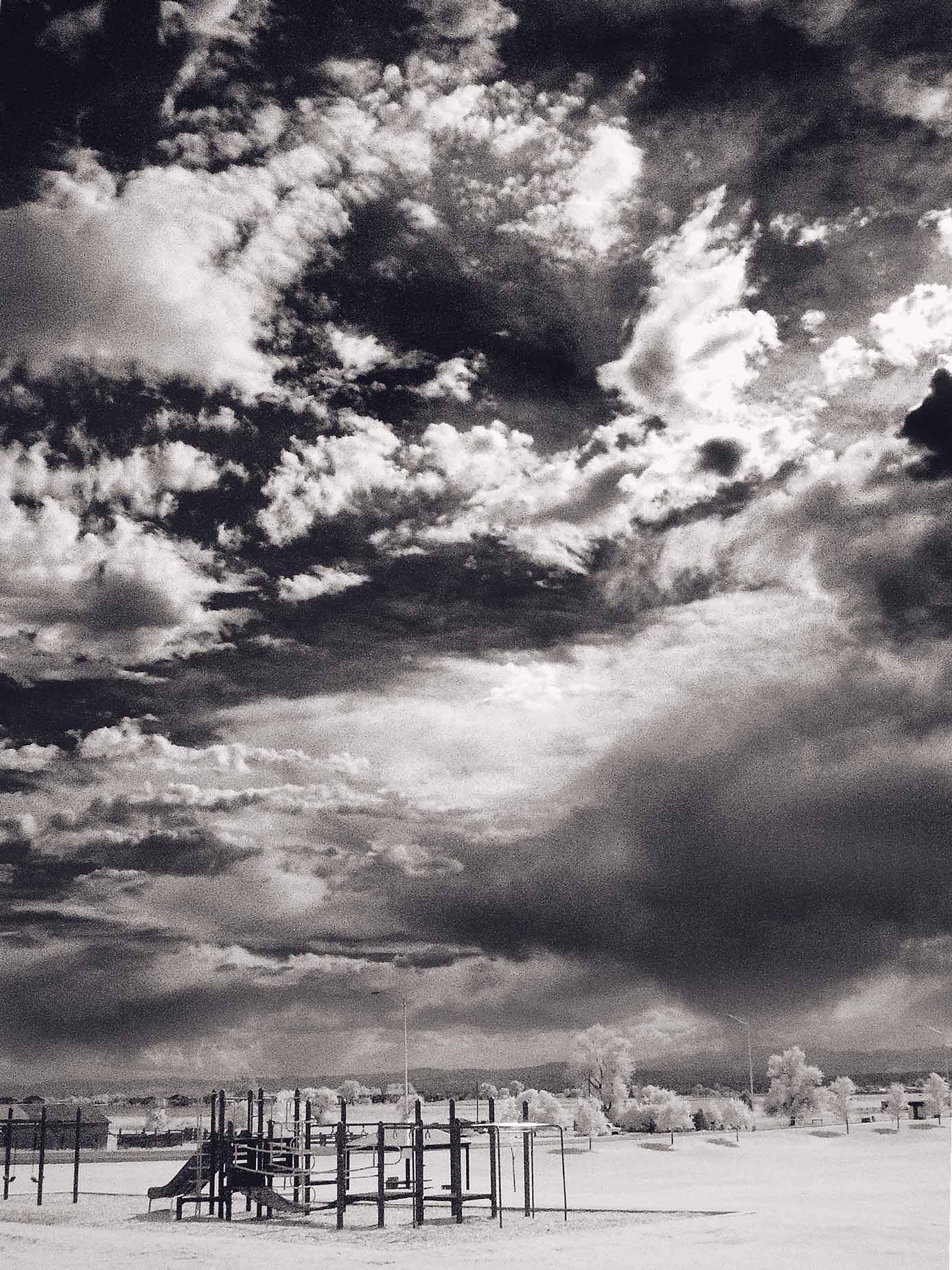 In reading the history of photography—something I encourage every photographer to do—one name sticks out to me, not just about his photography which I find inspiring, but all of the amazing and interesting things he accomplished with his life.
Alfred Stieglitz (1864-1946) was an American photographer who, during his 50-year career, was instrumental in making photography an accepted art form. Stieglitz was also known for the New York art galleries he ran in the early part of the 20th century, where he introduced many avant-garde European artists to the U.S.
I feel in love with his early photographs that were made in the pictorial style, which he eventually abandoned in favor of the influence of f/64 Group who shared a common style characterized by sharply focused and carefully framed images. Their work was the opposite of the Pictorialist photographic style that dominated much of the early 20th century.
I wanted to photograph clouds to find out what I had learned in forty years about photography. Through clouds to put down my philosophy of life – to show that (the success of) my photographs (was) not due to subject matter – not to special trees or faces, or interiors, to special privileges – clouds were there for everyone…—”How I came to Photograph Clouds.”— Alfred Stieglitz
How I Made this Photograph: I captured this photograph, ostensibly of a playground that was near my former home in Northern Colorado with a five-megapixel Leica Digilux 2 and a Cokin 007 infrared filter. The lens was a DC Vario- Summicron f/2.0-2.4 28-90mm (equivalent) with an exposure of one-half sec at f/4.0 and ISO 400.The Digilux 2 was manufactured Matsushita, which sold a variant as the Panasonic Lumix DMC-LC1. It had a 2/3 sensor (8.8 x 6.6) CCD sensor.
Stieglitz called these images “Equivalents” and the series consisted of 220 photographs of clouds that were made from 1925 to 1934 and were intended to serve as visual parallels to his inner emotions and life experiences. The majority of them show only the sky without any horizon, buildings or other objects in the frame but a small number include hills or trees. They are generally considered to be the first photographs intended to free subject matter from literal interpretation.
Almost all of these photographs were printed darkly so the sky often appears black or nearly black. Some images include the sun either as a distinct photographic element or as an illuminating object behind the clouds.
For a more depth look at Stieglitz’s life’s work, you might want to pick up a copy of Alfred Stieglitz. Camera Work, a 552-page hardcover book that selling on Amazon for around fifteen bucks.