
Today’s Post by Joe Farace
“every portrait that is painted with feeling is a portrait of the artist, not of the sitter. The sitter is merely the accident, the occasion. It is not he who is revealed by the painter; it is rather the painter who, on the coloured canvas, reveals himself.” ― The Picture of Dorian Gray
Every portrait shoot is a team effort between the photographer and the subject so its important that you should talk to them both before and during the shoot. Beforehand, you might discuss what you and they would like to accomplish during a shoot. During the shoot you should engage with them giving both directions and (positive) feedback of how they’re doing. Many times I’ve seen photographers shooting portraits but expecting the subject to do all the work. Sometimes that approach works and sometime it doesn’t and that’s because there are basically two kinds of photo subjects.
Different Folks for Different Kinds of Strokes
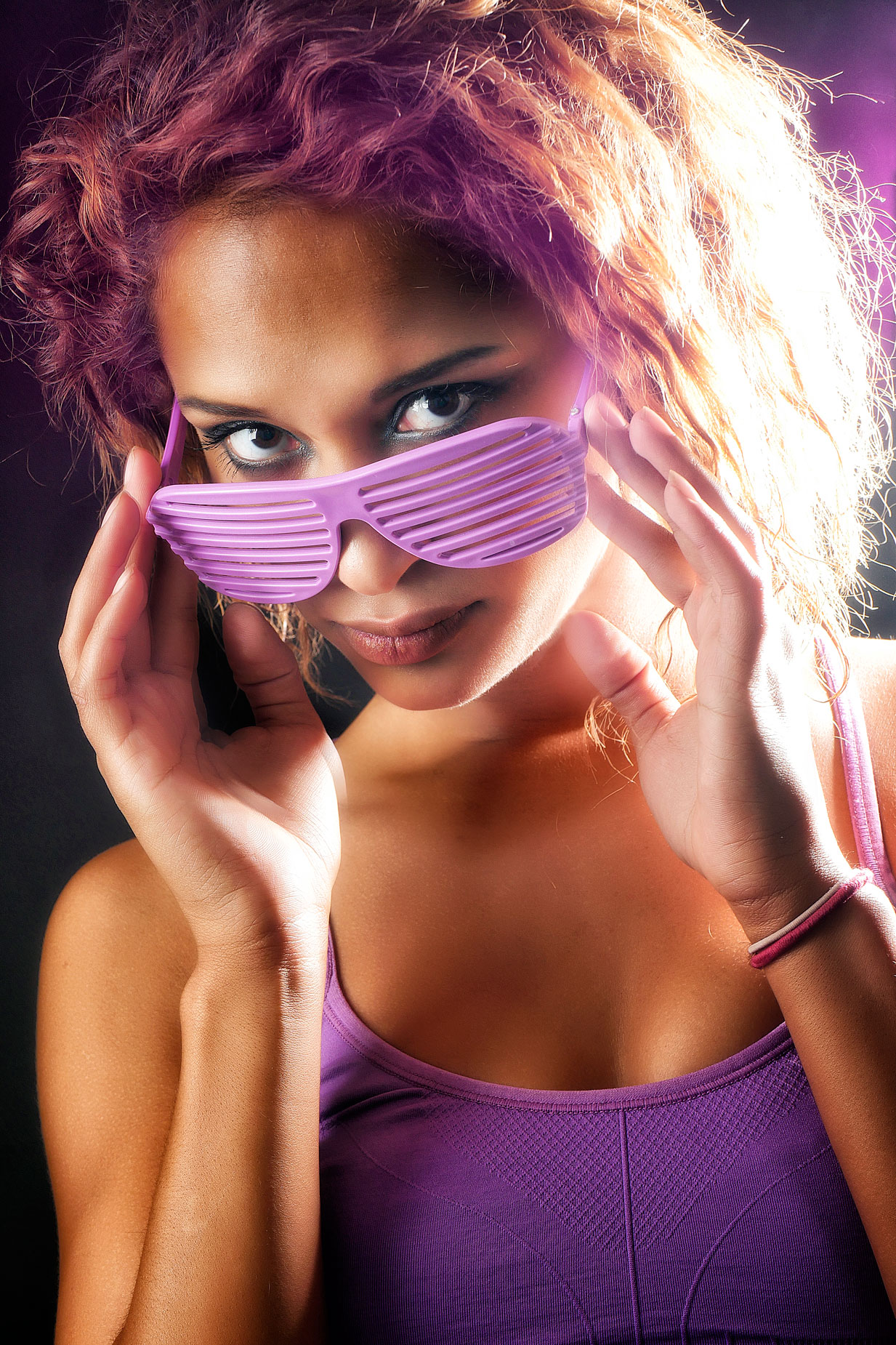 Inner-directed people are the Energizer bunnies of photo subjects. You tell them to stand “over there,” point the camera at them and they will change poses as fast as you can click the shutter. This type of subject probably represents 20% of the subjects you’ll get to photograph.
When photographing inner-directed people, you’ll get lots of good poses, some great ones and a few not so good because the subject isn’t getting any feedback from anyone, but themselves. The other downside is that you will also shoot more photographs of them, which in turn takes more editing time but to tell the truth, I feel that having more photographs to work with is better than having less of them.
How I made this shot: I photographed Amanda, who is inner directed, in my in-home studio. This is the tenth frame of the twenty-two images that I made in this particular series. The camera used was a Panasonic Lumix GH4 with Leica DG Macro-Elmarit 45mm f/2.8 ASPH. MEGA OIS lens with an exposure of 1/125 sec at f/8 and ISO 200. Lighting was from a Godox monolight with a Westcott Apollo Strip softbox attached and placed at camera left. Side light came from another Godox monolight located at camera right with the standard metal reflector in place. The background is a Savage Infinity black vinyl backdrop.
Outer directed people represent the other 80% of photo subjects that you’ll get to photograph and they expect and want you to tell them what to do. Photographing this type of subject takes longer and you’ll usually shoot less images. You’ll also need to take the time to communicate to them exactly what you want them to do, how to stand and pose. They will respond better if you periodically (key word) show them what the photographs you made of them look like on the camera’s LCD screen. Not every shot, just the ones you really like.
It’s up to you to tell outer directed subjects how to pose and in order to do that, you need to know what you want but you’ll also need to be gentle and allow them to be who they really are. What I do is try to with outer directed subjects is to watch what they do and than use a pose that’s close or identical what they do naturally.
 If you enjoyed today’s blog post and would like to treat me to a cup of Earl Grey tea ($3.50), please click here. And if you do, thanks so much.
Interested in learning more about posing? My book Posing for Portrait & Glamour Photography has 160 pages where you can learn all of my posing techniques. Kindle copies of the book are available from Amazon.com for $29.99, as I write this.