
Today’s Post by Joe Farace
We are not the same persons this year as last; nor are those we love. It is a happy chance if we, changing, continue to love a changed person. –W. Somerset Maugham
It’s hard for me to believe but yesterday marked the end of four years of writing Joe’s Book Club posts with today’s post kicking off year five!. When I started this series, I didn’t think that many people would be interested in books that were not about photography or even cars but I wanted to give it a try as part of my current plan to write eight posts a week. That’s why I was surprised to learn how wrong I was. It turns out that there were even times when page views for the Book Club were higher than my photographic-oriented posts, including those about glamour photography. That’s why I want to say a big THANK YOU to all of those readers who have partaken of my various rants and reviews about reading books along with my own sometimes weird, personal experiences navigating the book publishing world.
What’s new with new books from me? I don’t have much to report. As the American photo book publishing world, with few exceptions, has focused almost entirely on UK writers or writers that have a quarter million (or more) social media followers, hoping they would help sell their books, “mid list” writers–what the industry calls people like me–have been left out in the cold. If I ever figure out self publishing or can connect with someone who can help me with it–maybe that’s you— I’ll let you know.
Grab a Book…
…any book. I was told in a recent Books-ta-gram post that I should turn to page 112 of whatever book that I’m currently reading and the first paragraph will describe me. This is what my book said:
Captivity has brought my mental faculties to a focus; and you are well aware that for the collision of clouds electricity is produced—from electricity, from lighting, illumination.
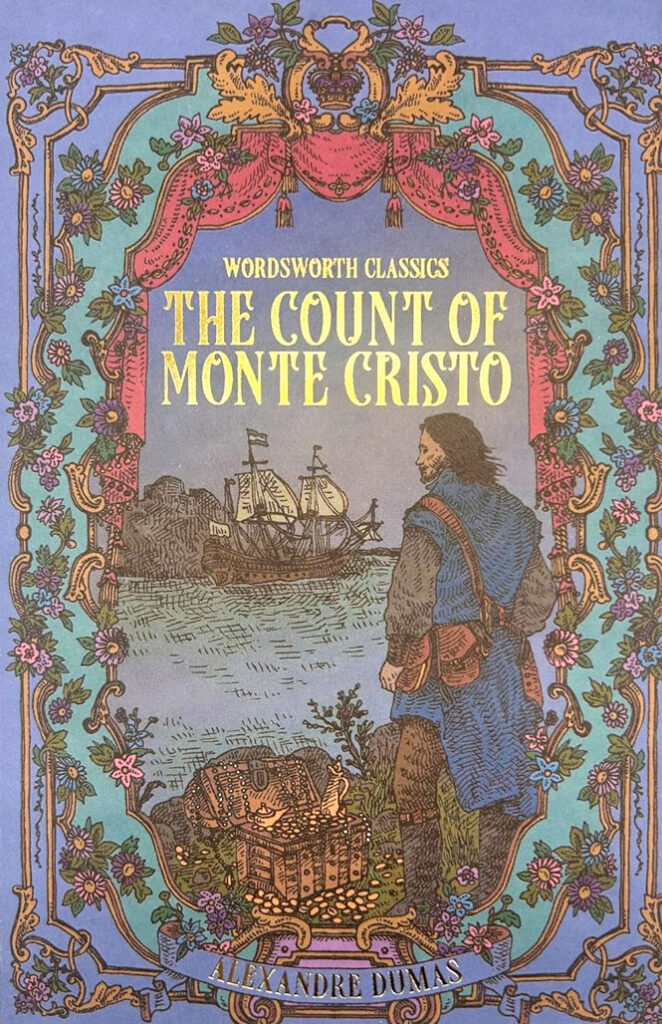 The book, by the way, is The Count of Monte Cristo by Alexandre Dumas (1802-1870.) I leave to you to discern what any of the above text means as it applies to me.
Speaking of this book,The Count of Monte Cristo is big. The unabridged–who wants to read an “abridged” version?—paperback version I’ve linked and read is 928 pages long, although to be fair, there are dozens of pages at the back filled with footnotes to help modern readers understand terms and nuances for something written in 1845. It still is a BIG book and took me a while to read it, which may be why, as I begin this fourth month of the year, I’ve only read 10 books with the eleventh–The Secret Hours–currently underway and that I’ll be talking about anon.
Although The Count of Monte Cristo is an old book, it is currently all the rage of social media with many, younger readers/influencers raving about it as “one of the best books they’ve read” and for once I agree with them. Is it my favorite book of all time? No, that remains Stephen King’s 11/22/63 but it’s easily in my top three, which I found funny. Why?
You may be surprised to learn that The Count of Monte Cristo is not a swashbucklers. Of course, some swashes get buckled now and then but at its heart it’s an adventure story in the classic style. This may be why there have been 50 versions of the book made into films. My favorite remains the 1934 version staring Robert Donat that I watched on television when I was a kid. I have been looking for a DVD of this particular version but have yet to find one. There is new French version of the book I just received from Amazon; Look for a review of that film and (what I read of) the book either here of on my YouTube channel.
The basic story line of The Count of Monte Cristo is simple, which is always the mark of a good story: A young man is falsely accused of treason, he gets sent to prison, after 15 years escapes and finds a fortune in gold and jewels that was told to him by another prisoner. He then plots his revenge on the people responsible for his imprisonment and goes about accomplishing that goal in unexpected ways. But that synopsis sells the story short. Instead, the book is a broad tapestry that has a huge group of characters, some of whom are seemingly randomly introduced for little or no reason only to be revealed in the later parts of the books as having an important and almost always critical and surprising role to play. Each time this occurs you are delighted with both the back story and the story going forward. This makes The Count of Monte Cristo the most fun read I’ve had in long time,
It may be a long book but while reading it and getting to the 900’th page, I found that I didn’t want the book to end. I’ve only seen a few movies and the occasional book that hit me like that so it’s a rare occurrence.The book wraps up with the author teasing a potential sequel but Dumas never wrote one. Maybe that’s a pity but, then again, maybe it’s not. The Count of Monte Cristo is a comfort book that you might want to return to again–I’ve read 11/22/63 three times–when you have the time. Highly recommended.
The Secret Hours
Regular readers know I am a fan of Mick Herron’s writing and have been working my way through his Slow Horses book series but every now and then I read some of his other books like The Secret Hours: I needed some vitamins and my local Walgreens was out of my favorites, so I ordered them from Amazon. When placing a small order I usually look for some inexpensive books or movies to add and saw they had The Secret Hours on sale for around ten bucks, so I ordered it because it was cheap and boy was I surprised.
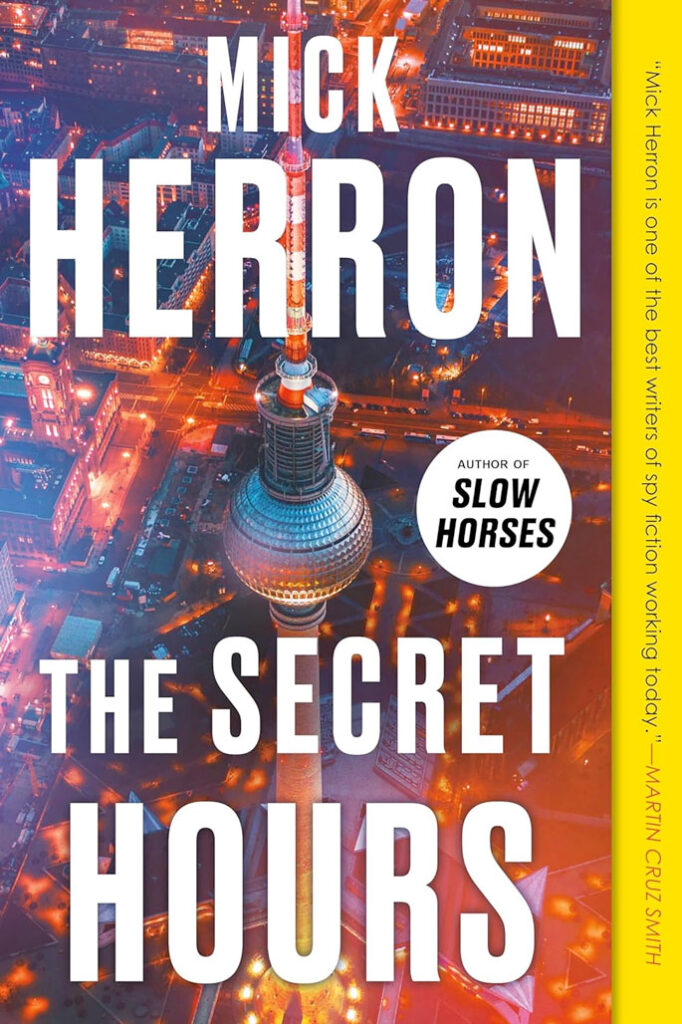 Although about the world of spies, this is not a Slow Horses book; instead I would call it Slow Horses-adjacent because it’s set in the same world and some of the same characters from that series make an appearance. Some are named, while others are not and yet others appear under different names but you’ll figure out who;’s who soon eniugh.
Like the Slow Horses books there is no single overarching storyline instead there are several and sometimes they intersect and sometime they don’t. That’s sorta the case here. The story lines kick off with an attempted kidnapping and maybe attempted murder of a retired spy named Max. The scene abruptly shifts to a story about Griselda and Malcolm, two minor bureaucrats in the secret services who are drafted to provide administrative support for a panel investigating wrongdoings within the spy agency. Here we also meet First Desk who shows up as an impediment to their function and later, by name, in the third storyline. Next, in both flashbacks and a contemporary story we meet Allison, a newbie clerical employees, who is drafted by another denizen of the Slow Horses milieu to go to Berlin and report of possible wrongdoings by that group.
The bureaucrat’s story plods—emphasis on plods—along but when Allison starts telling her story to the panel–even how that occurs is an interesting story of its own–about what happened in Berlin 30 years ago ago, fireworks erupt and the style of the book shifts to that of John le Carré in more ways than one. In these flashbacks. Alison first meets one of the characters from Dead Lions, along with one of the prominent characters in the Slow Horses books and then an unforgettable character named Otis, for whom this entire subplot revolves. This story line can be melancholy yet at the same time is a page turner. While John le Carré brought his real world experience to books like The Spy Who Came in from the Cold, Herron takes you into a post-Cold War Berlin that feels all-so-real even though it probably is not.
This may be the best book by Herron I have read so far and that’s saying something. While the enjoyment of reading it is enhanced by having already read four Slow Horses novels, I wonder if The Secret Hours would be an excellent introduction for new readers who have not read any of the Slow Horses books yet because after they read The Secret Hours and begin reading the Slow Horses saga, they will have delightful insight on how some of the characters are who they seem to be. No matter how you do it: Pick up a copy of The Secret Hours while it’s so cheap. Highly recommended.