
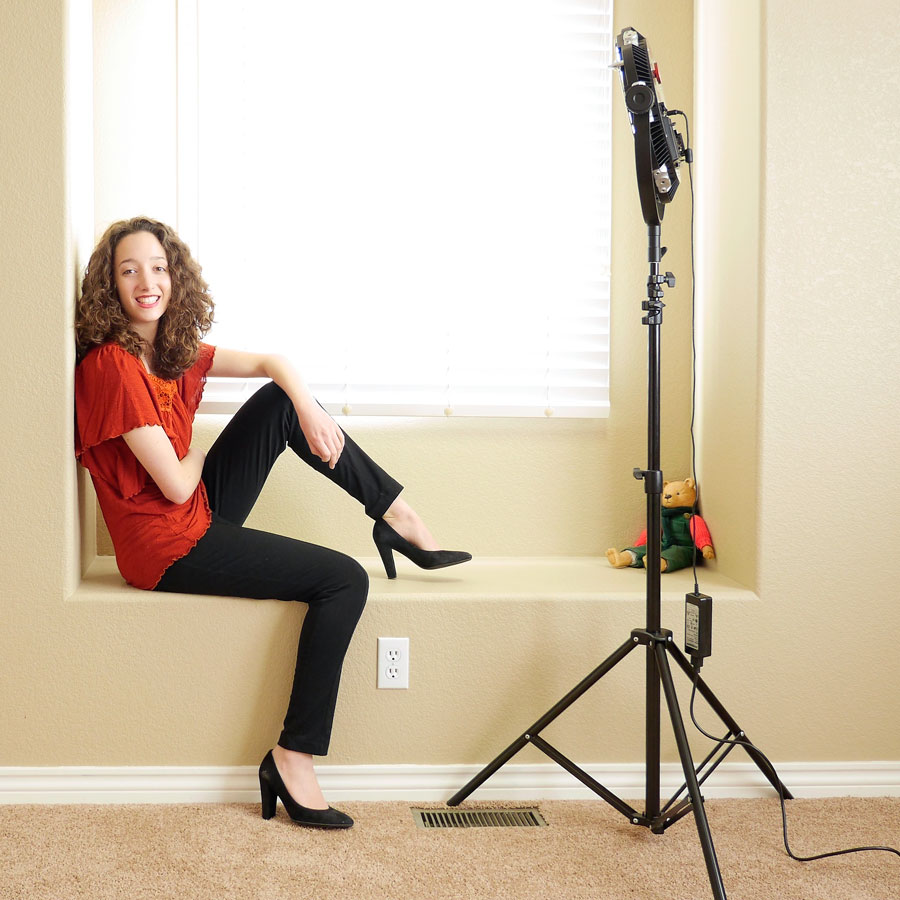
My Sunday Series on Available Light Portraiture continues today with a window light portrait of a young model that was made using mostly available light with some supplementary lighting from a Rotolight LED light source. Is that cheating? No more so than using a speedlight for fill, I think, but you are free to draw your own conclusions.
Today’s Post by Joe Farace
“The Sweet Spot is about shifting the small gears, the ones that rotate relatively easily. And because all the gears are interlocking, when we tweak a small gear, large gears start to move—effortlessly—as well.” ―
 Typically finding a photographic “sweet spot” refers to choosing an aperture at which your lens will produce its maximum sharpness but I would like to add that there is also an ISO sweet spot that maximizes sensitivity while minimizing the amount of digital noise and producing the best looking photograph. All of which brings me to how the featured image was made…
LED studio lighting systems are not a lighting panacea but seem to be a good match for today’s high performance DSLRs and mirrorless cameras that have higher-than-normal ISO capabilities.
Using whatever Light is Available
When testing one of Rotolight’s Anova LED lights in my home studio, I shot an ISO bracket to see what settings would work best, ultimately producing a “test strip” of images showing a bracket from ISO 400 through 500, 640, 800, 1000, 1250, and 1600. With the camera I used at the time, the differences between 400 and 1600 was so small I could only see it at large magnifications, so I ended up shooting that particular light in my studio at ISO settings ranging from 640 to 1600 depending on the specific situation.
 The images from mirrorless cameras newer than the Panasonic Lumix GH4—2014, yikes—I’ve been using have much more expanded, and better looking high ISO results. The Lumix GH7, for example, has a high ISO of 25,600 for photographs and 6,400 for video. It utilizes a Dual Native ISO system to manage noise in low light.
As newer cameras get better and better in capturing less noisy images at higher ISO settings, your own camera settings will certainly be different than mine. So take a few minutes to shoot a bracket of ISO settings at different levels, evaluate them on a good monitor and make your decisions based on real data not just by Kentucky windage.
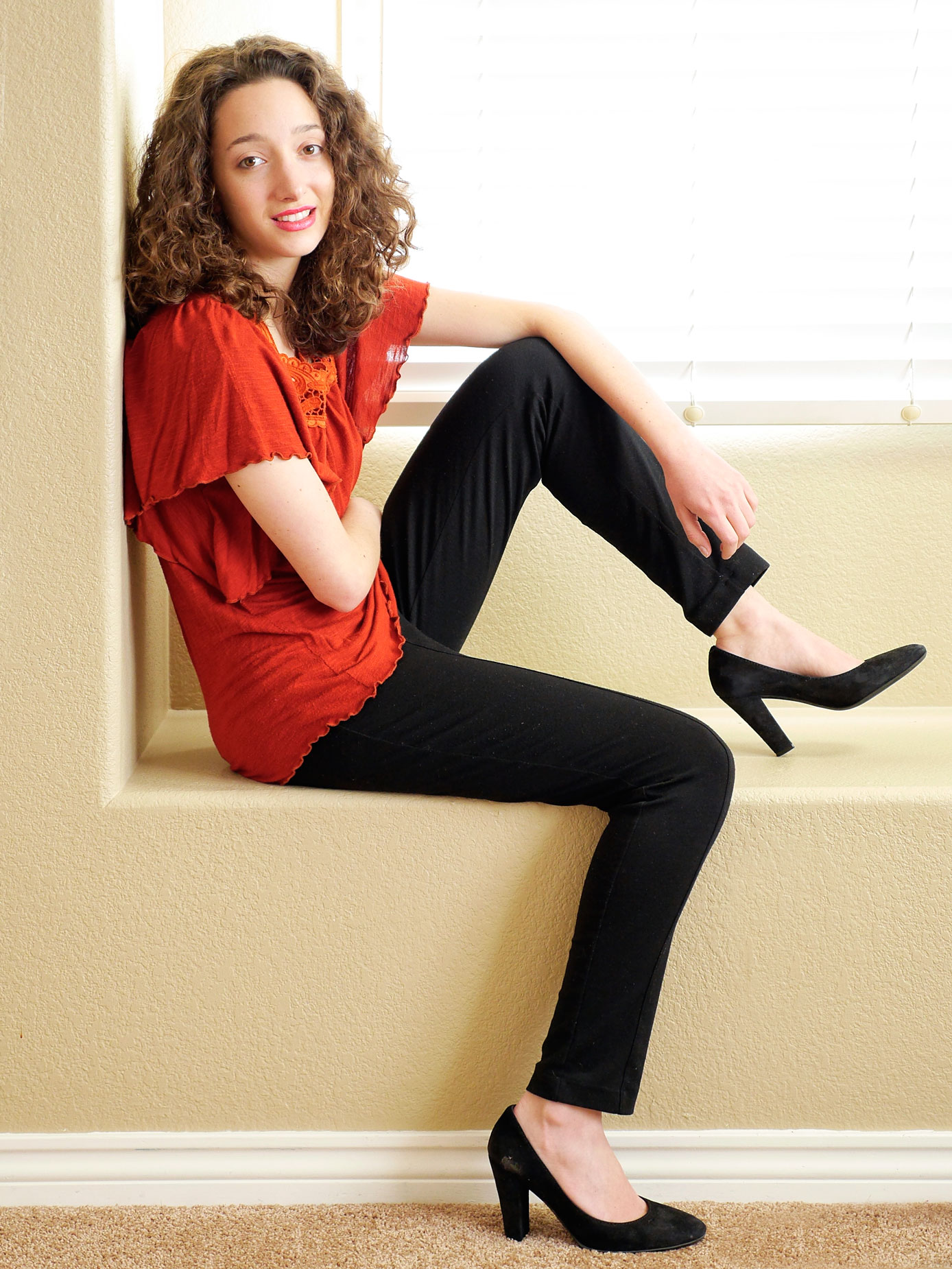
How I Made this Portrait: I photographed aspiring model Laura May Bachmayer in the guest bedroom of my home and this is the first acceptable result I’ve been able to get when shooting in the inherently contrasty South-facing window light in this room, even though for this shot, the white wooden blinds are closed tight. As you can see in the above right setup shot, the Anova LED light was placed at camera right and color balanced using Rotolight’s Magic Eye app. The camera used was a Panasonic Lumix GH4 with Lumix G Vario 12-35mm f/2.8 lens (at 33mm) with an exposure of 1/200 sec at f/2.8 and ISO 800 with a plus two and one-third stop exposure compensation,
The original JPEG file (made before my current RAW+JPEG capture regimen) was cropped using Photoshop’s 4:3 ratio because I had developed the bad habit—long since discarded—of shooting everything using a 3:2 ratio. Now with my Micro Four-thirds camera I only shoot in the native 4:3 ratio. The image file was then lightly retouched and enhanced with the Vivenza Photoshop-compatible plug-in,
 If you enjoyed today’s blog post and would like to treat me to a cup of Earl Grey tea ($2.50), please click here. And if you do, thanks so much.
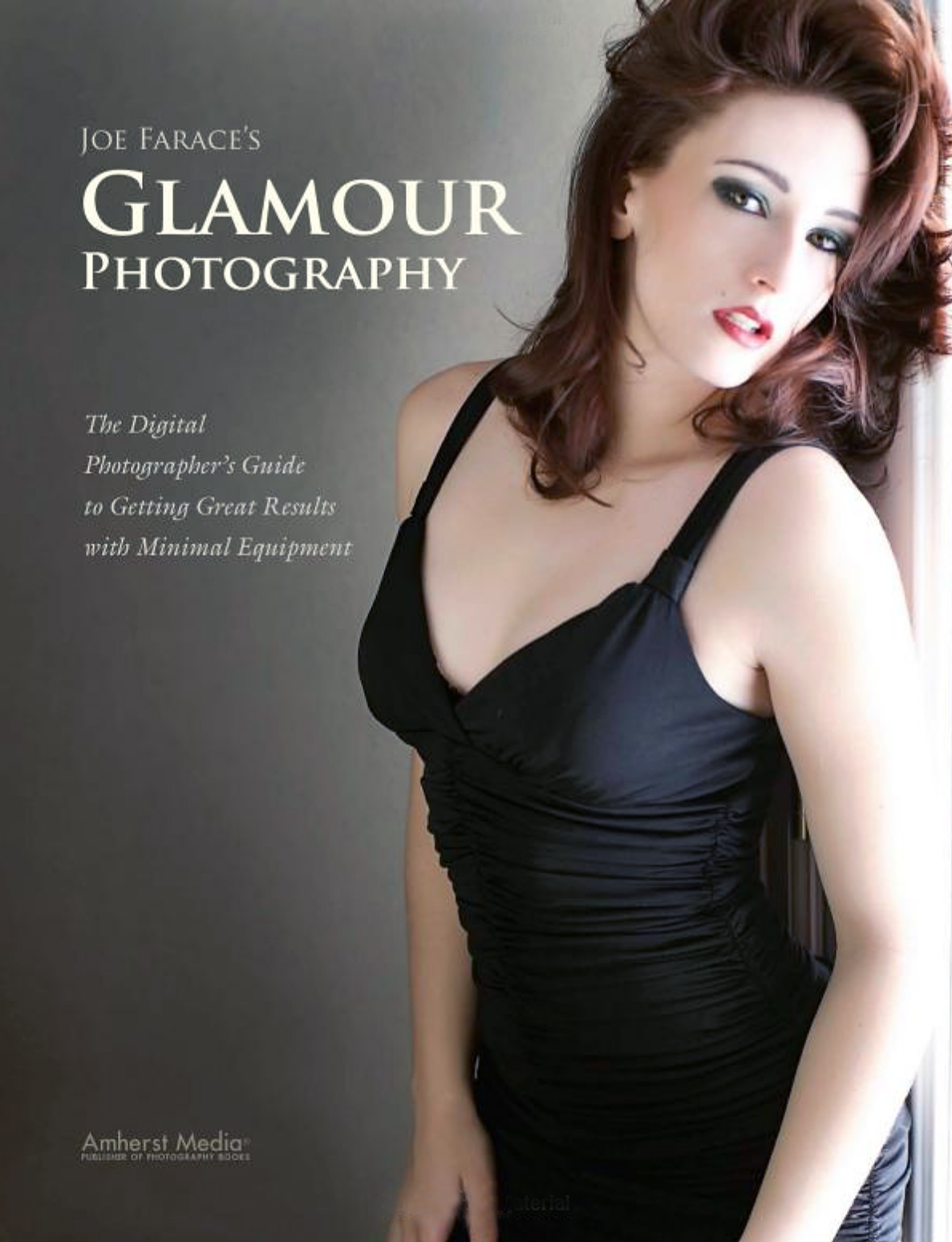
My book Joe Farace’s Glamour Photography is full of tips, tools and techniques for glamour and boudoir photography and includes information on all of the cameras used as well as the complete exposure data for each image. Used books start around thirteen bucks.as I write this. The Kindle version is $19.99 for those preferring a digital format.