
Today’s Post by Joe Farace
Amsterdam was a great surprise to me. I had always thought of Venice as the city of canals; it had never entered my mind that I should find similar conditions in a Dutch town. —James Weldon Johnson
My only visit to the Netherlands and Amsterdam was back in 1978; Even though the city is 750 years old I’ll bet a lot has changed since then. My main memories of Amsterdam are the overall charm of the city, it’s canals and the graciousness of it’s people. Not surprisingly all of the images I made at the time were shot on film—Kodak Ektachrome, for the most part. Someday I’ll digitize those images and write a post about my experiences there. Instead, in its place today its something called “dutch” that has its origins in another country, much like “Pennsylvania Dutch,” here in the USA.
The Dutch angle…
…also known as Dutch tilt, canted angle, vortex angle or oblique angle is a type of camera shot that involves setting the camera at an angle on its axis so it’s composed with vertical lines at an angle to the side of the frame, so the horizon line is not parallel with the bottom of the camera frame. This produces a viewpoint similar to tilting one’s head to the side.
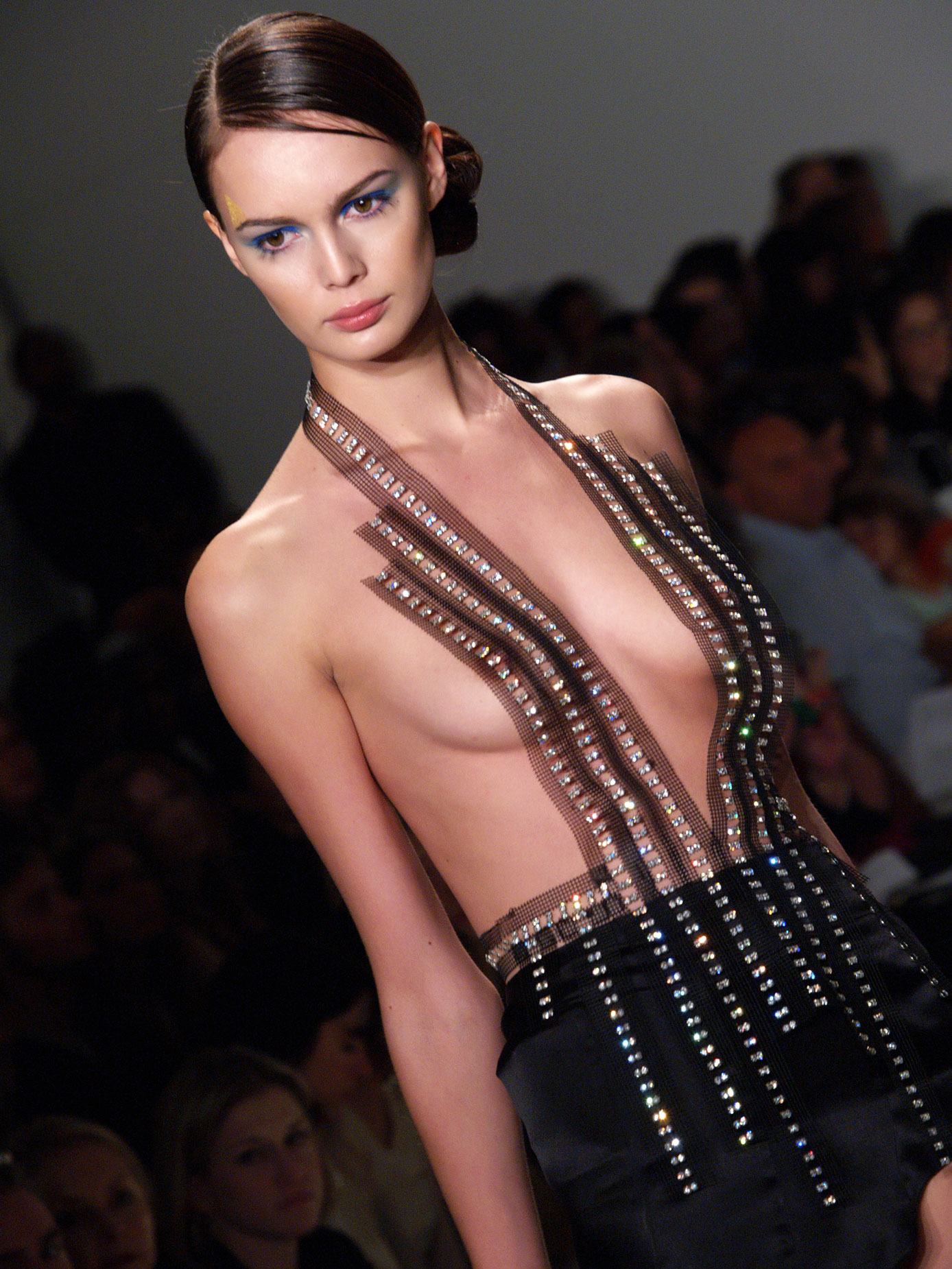 The Dutch tilt is strongly associated with the German movie industry during the expressionist movement (1919 to 1931, according to some pundits) which extensively used the Dutch angle. The word “Dutch” in this context is a twist on the word Deutsch, which is the German word for “German. Maybe that’s why sometimes, the “Dutch angle” is known as a “German angle” due to its popularity in silent-era German films that popularized this style of compensation, although you will see it all over James Whale’s 1931 film Frankenstein..
How I Made this Photograph: I made this runway shot during New York’s Fashion Week when I was knee deep in shooting everything with the Dutch Angle. I was a guest of Olympus who, that year, was one of the show’s sponsors. This sponsorship coincided with Oly’s introduction of their E-1 Four-thirds system DSLR (not the Micro Four-thirds system, that would come later,) The E-1 was a 4.9-megapixel camera that used the legendary Kodak KAF-5101C FFT CCD sensor that is, these days, well-regarded for it’s ability to produce film-like results, The camera had a continuous shooting rate of 3-12 frames per second, which came in handy when I was shooting fast walking runway models.
The camera was used with an Olympus Zuiko Digital 50-200mm f/2.8-3.5 ED lens at 112mm (224mm equivalent.) The Shutter Priority (Tv) exposure was 1/250 sec at f/6.3 and ISO 400 with a minus one-third stop exposure compensation. No flash was allowed during Fashion Week runway shows because of safety issues with the models so this is a pure available light shot. The runway lighting was set up for television and we photographers in the bullpen were told that the lighting was “daylight balanced.” It was not; it seems like we were a gullible lot but it was close enough and easy to correct in Photoshop using iCorrect Portrait.
 If you enjoyed today’s blog post and would like to buy me a cup of Earl Grey tea ($2.50), click here. And if you do, thank you very much.
My book Joe Farace’s Glamour Photography is full of tips, tools and techniques for glamour and boudoir photography with new copies available from Amazon for $30.54. Used copies are starting at the hard-to-beat price price of around ten bucks and the Kindle version is $19.99 for those who prefer a digital format.