
January 9 is National Law Enforcement Day/ If you have a police officer as a friend or family member, today is a good time to show these officers we understand how difficult their job is and appreciate their sacrifice and risk.
Today’s Post by Joe Farace
Last week I was having a coffee/tea break with my photographer pal Cliff Lawson who was telling me about the challenges he encountered handling the logistics for shooting a location portrait that included the subject’s horse.
For more information about on location portrait photography, please check out the Holiday Edition of the Pixels, Grain and Cookies podcast for a behind-the-scenes look at my friend Barry Staver‘s shoots for People magazine that includes photographing gorilla twins. For several months, I wrote a Sunday Series of posts about Outdoor Portraiture; you can find them using this blog’s Search function (Magnifying Glass icon.)
You’re On Location and…
Making any kind of portrait outdoors means that sometimes you’re going to have to be creative about where and when you shoot. This means you need to search for places that accommodate your subject and the shoot’s photographic requirements but even after doing the appropriate amount of research, it doesn’t mean you won’t encounter a few problems.
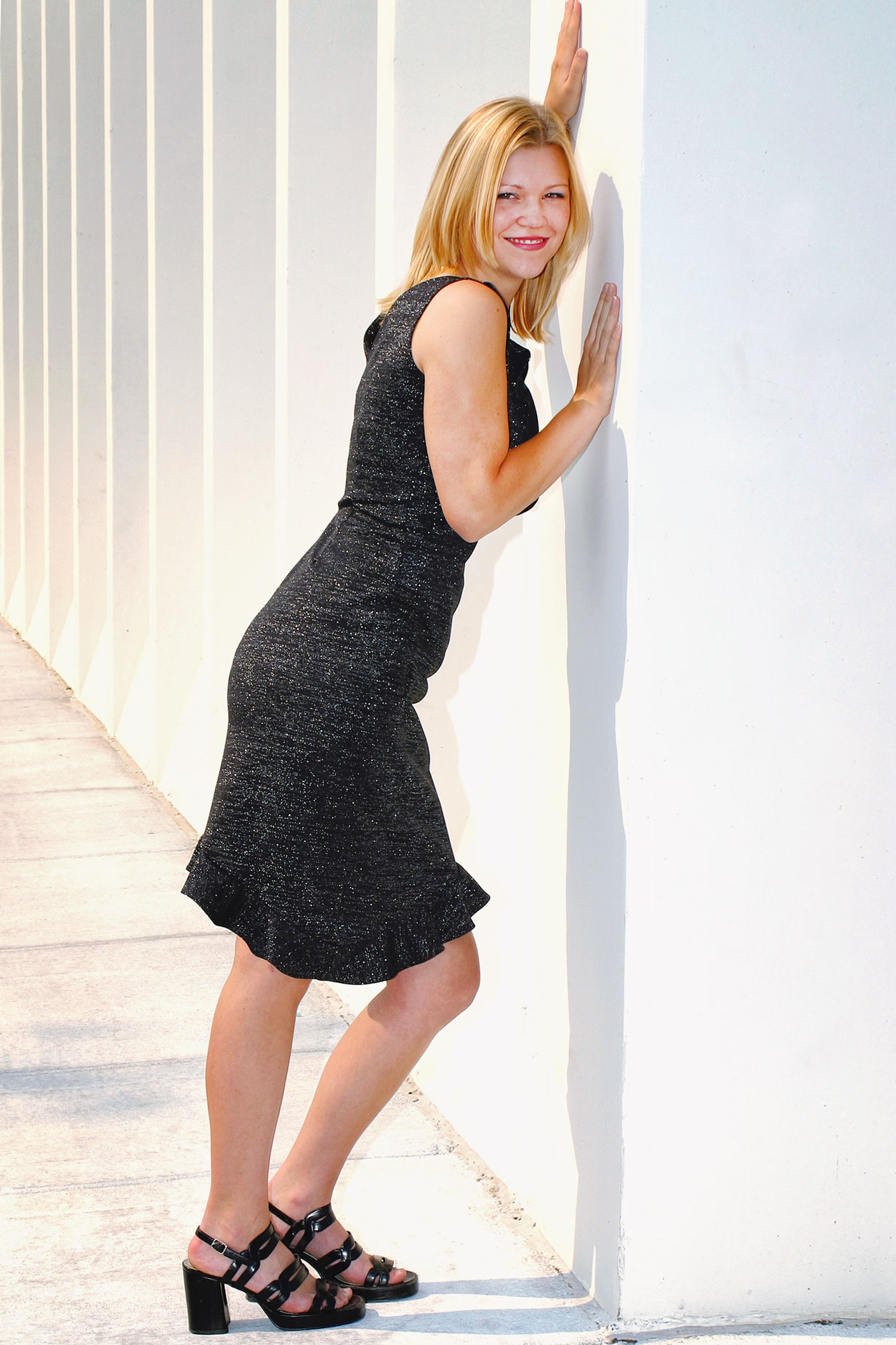 I was shooting a model portrait of Jennifer (at right) outside a county office building and after less than ten minutes of photography, a polite Sheriff’s Deputy showed up asking us to move along because we were “disturbing the people working in the building.” Maybe he said “distracting” but I suppose that could also be true.
During those few minutes, I managed to make twenty-two shots and while I would have liked to have made more we agreed to leave. My personal rule is never argue with anyone who carries a badge and a gun.
How I Made this Photo: This is one of the photographs that got the Sheriff’s Deputy’s attention. Unfortunately, I never got the shot I was trying to achieve but this pose is close to it and gives you an idea of the look I was trying to achieve—black dress, white building—you get what I was going for.
The above image was shot using a Canon EOS 60D and a EF 22-55mm f/4-5.6 lens with an exposure of 1/200 sec at f/11 and ISO 100. A 420EX speedlite was used for fill. I originally envisioned this as a black and white image but on further reflection, prefer this color version, that seems more cheery and upbeat.
An interesting postscript to this particular shoot was that after Jennifer and I were asked to leave, we moved the shoot two blocks away, did a wardrobe change (in my car) and shot at a city building were she posed on a ledge just outside the City Court bailiff’s office. During the entire shoot nobody in the building said a single thing to us but it was in such a public space space that we had lots of comments from the Peanut Gallery as cars drove by.
What Are Your Rights?
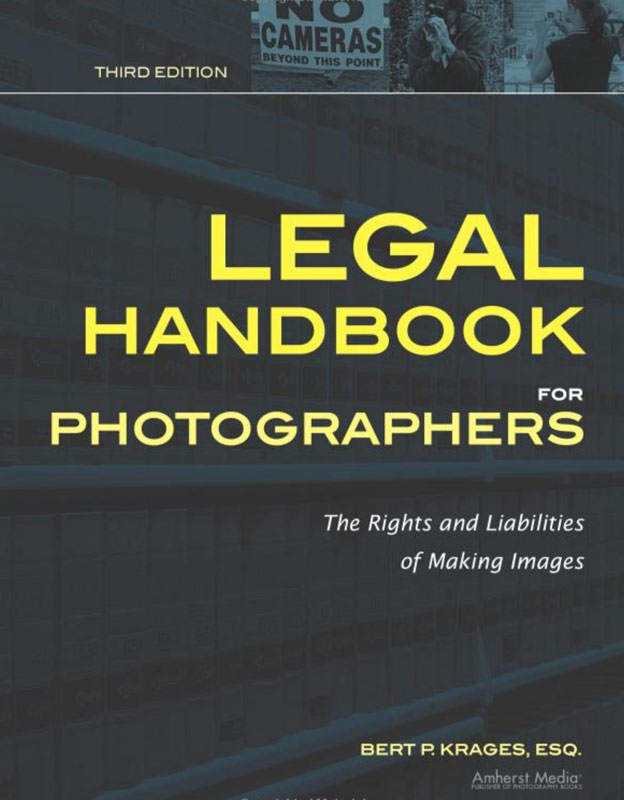 What are your rights under these kind of situations? Bert P. Krages II attorney-at-law developed a one-page PDF containing information about what your rights are when stopped and confronted by authorities. As the author of the useful book, Legal Handbook for Photographers, Mr. Krages is knowledgeable about photographer’s rights. I would like to thank him for producing a document that explains your rights and legal remedies when confronted by law enforcement or others when shooting in public but more importantly how you should handle these kinds of encounters. Print a copy and keep it in your camera bag.
Please visit my YouTube Channel—Joe Farace’s Videos—for lots of videos about photography and Barry Staver and my Pixel, Grain and Cookies podcasts. If you can find it in your heart, please click Like and Subscribe; it would really mean a lot to me. Thanks.