
It’s #wheelswednesday and today is the first post in a three-part (at least) series of Car Portraits where I am shifting the theme’s focus from the cars to the people that drive them. The series begins with this portrait I made of Courtney who is a drift car driver
Today’s Post by Joe Farace
If you’re in control, you’re not going fast enough.— Parnelli Jones
In case you asked…Drifting is a driving technique where the driver purposely oversteers the car, with a corresponding loss of traction, while maintaining control and driving the car through a corner or turn. This technique causes the rear slip angle to exceed the front slip angle to such an extent that the front wheels are often pointing in the opposite direction to the turn (e.g. car is turning left, wheels are pointed right or vice versa, also known as opposite lock.)—from Wikipedia
There Are Two Types of Photographers
 When it comes to portrait lighting, I like to think there are basically two kinds of photographers: The first one likes to shoot using “available light” by which they mean is they like to use “every light that’s available.” Back when my wife and I owned a studio, this was a perfect description of her portrait lighting technique and she was a master of it.
In the past, I was the second type of photographer and preferred to use as few lights—or none— as possible mainly because it’s simpler, less expensive, reduces setup time and results in less weight being transported on location. As I’ve gotten older, my approach to portrait lighting has evolved. Nowadays, I’m more open minded about the amount and kind of lighting that I’ll use for portraits. While I still have a lot to learn about lighting, I enjoy experimenting with different kinds of lighting styles, although the setup for today’s portrait seems straightforward and perfectly fits my original style of lighting..
How I made this portrait: Courtney is both a model and an automobile enthusiast who drives a drift car, a Nissan 240SX, and was photographed in my home studio while wearing one of Morgan’s and Philip’s T-shirts that the company donated for the shoot. The lighting for her portrait was provided by a single 150 Watt-second Flashpoint monolight—before I switched to monolights from Paul C . Buff—that had a 24×36-inch soft box attached and was mounted on a 9.5-foot light stand. It was placed at camera right and as close as possible to the subject without encroaching into the frame.
I photographed Courtney against a Savage Focus Gray seamless paper background that was mounted onto JTL background stands. The camera used was a Canon EOS 50D with EF28-135mm f/3.5-5.6 IS USM lens (at 80mm) with a manual mode exposure of 1/125 sec at f/18 at ISO 100.
 If you enjoyed today’s blog post and would like to treat me to a cup of Earl Grey tea ($2.50), please click here. And if you do, thanks so much.
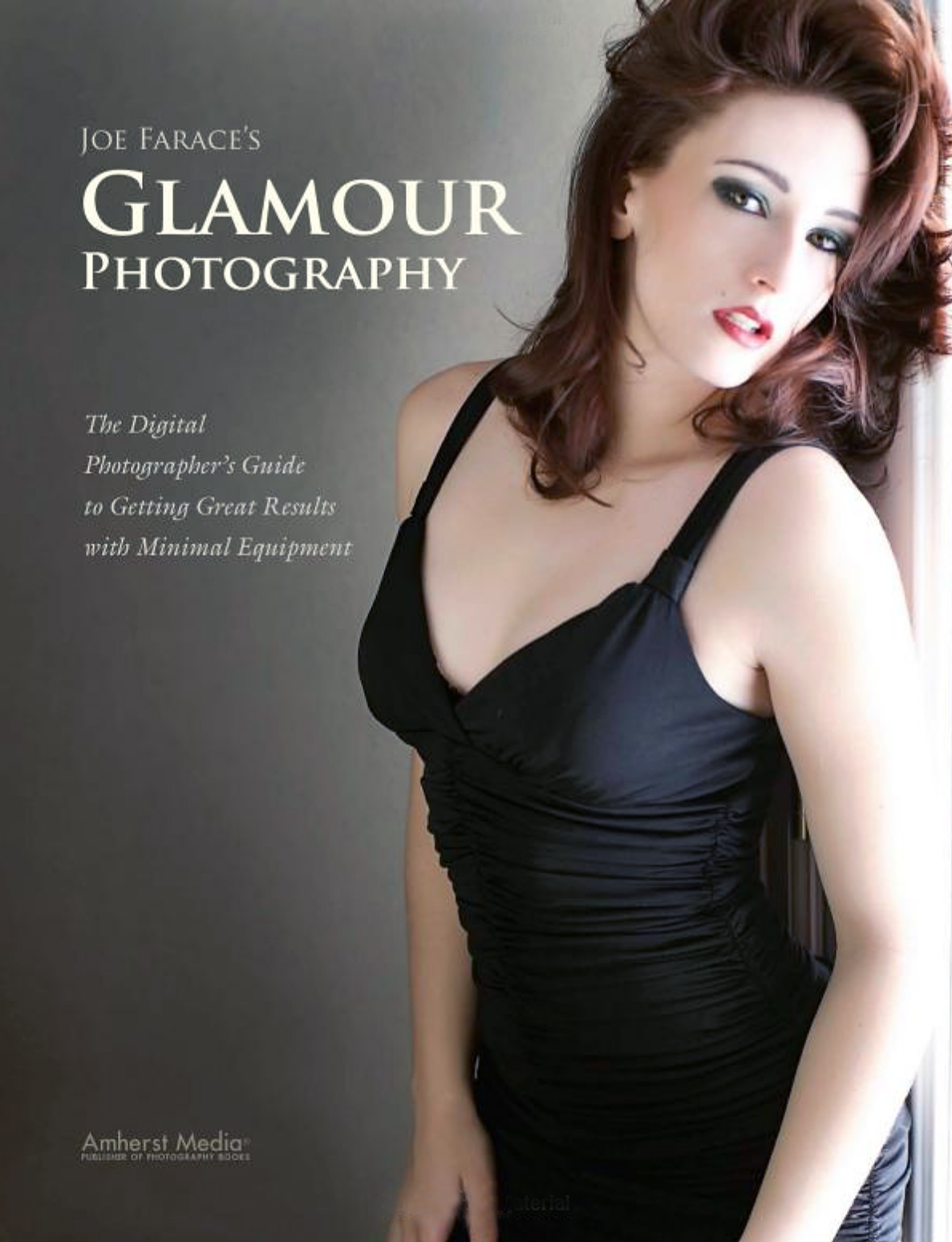
My book Joe Farace’s Glamour Photography is full of tips, tools and techniques for glamour and boudoir photography and includes information on all of the cameras used as well as the complete exposure data for each image. New books are available from Amazon for $20.02 with used books starting around ten bucks.as I write this. The Kindle version is $19.99 for those preferring a digital format.