
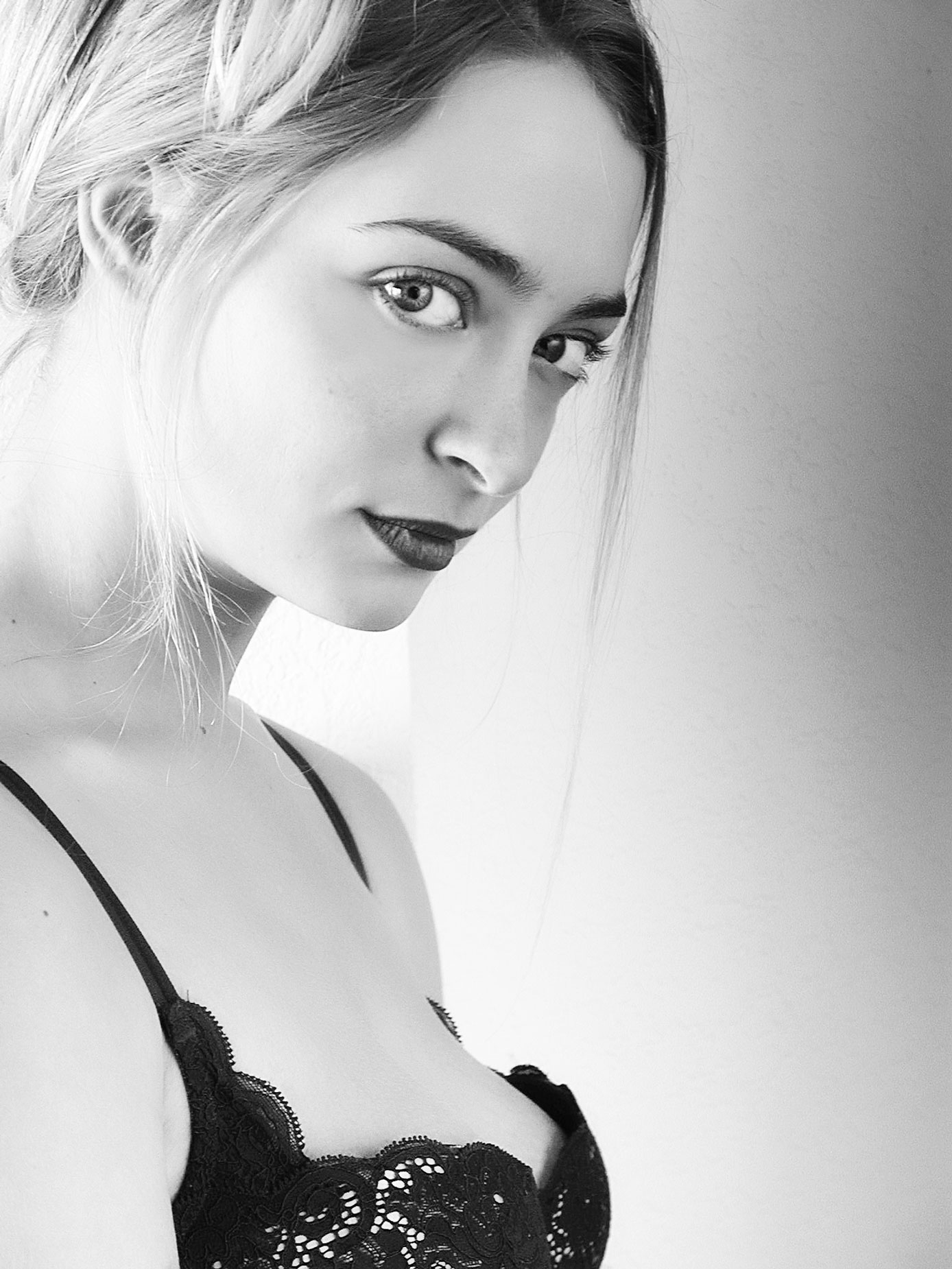
My Sunday Series on Available Light Portraiture continues today with a look at the concept of using available light to create a black and white portrait. The featured portrait is a model who may be new to this blog, Chelsea,
Today’s post by Joe Farace
“Available to all photographers free is the one light source given by a window which faces the north. It’s a painterly light that any face or still life comes alive in”. – Garry Camp Burdick
 I once wrote in a post that “Sometimes the very nature of the subject demands that the image be photographed in black and white. Arnold Newman’s classic portrait of composer Igor Stravinsky sitting at a piano could never have been made in color and have the same impact it has as a monochrome image.” I think today’s featured window light portrait of Chelsea is another example of how a black and white portrait can be more dramatic than if it had been made in color, which is how it was originally captured.
It’s all there in black and white
Black and white photography is a wonderful media for making intimate portraits because, as I’ve mentioned before, the lack of color immediately simplifies the image, causing the viewer to focus on the real subject of the photograph, their face, instead of their clothing or surroundings.
Recently, several portrait photographers told me they’ve seen a higher than normal demand for black and white portraits. Making a portrait in black and white is something you might want to think about for your next model shoot and since you can shoot in color and convert the image file into black and white later, you still have that color original available, just in case. Better yet, shoot the portrait in RAW+JPEG mode, setting the camera in monochrome mode so you have a black and white JPEG file to use as a “proof” and a color RAW file to convert to monochrome later. This is something that my co-host Barry Staver and I talk about in our most recent Pixels, Grain and Cookies podcast;
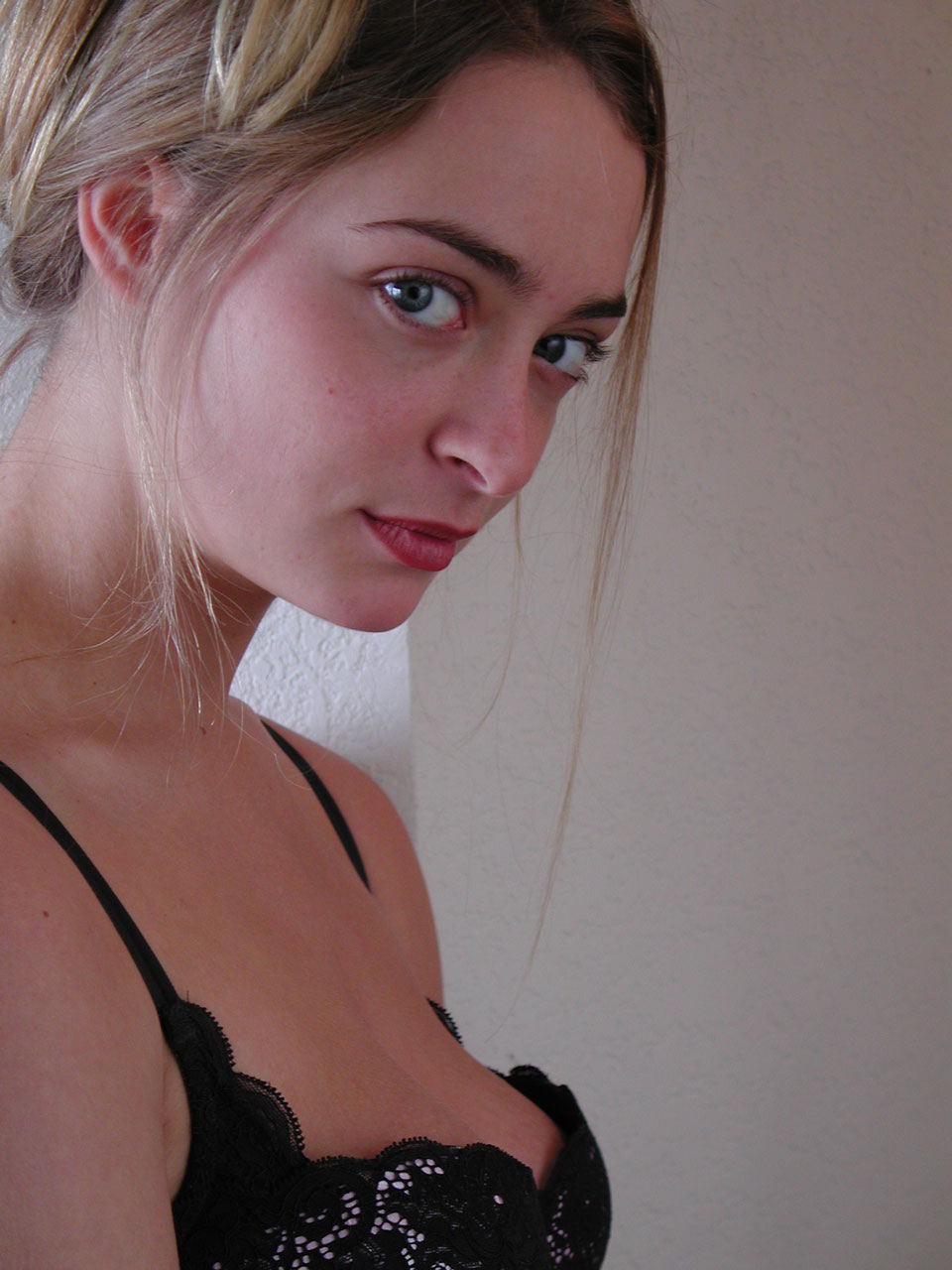
How I Made this Portrait: I photographed Chelsea as part of an arraignment I used to have with a local modeling agency to have a portrait or glamour session with their new models. After the shoot, I provided images to both the model and the agency, These were, for the most part, one-time shoots and that was the case with Chelsea. She was photographed in the kitchen of my former home using the available light from a North-facing bay window. The camera used was an Epson PhotoPC 3100Z point-and-shoot camera.
 Yes, Epson used to make cameras. The 3.3-megapixel PhotoPC 3100Z was introduced in 2001 as a digital bridge camera that had a relatively attractive body during a time when digital camera design was all over the place. At this time, camera manufacturers never thought that, perhaps, they should make these new-fangled devices look like, well, cameras!
The PhotoPC 3100Z had a zoom viewfinder with diopter correction and a hot shoe for attaching a speedlight. The camera had a 1/1.8-inch CCD image sensor that is now beloved by shooters of older digital cameras because they believe it produces the most filmic look. The camera had a motorized a 7-21mm f/2.0-2.5 lens that was marked as an Epson optic. EXIF data for this image shows the lens was set at 20.7mm and with its 4.8x multiplication factor, it produced a 99mm equivalent angle-of-view. The exposure was 1/30 sec at f/2.5 and ISO 100.
The portrait was originally captured as a color JPEG file: I don’t know if the PhotoPC 3100Z even had a RAW capture option. As you can see (above right) the original image file was slightly underexposed and the underexposure was corrected using techniques I use for underexposed portraits that are explained here. After correcting the exposure, I first tried Exposure Software’s Exposure but ended up using Silver Efex’s default preset, suppressing grain and using the green filter to pump up the contrast a bit before adding exposure and contrast from the named sliders. The portrait was finished with a light layer if the Glamour Glow filter from Color Efex.
 If you enjoyed today’s blog post and would like to buy Joe a cup of Earl Grey tea ($3.50), click here. And if you do, thank you very much.
My book Joe Farace’s Glamour Photography is full of tips, tools and techniques for glamour and boudoir photography and includes information on all of the cameras used as well as the exposure data for each image. Used books are available from Amazon for $45.08, I write this. A Kindle version is $19.99 for those preferring a digital format.