
Today’s Post by Joe Farace
The true work of art is but a shadow of the divine perfection.—Michelangelo
 In the 1970’s when I was teaching photography at Howard Community College in Columbia, MD, I would tell my students at that the perfect photographic exposure was the one that they liked.
To achieve their goals, I suggested that they shoot tests using their favorite slide film, making notes on how the film behaved under different kinds of lighting conditions such as cloudy days, back lighting, side lighting and even electronic flash.
These days in almost all of the digital photography workshops I conduct, getting perfect exposures seems to be the first thing students ask about.
Part of the confusion is that some digital gurus compare exposing digital images with shooting slide film, such as “be careful not to blow out the highlights, all the pixels will evaporate.” Or they compare it to negative film, advising that digital sensors have a two to three stop exposure latitude. I beleive that, depending on the lighting conditions and type of chip, digital cameras behave like a mixture of slide and negative film at the same time. It’s like slide film on the overexposure side and like negative film on the underexposure side.
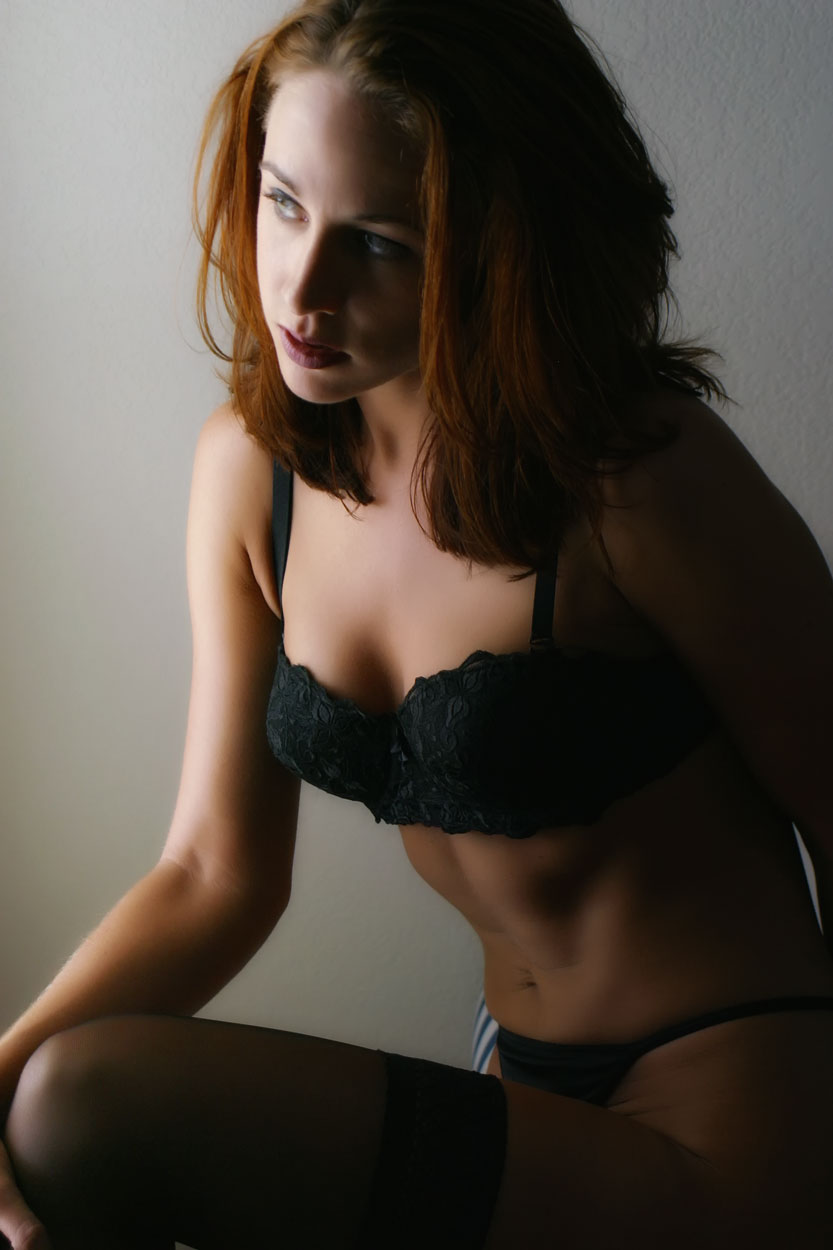
How I made this shot: Before she became a pastry chef, Megan Textor was one of my favorite models and called me about updating her portfolio with some new images that would include moody lighting and shadows. Since she wanted me to create some portraits that had extreme (my opinion) contrast I picked a tall, thin south-facing window in my former living room as the main light source with no reflectors or supplemental lighting to fill in shadows.
The above images was made using only window light—no reflectors or fill flash—with a Canon EOS 50D and a EF 22-55mm f/4-5.6 USM EF lens (at 53mm.) Program mode exposure was 1/80 sec at f/6.3 and ISO 400. I shot a bracketed series of underexposed shots in one-third stop increments. White balance was set at “daylight.” When I reviewed the images on the camera’s preview screen with the model, it was obvious the images capturing the mood we were trying to achieve were produced at one to two stops under what would be considered “normal.” This particular image had minus two-thirds stop exposure compensation.
That doesn’t mean that these photographs were “perfect.” Far from it. As you underexpose digital images, noise becomes a problem but that is one problem that can be minimized by using noise reduction software or you can just let it add to the mood, much like film grain. In the case of this particular image I used the Dfine plug-in to minimize noise.
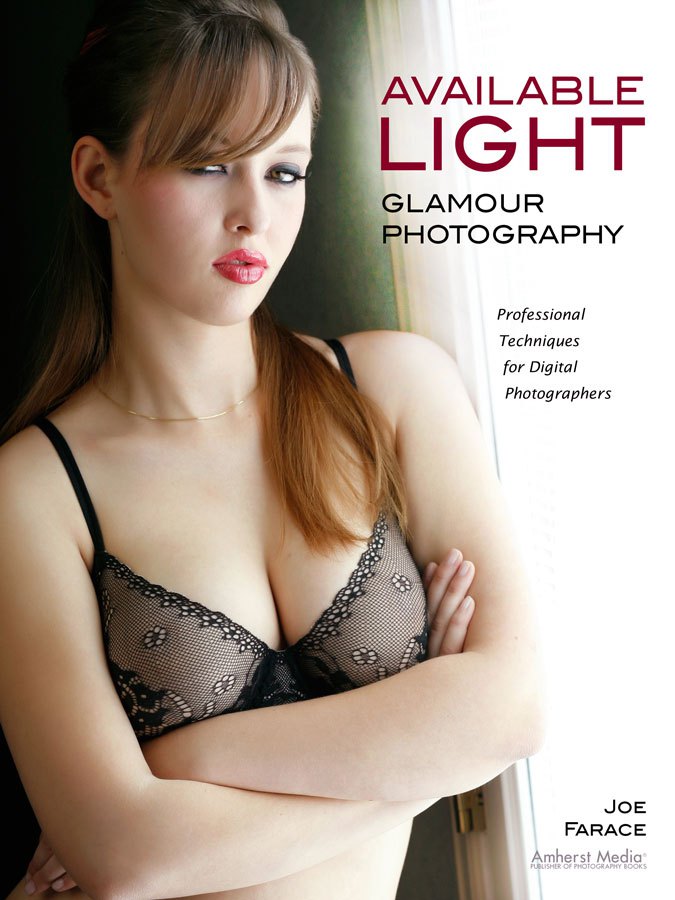
You can learn all of my tips, tools and techniques on shooting available light glamour photography in my book surprisingly titled Available Light Glamour Photography. New copies of the book are available from Amazon for $29.95 with used copies starting around twenty bucks, as I write this. Kindle copes are $28.45 if you prefer a digital format.