
Today is National Donut Day that’s celebrated in the United States and in some other countries, on the first Friday of June of each year, succeeding the donut event created by The Salvation Army in Chicago in 1938 to honor those of their members who served donuts to soldiers during World War I. The holiday celebrates the donut and if you are reading this post in the morning, my pal Barry Staver and I are celebrating it in Starbucks while eating LaMars donuts (est. 1933) while sipping coffee and tea.
Today’s Post by Joe Farace
 One of the basic laws of imaging states that when making a photograph only one part of a three-dimensional object can be in focus at the image plane. This means that the areas in front of and behind the focus plane can appear, more or less, in focus or in what some people like to term acceptable focus. “Acceptable” sharpness is subjective and becomes more critical when viewing larger prints or on large screens, like a 27-inch (or larger) monitor,.
Back to Basics
Depth-of-field is a measure of the zone of distances (from near to far) that are within acceptable sharpness at a given aperture and focusing distance. It is the area that your eyes perceive as being in focus and is affected by several factors, including the distance of the camera to a subject that’s being focused. Depth-of-field increases as the lens aperture is stopped down and decreases as the lens aperture gets larger and when the camera-to-subject distance decreases. At the point of critical focus, there is a range of acceptable focus that is one-third in front of that point and two-thirds behind it. A lens with poor resolution may appear to have greater depth-of-field but this is simply due to none of the image as being truly sharp and some lenses take advantage of this effect.
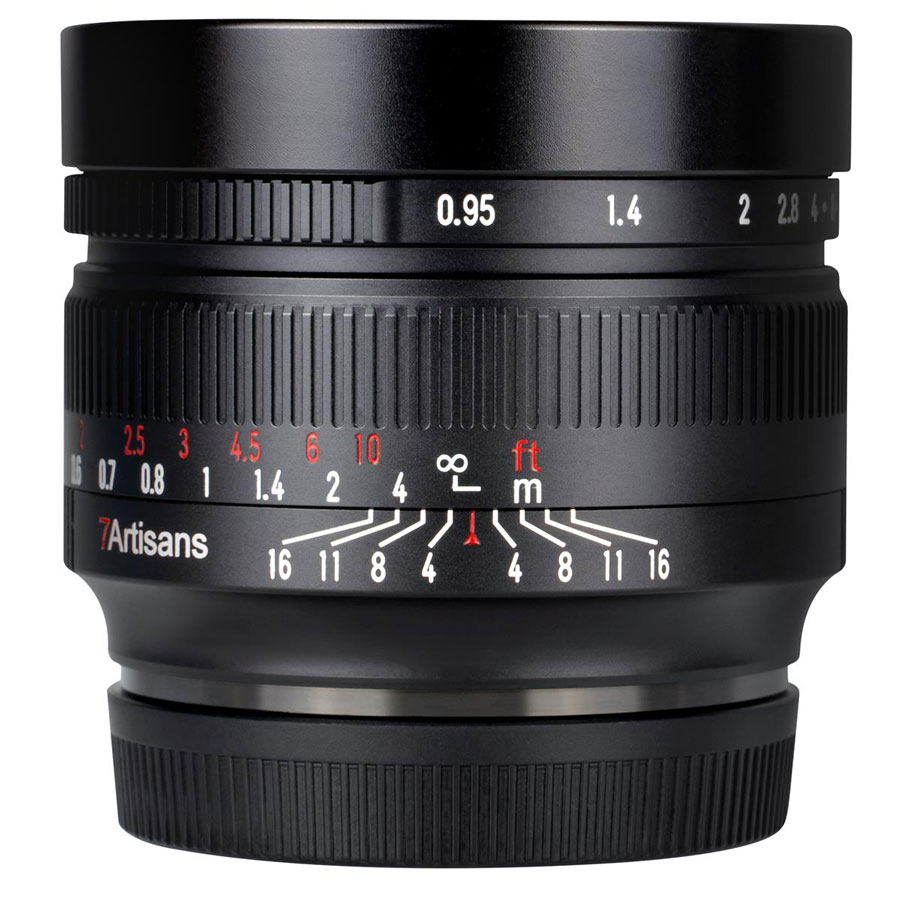
As the control of aperture shifted from the camera’s lens to the camera body, aperture rings have disappeared from many modern lenses. But some older lenses and occasionally some newer ones for mirrorless cameras, especially when adapting those from other formats, have an aperture ring. Most vintage lenses even have a depth-of-field scale, which can be helpful when using hyperfocal focusing.
The Hyperfocal Distance is the specific point of focus where any object that is between that distance and infinity is in focus. Here’s how you can make that work and is the technique I often use when working with manual focus lenses: After selecting an aperture, you rotate the lens’s focusing ring so that aperture is opposite the infinity mark so that everything from what’s at the opposite end of the focusing mark will be in acceptable focus.
 How I Made this Photograph: This bridge near the entrance to the Castle Rock’s East Plum Creek Trail was photographed from the trail looking up. Shot with Panasonic Lumix G5 and Zeiss 21mm f/2.8 with an Av exposure of 1/800 sec at f/11 and ISO 400 with the in-camera monochrome mode.

Along with photographer Barry Staver, Joe is co-author of Better Available Light Digital Photograph with new copies available from Amazon for $24.50 with used copies starting at sixteen bucks. For some reason,(not Barry or I) the Kindle price is really high.